
The world and the Islamic world
820 articles. Each article links to the source where it was published. The short summaries are prepared by this site's editors; for the full text, please visit the source page.
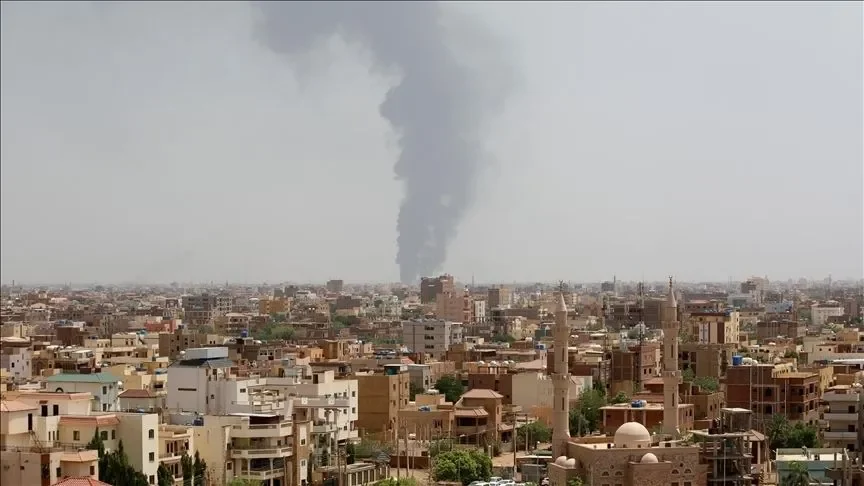
Al-Fashir: the massacre of a city, the world's silence
To describe the war that has continued in Sudan since April 2023 as an ordinary power struggle between two armed forces is, as we have written here many times before, both to misunderstand the nature of the catastrophe from the very start and thereby to legitimize it. Because on one side stands the army, which, despite all its weaknesses and political mistakes, represents the institutional existence of the Sudanese state, and on the other a force that was nurtured within the state, then armed against the state, with no law,

What does history represented as museums in Uzbekistan say, and to whom?
The author says that Uzbekistan's making Islamic civilization visible through museums and light shows may overshadow the thought that produced that civilization. Still, he explains that a properly built museum can be a door to this civilization, and that how the past is presented is connected to identity politics.

How is the Lost Enlightenment we are seeking to be found? Will tourism reviving in Uzbekistan bring Enlightenment too?
The author explains that the historical heritage revived by tourism in Uzbekistan has made the Islamic world's shared "lost enlightenment" visible again. He asks that this heritage not be reduced to a tourist spectacle and that it not be forgotten that it belongs to the entire Islamic world.

A shared academic basin between Turkey and the Arab world
The author argues that a shared academic space between Turkey and the Arab world, based on the mobility of students, academics and researchers, is an important opportunity. He regards the cooperation initiative between YÖK and the League of Arab States as a positive step and says success depends more on joint programmes working than on protocols.
In the UN draft, whom does "equidistance between the parties" serve in Sudan?
The author criticizes the "equidistance" approach of the UN Security Council draft on Sudan between the state army and the Rapid Support Forces. In his view the solution is to cut off external arms and financial channels and to force those committing crimes against civilians to be held accountable, rather than to restrict the state's defence capacity.
Five years in Afghanistan: a story of decolonization from liberation from occupation to state-building
The author assesses the Taliban's entry into Kabul in 2021 as a liberation and argues that in five years Afghanistan has moved from resistance to reconstruction and state-building. He says the country's real test is no longer fighting but building a state.
The story goes on: the story of the book, of Syria and of freedom
The author treats Syria's being the guest of honour at the International Arabic Book Fair in Istanbul as a development showing the importance of culture and memory in post-war reconstruction. He says that translation and the book can reunite divided societies, and draws attention to the freedom of the imprisoned thinker Rached Ghannouchi.
The Mecca Alliance: the Islamic world taking charge of its own security
The author regards the joint defence agreement between Turkey, Saudi Arabia and Pakistan as a belated but important step towards the Islamic world producing its own security without depending on outside powers. He notes that the agreement targets no country.
There is no civil war in Sudan; there is a proxy attempt at occupying the country
The author defines the war in Sudan not as a civil war between two equal sides but as an attempt at occupation by an externally supported armed structure against the legitimate state. He argues that the solution lies in re-establishing state authority and cutting off external military support.
In Tunisia the jasmines still smoulder and Ghannouchi still breathes
The author explains that the latest protests in Tunisia show an erosion in the current administration's social legitimacy and that economic hardship feeds this reaction. He regards Rached Ghannouchi's situation in prison as a symbol of the debate on the rule of law and appeals to international public opinion.
From a story of trust to a test of law: the citizenship grievance of Yemenis
The author explains that Yemenis who acquired Turkish citizenship through investment are aggrieved by the cancellation of their citizenship because of procedural errors detected afterwards. He argues that the errors should be corrected first, that it should be examined whether the fault originates from the person, and that good-faith investors should be set apart.
A new tribal mobilization in Yemen: against whom, and towards what?
The author explains that in Yemen tribes have come together in a traditional mobilization over the alleged violation of the right of asylum. He explains this movement through tribal honour and the notion of protection, and compares it to a pre-Islamic war.
The Rohingya crisis: the burden Bangladesh carries, the world's test of conscience
The author argues that the Rohingya crisis is an international matter of conscience and responsibility that cannot be resolved between Bangladesh and Myanmar alone. He says the burden Bangladesh has taken on is not sustainable, and that a lasting solution depends on securing rights in Myanmar and sharing the burden internationally.
In the second year of the revolution: expectations, criticisms, quests
The author explains that in the second year of Bangladesh's July Revolution the debate is now over how much of the revolution's goals can be realized. He regards the rising criticism as a sign of the normalization of politics and says there is hope, especially among the young, despite economic problems.
A revolution under the monsoon rains: Bangladesh's new story
The author argues that Bangladesh overthrew an oppressive government with the July Revolution, and that the real test is building a free order after the revolution. He explains that the country is emerging from a climate of fear and continuing its quest for institutionalization and democratization.
The voice rising from the walls of Tadmur
The author argues that the 1980 Tadmur prison massacre and the Baath regime's system of torture must be remembered. He says lasting peace in the new Syria will be possible through revealing the truth and securing justice rather than revenge.
Many signs have appeared that call for rethinking the university
For a long time universities have tended to survive as institutions that classify knowledge rather than as centres of knowledge production.
His Majesty's theologians and their ravings about the Sharia
"Theologians of which religion are these?" a reader wrote under a post reporting the text of a declaration. What other reaction can you have when you read a declaration by theologians titled "Sharia has no counterpart in human dignity!"?
Syria on the way to becoming a "homeland" for all Syrians
DAMASCUS. This is my fifth visit, and my second this year, to Syria since its liberation from the network of crime and oppression, this time having come to offer condolences for Dr. Rania al-Abbasi, her husband and her 6 children.
Condolences at the Umayyad Mosque for Dr. Rania and her 6 children
DAMASCUS. The interrogations carried out after the capture of Amjad Yousef, known in Syria as the Butcher of Tadamon, at his hiding place a while ago, and the information and data obtained, revealed that 13 years ago Dr.
Iran's Gulf impasse: striking its neighbours when it cannot find the enemy
Despite the ceasefire agreement reached in the war that began with the US and Israeli attacks on Iran, Israel insists on continuing its attacks as a natural right.
Dr. Rania al-Abbasi, her husband and their six children
A massacre brought to light in Syria in recent days is heavy enough to shake the memory not only of a family but of a country. It was officially announced that the six children of Dr. Rania al-Abbasi, whose fate had been unknown for thirteen years, were killed.
The spoils and losses of the war in the US and Iran
The war launched by the US and Israel against Iran, whose field is gradually widening, is transforming not only the front lines but also states' internal structures, decision-making mechanisms and ideological orientations.
From 1973 to the Hormuz crisis: the geopolitics of oil at a theo-political crossroads
The 1973 oil crisis is regarded as one of the founding moments of modern energy geopolitics.
No matching articles on this page. Press "Search" to search all articles.