
Articles
2619 articles. Each article links to the source where it was published. The short summaries are prepared by this site's editors; for the full text, please visit the source page.
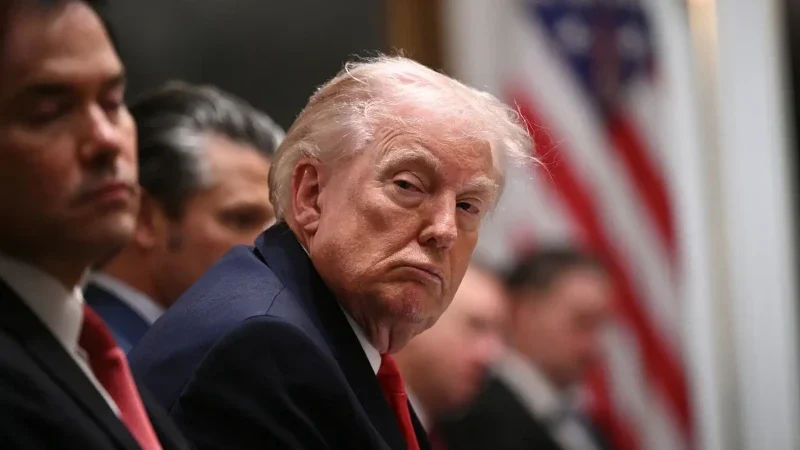
The Democrats Didn't Win the Election; Trump Lost, So What Has Changed for Türkiye?
From the factors pointed out by US President Donald Trump in his speech evaluating the election results, it is understood that the election results served as “a lesson for him.” A lesson coming a bit late, of course, even at a stage when it is already too late. Like the words Temel said on his way to execution: “Let this be a lesson to me.” In fact, the interesting side of the matter was that Trump was aware of these lessons long beforehand. Trump, stating that this indicates the priorities of the American people have changed, to the public's dislike of war, gas
A breach at the ballot box: Muslim representation, Gaza, and the (un)rising right
Mamdani's victory in New York a year ago and now Abdul El-Sayed's election to the Senate are naturally remarkable developments for Muslims in America and supporters of Palestine. Furthermore, in the US midterm elections held last week, Muslim candidates achieved historic success at both the federal and local levels. While a record number of at least 7 Muslim lawmakers were elected to the US Congress (the Senate and the House of Representatives), a total of at least 97 Muslims across different levels of governance throughout America
Aksa Tufanının suları Amerikan sandığını sürükledi
Aksa Tufanı’ndan bir süre önce Hamas liderlerinden Yahya Sinvar şöyle bir konuşma yapmıştı: Birkaç ay içinde, tahminime göre bu süre bir yılı aşmayacak, işgali iki seçenekten biriyle karşı karşıya bırakacağız: Ya onu uluslararası hukuku ve kararları uygulamaya, Batı Şeria ve Kudüs’ten çekilmeye, yerleşimleri dağıtmaya, esirleri bırakmaya ve mültecilerin dönüşünü sağlamaya zorlayacağız ya da işgali bütün uluslararası iradeyle çatışır hâle getirip güçlü biçimde yalnızlaştıracak, bölgeyle ve bütün

İçimizdeki beyinsizlerle sınırlı kalmayan afet: Fon krizi
Fon krizi, artçı sarsıntılarıyla birlikte bütün toplumu sarsan bir afet etkisi yaratmaya devam ediyor. Bütün afetler gibi, toplumun içinden yalnızca beyinsizleri, yani bu işte doğrudan dahli, günahı ve hatası olanları vurmuyor; toplumun tamamını vuruyor. “İçimizdeki beyinsizler yüzünden bizi helak etme, Rabbimiz!” diye bir duamız olsa da maalesef tarihin seyri, bir toplumda göz yumulan, zamanında ses çıkarılmayan ve fütursuzca faaliyetlerini sürdürmeye devam eden mücrimler yüzünden yaşanan bu tür

Doğru sorular sorulursa, Nutuk en değerli tarih belgesi
Bugün aslında nispeten daha rahat ulaşılabilen ve tarihyazımı veya akademinin gündemlerinde dolaşıma girebilen belgeler Cumhuriyet tarihini yeni baştan ve soğukkanlı bir biçimde yazmayı zaruri kılmaktadır. Nutuk metninin bu tarihi okuyacak ve yazacak tarihçiler için her zaman paha biçilmez değerde bir metin olduğunda hiç kuşku yok. Ancak Nutuk metninin Cumhuriyet tarihi için tek ve nihai sözü söylemiş metin olarak okunması tarihi anlamayı değil, tarihi bir teolojik destan gibi okumayı getirir ve

Diplomasi ve Cumhuriyet
Kazım Karabekir, Rawlinson’dan aldığı bilgileri aktardıktan sonra İngilizlerin hilafet ve saltanatın ayrılması, cumhuriyete geçilmesi ve hükümet merkezinin İstanbul’dan Anadolu’ya taşınması konularındaki sorularını da Mustafa Kemal’e bildiriyor. Bu sorulara verdiği cevap ise sonradan yaşanacaklarla aradaki mesafeyi bütün açıklığıyla ortaya koyuyor: Karabekir’e göre hilafetle saltanat birbirinden ayrılamazdı; ikisi de korunmalıydı. Karabekir, Rawlinson’a verdiği cevabı ve aralarında gerçekleşen diyaloğu
The Republic at 103: Making History or Writing History?
As of the 103rd anniversary of the founding of the Republic, our knowledge regarding the collapse of the Ottoman Empire and the establishment of a new administration in its place remains very limited. The expectation that the mists surrounding our recent history would dissipate on the occasion of its centenary was not fully met. Paradoxically, this history—a period not so distant at just 100 years—continues to be the most difficult to understand and learn.
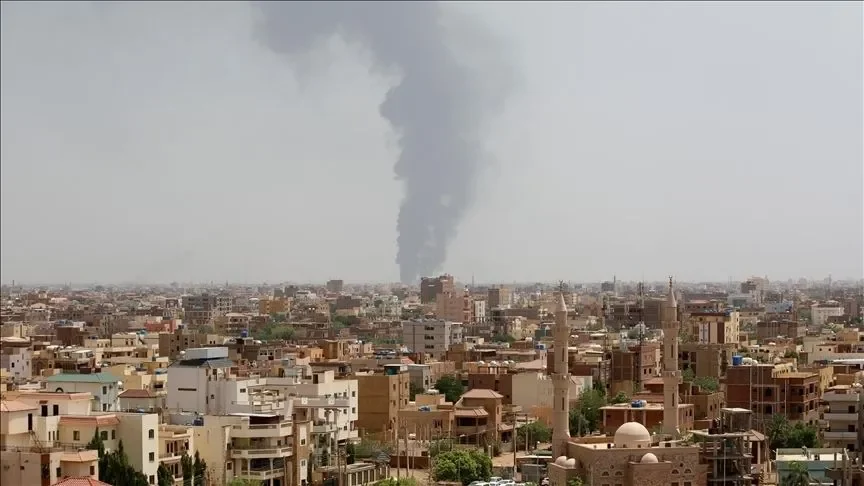
Al-Fashir: the massacre of a city, the world's silence
To describe the war that has continued in Sudan since April 2023 as an ordinary power struggle between two armed forces is, as we have written here many times before, both to misunderstand the nature of the catastrophe from the very start and thereby to legitimize it. Because on one side stands the army, which, despite all its weaknesses and political mistakes, represents the institutional existence of the Sudanese state, and on the other a force that was nurtured within the state, then armed against the state, with no law,
Imprisoning God's truth, open to all languages, in one language
The reactions to my article on the excessive privilege that the philosopher Yalçın Koç attributes to Turkish with regard to the opening of the Word, the ancient covenant, in the heart give me an opportunity both to elaborate my words a little more and to complete what was left lacking. In both articles I said that the metaphysical privilege he attributes to Turkish recalls the reproduction of the 1930s Sun Language Theory with heavy philosophical terminology. In one, Turkish was placed at the origin of all languages, in the other divine truth…
A life with the flavour of conversation among books: in memory of Cevat Özkaya
The author commemorates the recently deceased publisher Cevat Özkaya, describing how he lived publishing not as a career step but as responsibility and devotion. He argues that the publishers who brought ideas to people deserve their rightful place in the history of Islamist thought.
From the Mountain of the Heart to the Turkish essence: a language's trial with metaphysics
In a talk, the author criticizes the attribution of a metaphysical superiority to the Turkish language and Turkish thought. In his view no language can monopolize divine truth; the strength of a language comes from its encounter with other languages.

Where is Turkish thought? In the metaphysical waters of the Sun Language Theory?
The author explains how the search for a universal contribution of Turkish thought has turned into an essentialist discourse that loads Turkish with metaphysical superiority. Finding these claims devoid of scientific basis, he likens them to the Sun Language Theory of the 1930s.
The road of the Nobel to Gaza and the immunity Israel has lost
The author sees the awarding of the Nobel Peace Prize to the head of the UN commission of inquiry as a sign that Israel's moral immunity in the international arena has been shaken. He argues that justice is a universal principle that requires powerful states to be held accountable too.

In fact, we are very different from one another
The author argues that the perception that the government and the opposition are equally tainted in the funds investigation makes corruption seem normal. He calls for accountability regardless of who the culprit is, and for the innocent to be protected from slander.
The American front of 7 October: the collapse of AIPAC
The author argues that after the Gaza war Israel has largely lost its political immunity in America and AIPAC its influence. He explains that the Palestinian question has moved to the centre of American politics and that support for Israel has ceased to be a shared matter.
7 October: the horizon of freedom that a people opened to humanity by sacrificing themselves
The author interprets the attack of 7 October as an expression of the Palestinian people's demand for freedom against siege and being ignored. He argues that the destruction in Gaza could not break this will and has begun a new era in the region.

The questions, the road and the companions that make us "us"
The author makes a movement's ability to become an "us" depend on its giving clear answers to the questions of road, goal and fundamentals. Drawing on the story of Saul (Talut), he explains that the road is sifted through trials and that those who remain should be sought for piety, merit and patience.

A river would come before us; we had been warned
The author argues that the funds investigation concerns not only investors but the whole economy, and that Muslims should keep away from quick-profit paths. He also asks those in politics not to deviate from justice even towards their relatives.
Kemal Kelleci against his own windmills: a stranger at his own door, familiar to thousands
The author describes Kemal Kelleci's devotion to the Qur'an, his distribution of books and his support for students as an exemplary life of dedication. He says he assesses it without overlooking the costs it brought to his family and without romanticizing it.
Another star has slipped from this sky, and Kemal Kelleci has died
The author remembers Kemal Kelleci, whom he knew closely, as an example of devotion that does not accept defeat and believes that the Islamic subject is built by turning to the Qur'an. He describes Kelleci's character, who did not turn back from his path even when left alone, with a Don Quixote analogy.

Did Max Weber plagiarize from Biruni?
The author discusses, through an academic's comparison, whether Max Weber took his ideas on the caste system from Biruni. He says there is no conclusive proof of plagiarism, but sees the lack of citation as a sign that the East's accumulation of knowledge is not sufficiently seen in European academia.
Before Weber there was Ibn Khaldun, and before him, Biruni
The author argues that room should be made for the names outside the West-centred narrative of the history of social thought. Treating Biruni's study of India as an early example of trying to understand others' beliefs before judging them, he links it to Weber's interpretive sociology.

What does history represented as museums in Uzbekistan say, and to whom?
The author says that Uzbekistan's making Islamic civilization visible through museums and light shows may overshadow the thought that produced that civilization. Still, he explains that a properly built museum can be a door to this civilization, and that how the past is presented is connected to identity politics.

How is the Lost Enlightenment we are seeking to be found? Will tourism reviving in Uzbekistan bring Enlightenment too?
The author explains that the historical heritage revived by tourism in Uzbekistan has made the Islamic world's shared "lost enlightenment" visible again. He asks that this heritage not be reduced to a tourist spectacle and that it not be forgotten that it belongs to the entire Islamic world.
No matching articles on this page. Press "Search" to search all articles.