
← All articles · Thought and sociology
The Democrats Didn't Win the Election; Trump Lost, So What Has Changed for Türkiye?
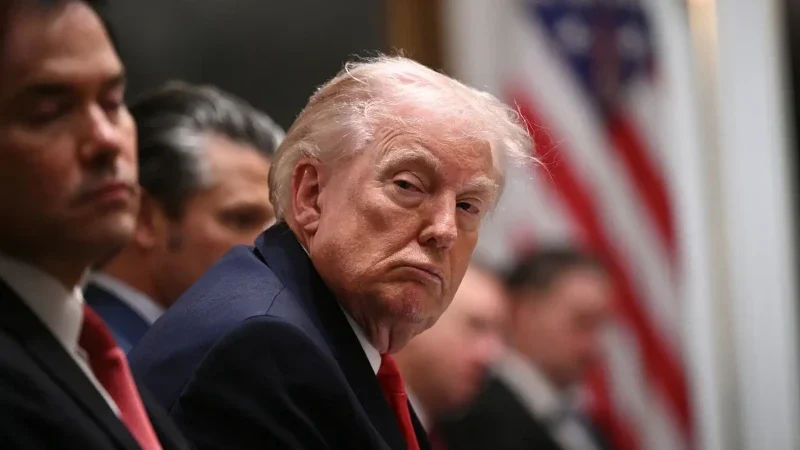
It is clear that the factors pointed out by US President Donald Trump in his speech evaluating the election results show that the election results were "a lesson for him." Naturally, it is a lesson that comes somewhat late, even at a stage when the damage is already done—much like the famous saying of Temel on his way to execution: "Well, let this be a lesson to me." In fact, the interesting part of the matter was that Trump was aware of these lessons long ago. Stating that it pointed to a shift in the priorities of the American people, Trump drew attention to the public's dislike of war, the rise in gas prices, but more importantly, to the fact that "there is an unbelievably large discontent with Israel, a reaction toward Israel."
Well, he had already stated much earlier—and right to Netanyahu's face—that serious anti-Israel sentiment had developed among the American public. Trump seems to have been unable to turn a situation he was aware of into policy. Why, one wonders? Though the reasons are not so unknown. It is due to the Israeli lobbies' increasing power, influence, and blackmail mechanisms over politics remaining valid, even as they lose their ground-level impact, and so forth. In our previous two articles, we focused on the very factors of the American elections that everyone now accepts—the point of intersection for multiple tensions extending from Gaza to Iran, from the cost of living to debates over representation.
Today, let us look at the situation through the insider observations of Murat Güzel, who has lived in the US for nearly forty years and engaged in politics at the level of the Central Executive Board in the Democratic Party. Güzel's evaluations, published in full on Tezkire.net, offer an insider's view into the daily functioning of American politics and voter reactions, unlike commentary observing the election results from the outside. Güzel summarizes the election result with the following sentence: "The Democrats did not win this election; Trump lost it." This distinction reminds us that we should not assume voters provided strong and unconditional support to the Democratic Party.
According to Güzel, Trump addressed the voters saying, "Think of me as if I were on the ballot," and the electorate turned the election into an evaluation of him. Thus, the midterm election was converted into an opportunity to audit power and object to the course of events. Güzel suggests reading the message from the ballot box not as a Democratic victory, but rather as the result of Trump placing his own weight at the center of the election. Naturally, this observation also points to Trump's political shortsightedness. Calling voters to a test of personal loyalty carries the risk of tying all the dissatisfaction in the election directly to one's own leadership.
Moreover, in 2024, voters were familiar with Trump's rhetoric and political style, voting for him trusting his promise of a cheaper life. In Güzel's words, "When the promise remained unfulfilled, the bill came due." This time, the bill was footed not just by economic management, but by the president's own political account. Güzel specifically connects the impact of war on voters to daily life: "The American voter often settles for watching a distant war; but when gas and diesel prices skyrocketed, the war entered the kitchen of every home." He then makes the following distinction: "President Trump was punished not because he waged war, but because the war made life expensive."
This illustrates that the anti-war stance of the American electorate should not be seen solely as a moral foreign policy attitude. When the economic cost of war reaches the daily life of the voter, foreign policy becomes a matter of domestic politics and the family budget. The concerns about democracy and corruption highlighted by Güzel complete this picture of discontent. His assessment regarding Gaza opens onto another plane. Güzel states, "Gaza left a mark on the conscience of the American public before politics." This sentence acknowledges the moral impact of the events without exaggerating the shift in American politics.
The mark left on the public by the images of Gaza may have broadened the debate over the support given to Israel; however, it is too early to say that this has automatically changed Washington’s established policy. Güzel also emphasizes that the change is real, but that it will come slowly. The election of Abdul El-Sayed to the Senate is a striking sign of this transformation; meanwhile, the Democratic Party leadership’s support for Israel and the deep-rooted ties between the two countries serve as a reminder of the limits of this sign. In terms of Türkiye, Güzel’s prioritization is also noteworthy: “The public agenda is the F-35, but the issue that will affect Türkiye the most is energy.”
The tension in Hormuz and the rise in oil prices have direct economic consequences due to Türkiye’s dependence on energy imports. Therefore, the course of the Iran war is significant not only in terms of regional security, but also regarding Türkiye’s energy bill and inflation. Güzel foresees that the new Congress could pressure Trump to end the war. Whether this happens, however, depends not only on the stance of Congress, but also on the calculations of the White House and developments on the ground. Güzel also points out the tendency of American presidents who are weakening in domestic politics to focus more on foreign policy.
Based on this assessment, he foresees that Türkiye’s mediation and regional engagement opportunities could gain importance. Ankara’s ability to dialogue with Washington, Tehran, and regional actors could enable it to assume a diplomatic role on topics such as Gaza, Syria, Iran, and Hormuz. However, this should not be presented as an automatic advantage. Türkiye’s regional weight can only yield results through sustained diplomacy and reliable communication channels. Güzel also offers a succinct warning regarding Washington, saying, “The White House opens the door, but Congress makes the decision.”
Thus, he reminds us that Türkiye-US relations should not be reduced merely to the closeness between the two leaders. The stance of Congress will continue to be decisive in arms sales and defense files. The S-400 and F-35 issues, CAATSA sanctions, and other defense topics are related to the political balances in Congress as much as to the contact established with the White House. All these assessments should be viewed not as a declaration that everything has changed in the US, but as an insider reading demonstrating where and within what boundaries change might emerge. The American electorate gave Trump a strong warning; however, this does not mean Washington’s foreign policy will change all at once.
The window of opportunity opening for Türkiye will not produce results automatically either. Ankara will need to develop its relations with both the White House and Congress, both parties, and the Turkish community in America. The election may open some doors; which outcomes pass through those doors will be determined by continuous diplomacy.