
← All articles · The world and the Islamic world
Al-Fashir: the massacre of a city, the world's silence
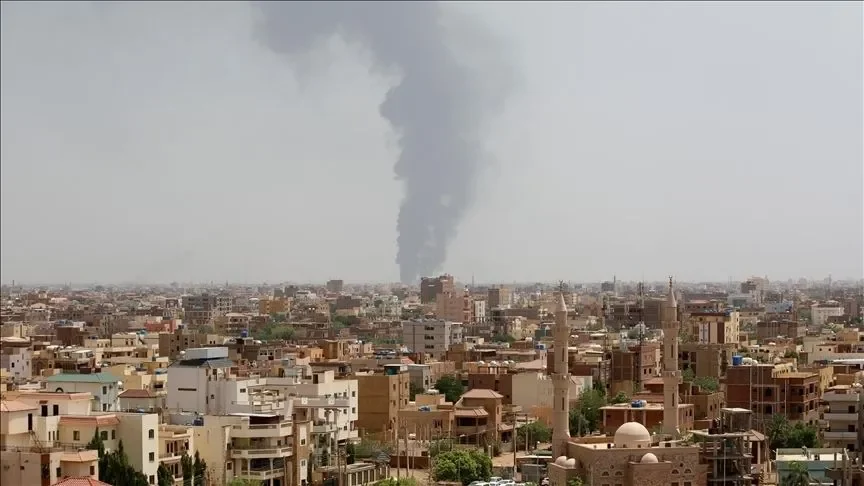
To describe the war that has been going on in Sudan since April 2023 as an ordinary power struggle between two armed forces, as we have written here many times before, is to misunderstand the nature of the catastrophe from the outset and thereby to legitimize it. For on one side is the army, which, despite all its weaknesses and political mistakes, represents the institutional existence of the Sudanese state; on the other are the Rapid Support Forces (RSF), nurtured within the state, then armed against it, recognizing no legal, moral or humanitarian limit. Moreover, these forces are not merely a militia acting on its own account. They are the principal actor of a proxy war intertwined with the interests of external powers that have set their eyes on Sudan's gold, its resources and its strategic position.
Of course, the Sudanese army too is not exempt from questioning, past and present. But a language that equates the two sides renders invisible the systematic brutality the RSF inflicts on civilians, its methods of ethnic cleansing, and the international networks of interest behind this brutality. What is happening in Sudan is not merely a struggle for power; it is an attempt to take a country away from its own people and hand it over, together with its resources, to the account of others.
26 October is the first anniversary of the RSF's capture of El Fasher, the capital of North Darfur, one of the most terrifying scenes of this war.
We are not speaking of the fall of a city, but of a massacre that was known to be approaching step by step before the eyes of the whole world, that was even reported repeatedly, but was not prevented.
El Fasher fell on 26 October 2025 after a siege of more than five hundred days. The city had already been exhausted by hunger, thirst, lack of medicine and bombardment. But the real horror began with the city's capture.
According to the report of the United Nations Human Rights Office dated 13 February 2026, more than 6,000 people were killed in the first three days of the attack. At least 4,400 of them were killed inside the city, and more than 1,600 while trying to flee. People had no right to remain in a city, and no right to flee from it either. Death had seized the escape routes as well.
The mass killing of civilians who had taken refuge in university buildings, the execution of people selected according to their ethnic identity, sexual violence against women, the breaking up of families… These were not the unavoidable side effects of war; they were the methods of a brutality directly targeting civilians.
Before the city had even fallen, in September, in an attack on a mosque near Abu Shouk Camp during the dawn prayer, at least 11 children aged between 6 and 15 had been killed.
What would happen in El Fasher was not unknown. In Resolution 2736, adopted on 13 June 2024, the UN Security Council had demanded that the RSF lift the siege, that civilians be protected and that humanitarian aid be delivered.
And what happened?
The siege continued. Hunger and bombardment continued. Finally the city fell and the massacre took place. International law could not prevent the massacre, but it managed to report it afterwards!
The tragedy of today's world order lies partly here. Warnings before the massacre, reports after the massacre, thousands of corpses in between. The distance between the existence of law and its application was measured in El Fasher by people's lives.
The moral bankruptcy of the international order that we saw in all its nakedness in Gaza confronts us in a different form in Sudan. Although the historical and political natures of the conflicts differ, when it comes to the protection of civilians we encounter the same scene, in which the calculations of the great powers take precedence over human life.
There is also the matter of the external support that makes this brutality possible. Where do the RSF's weapons, financing and logistical means come from? Who profits from Sudan's gold trade? Which regional actors have a share in keeping these militias on their feet?
The serious international reports and accusations that the UAE supports the RSF are too important to be brushed aside with denials. These allegations must be investigated independently. To describe Sudan merely as a clash of internal actors would mean absolving the war's external partners of responsibility.
Why does Sudan, where millions of people have been displaced, cities have been reduced to ruins and children have been condemned to hunger, not find the place on the world's agenda that it deserves?
Sudan is an extremely important country with its gateway to the Red Sea, its position in the Nile basin and its historical ties between Africa and the Arab world. But reducing its importance to its geopolitical position alone is also unfair to the Sudanese people. We are speaking of the land of a deep-rooted civilization, of learning, culture and social life.
Today the people of this country cannot find a place of refuge on their own soil. Moreover, the effects of the war are spreading from Chad to Egypt, from South Sudan to the whole Red Sea basin.
Turkey's historical and humanitarian ties with Sudan require that it not remain a spectator to this catastrophe. While mobilizing its humanitarian aid capacity more strongly, Turkey should also use its diplomatic means for the investigation of war crimes, the cutting off of external support and the protection of Sudan's territorial integrity.
The aid mobilization to be carried out with TİKA, AFAD, the Turkish Red Crescent and civil society organizations must be complemented by diplomacy to be pursued with the African Union and the countries of the region. But at the foundation of all these efforts must lie the principle that the future of Sudan is to be determined by the Sudanese.
26 October should be not merely a day of commemoration but a day of reckoning. A day of reckoning with those who carried out the massacre, those who armed and financed them, and those who, knowing all this, did not act enough to prevent it.
The real purpose of human rights is not to count the dead but to prevent people from being killed. A year ago in El Fasher, it was not only a city that fell. It was also tested how far the institutions humanity has established in its own name, the principles it has proclaimed and the values it claims to defend can remain standing.
What the Sudanese expect from the world today is not another message of condolence, but that the killers and the powers behind them be stopped.