
← All articles · Palestine and Israel
7 October: the horizon of freedom that a people opened to humanity by sacrificing themselves
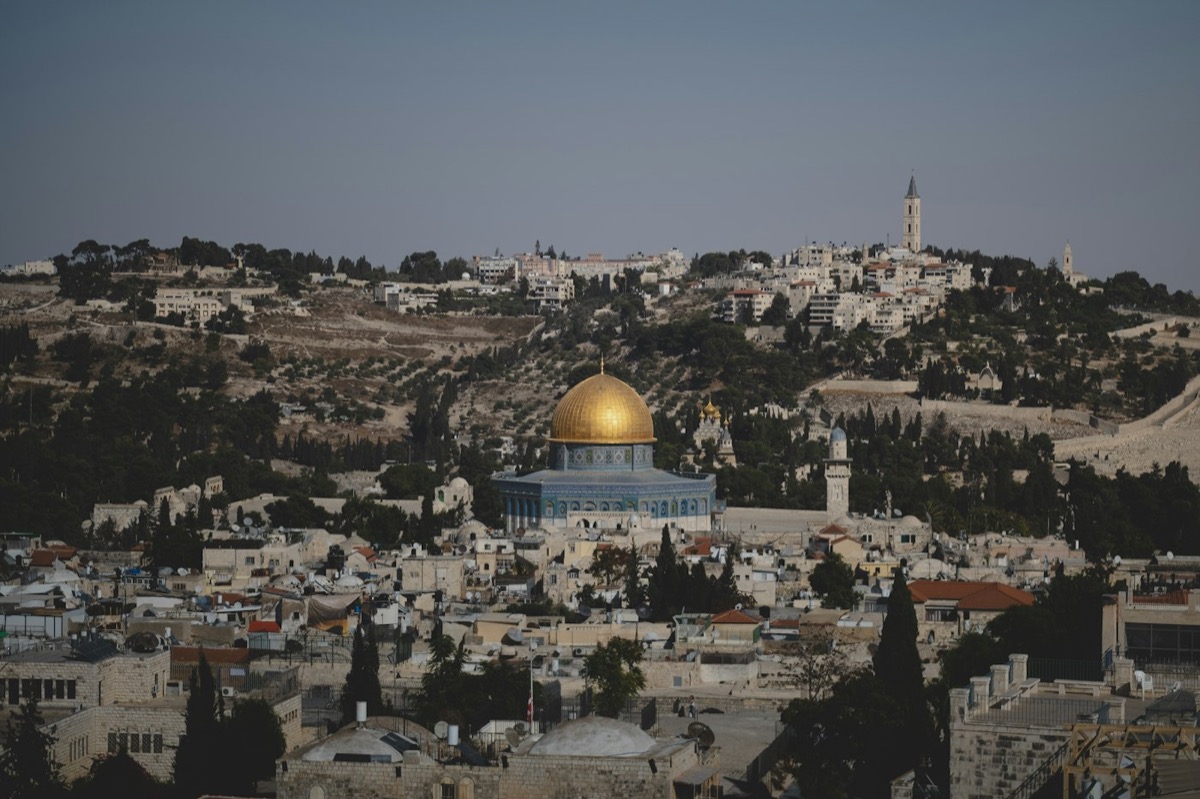
Today, October 7, is the anniversary of the Al-Aqsa Flood, a breakout that would close an age and open an age. Three years ago, on the morning of October 7, when the world woke up, what it faced was not merely an act that had breached Israel's walls, thought to be impregnable. It was a people's cry of "I am here!" against the power that was trying to erase it from history. The scream hurled toward those who besieged it by a people that had been besieged for years, whose land had been taken from it piece by piece, whose homes had been demolished over its head, whose children had been killed before the eyes of the world, pierced through the silence that had closed over the whole world. Like the laughter of Ishmael, ignored, excluded, humiliated, it was an event that mocked all the value systems the world had closed itself under and the security systems it boasted of, and showed that beneath them there was nothing at all.
Let us remember. Before the Al-Aqsa Flood, the Palestinian question was a matter that had to be talked about but could be postponed. The Israeli occupation was condemned, and then life went on from where it had left off. While people were dying in Gaza, the world was finding ways to get used to these deaths. A life narrowing a little more every day, a siege growing a little larger, an occupation advancing a little further; all of it was described as "the complex realities of the region." Humanity had begun to count silence in the face of a tyranny whose cries had reached the heavens as a kind of common sense, and the silence of the Palestinians as a kind of peace.
October 7 was a thunderbolt that fell into this habit. It was a people's refusal to live waiting for death. There were those who knew what the step taken that morning would cost. But their calculation was not the calculation we make according to the comfort of daily life. Within a people that the siege was killing a little more every day, they had dared not only to survive but to live free. They paid the price of their struggle not by making others pay it, but by putting their own lives on the line.
Then Israel marched on Gaza with all its might. It destroyed a city stone by stone, street by street. It struck homes, hospitals, schools, houses of worship; it condemned people to displacement, to hunger, to searching for their loved ones under the rubble. In the Gaza Health Ministry's statement of October 4 it was reported that since the start of the attacks more than 74,000 Palestinians had died and more than 175,000 had been wounded. Even during the ceasefire period the deaths continued. None of these figures can be entered into a victory's ledger. Each is a person's name, the light of a house, a family's life left unfinished.
As the destruction Gaza suffered grew, the victory Israel narrated to the world shrank. Because it found no people kneeling before it. After every leader it killed, a new young man emerged; after every voice it silenced, thousands of voices rose. What it could not subdue was a will not measured by the number of weapons. Israel had an army, aircraft, bombs and intelligence; Gaza had mothers who stood up again after burying their children, fathers who recited the Qur'an at the rubble, children who, even wounded, said "We will not leave here." On the world's scales these two forces were not the same thing.
Israel's own official data also records the military cost of the war: the Israeli army reports that 970 of its soldiers have died and 6,424 have been wounded. But Israel's real loss is far beyond these figures. The security myth that had been burnished for years collapsed. The image of a state that saw everything and controlled everything was shattered within a few hours. The three years that followed could not rebuild this myth. As Israel enlarged its power, it enlarged not its security but anger; as it deepened its occupation, it enlarged not its dominion but resistance.
And the greatest loss was the immunity that had been granted to it. For decades Israel covered its occupation in the language of security; to silence those who objected, it left every word about Palestine under the shadow of the threat of an accusation. The images of Gaza dispelled that shadow. The world's young people took to the squares; universities, unions, artists, academics and ordinary people raised their voices against the silence of their own governments. The Palestinian flag became the flag not only of Palestine but of everyone who objects to colonialism, racism and domination.
Gaza showed all of humanity again what freedom is. Freedom is not merely a permission granted by the powerful. On the contrary, when the time comes, it is the insistence of a besieged people, despite all impossibilities, on having its say about its own life. Sometimes it is to be able to sit in the ruins of one's own home and say "I am here." And sometimes, when the world's powerful offer you only to be silent and to leave, it is to cling to your land and to keep on laughing.
The heaviest side of this epic is that its price has been paid in human lives. To ignore this, and to weigh that price from afar and ask "was it worth it?", are both failures to understand Gaza. The will of the people of Gaza cannot be measured according to the comfort of other peoples. In a place where death was already coming to their doors every day, they wanted to decide for themselves not only when they would die but how they would live.
Three years on, what we have is not a completed victory but a struggle that is not yet over. Israel is still killing, destroying, besieging. The Palestinian people are still mourning, binding their wounds, trying to return to their land. But the world can no longer go on its way without seeing this people's existence and its demand for freedom.
The breach the Al-Aqsa Flood opened has not closed; it has widened. A people, by sacrificing itself, showed all of humanity a new horizon. However great oppression may be, it cannot wholly encircle the human desire for freedom.
More concretely, what we said at the beginning of this article has come to pass. An age has closed. The world's balances of power have begun to be rearranged under the influence of these wars. Under the influence of the waves of the Al-Aqsa Flood, the 14-year regime of tyranny in Syria was overthrown. A regime resting on its own people was established. For the first time in 40 years Iran and Hezbollah had to fight an enemy other than Muslims, Israel, and because of this war there was a recovery in the ummah consciousness of the world's Muslims. The moral superiority that the United States and Europe wielded relentlessly against Muslims and the rest of the world has been razed. The desire for racism and exploitation beneath the hegemony they established over the entire world in the name of human rights has been exposed. It has been clearly seen that the Zionist world order, which imposes on the entire world, through the genocide it claims to have suffered, a debt that grows the more it is paid and is impossible to repay, can be neither the measure nor the source of any moral value. In contrast, Gaza, without producing a burden of debt on the world on account of its own victimhood, simply showed that a different world, a different life, a different way of existing is possible.
Perhaps one aspect of the new era the waves of the Al-Aqsa Flood opened has been Muslim countries' drawing closer to one another. The Mecca alliance formed today undoubtedly bears, directly or indirectly, the effect of this flood.
But alas. If only the Mecca Alliance had been formed long before this stage, in advance and openly named as such, against Israel's genocidal aggression, its fated threat, its arrogance and its immoderate insolence.