
← All articles · Palestine and Israel
Where is the Islamic world, where is the line of resistance against Zionism?
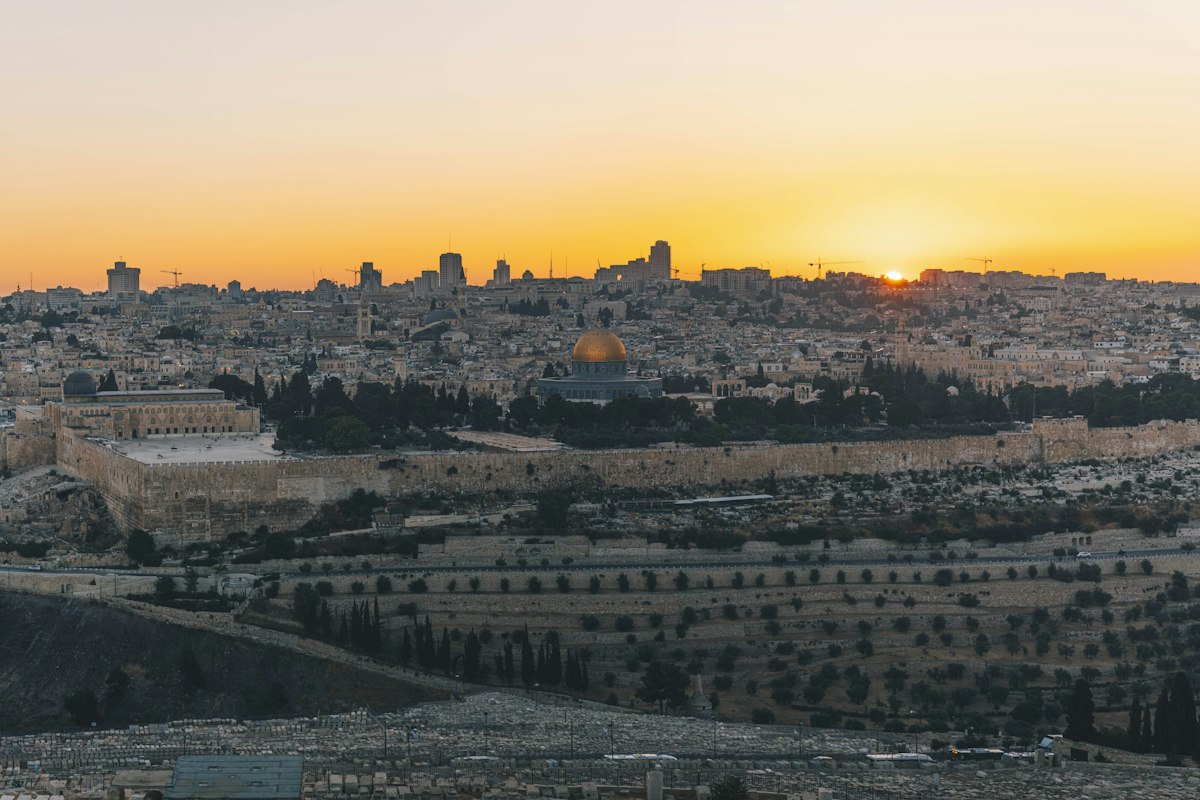
LONDON. 2014 is the hundredth anniversary of the First World War. All the problems we are living through in the Middle East today are results of this war. As a result of this war, the region was torn to pieces by creating nation-states out of peoples who were all Ottoman land and who lived together in a certain harmony. Each piece was shared out as the sphere of influence of a great European power. Again as a result of this war, the gradual plunging of Israel like a dagger into the heart of this region was planned and announced. The implementation of this plan resulted in the Palestinian people being left landless and a whole people being turned into a people in exile.
Every time a fire in the Middle East that seemed to have turned to ashes is stoked a little, Israel in some way goes on deepening its occupation of Palestinian lands and gaining facts on the ground. Although the UN has adopted a series of condemning and prohibiting resolutions on this matter, Israel, which does not recognize these resolutions, in every situation in which the world is preoccupied with itself goes on opening Jewish settlements, thus tightening its siege around Jerusalem from all sides and choking the Palestinians.
While everyone is focused on gawking blankly at the acrobat in Kobani because of ISIS and its terror, Israel is gauging reactions by committing its greatest insolence since 1967 against the holy site of Muslims, the Al-Aqsa Mosque. We can guess what lesson it draws from the reaction it gauges. The leaders of the Islamic world, who plan and carry out coups against oppressed Muslim peoples in Egypt, Yemen and Libya, have no worries or concerns to occupy themselves with Jerusalem. While they themselves do things every day that make the honor of Muslims worth next to nothing, it is in any case futile to expect them to raise a voice against Israel, which violates the privacy and honor of Muslims. Besides, they are not even the segment whose reaction Israel is gauging. The Islamic world is in any case in safe hands from their point of view. Where, then, has Iran's line of resistance against Zionism gone, which Iran says it guards like the apple of its eye and at whose head it put Assad?
The real world whose reaction it is probably gauging is Europe again. The Palestinian state, recognized first by Britain, then by Sweden, and which France is now preparing to recognize, has probably made Israel wonder exactly where the limit of reaction has been set.
We are in London on account of a conference organized by the Palestine Return Foundation in London titled "On the 100th Anniversary of the First World War, the Effect of the War on the Palestinian Question."
The conference will start tomorrow, but having come to London I also gave talks at meetings in both the House of Lords and the House of Commons and at the Royal United Services Institute (RUSI), attended by members of parliament, defense and security experts and invitees from different segments. Some of these meetings are closed meetings governed by the Chatham House rule. Others are open to the public.
WHO CARES ABOUT THE DIFFERENCE BETWEEN ISIS AND THE PYD, AND HOW?
I can relay some of the talks in the open one. I can say that what role Turkey will play in the fight against ISIS is considered very important. It seems to have surprised some people that Turkey puts ISIS and the PYD in the same basket. Because the PYD is being raised in an instant to the level of a hero of freedom because it is fighting ISIS. Unfortunately, as we have said here before, PKK militants, who are war and murder machines with their Kalashnikovs in hand, are increasingly being presented in the Western media as angels, objects of sympathy, merely by highlighting their being women and being bareheaded.
I can repeat here what I said at the meeting. What the PYD has done in Kobani and Rojava prevents us from seeing it as less dangerous than ISIS. From the outset, with the permission, authority and support it received from Assad, it fought in Rojava particularly against the Free Syrian Army, and it forced all the Kurdish groups that did not side with it to migrate to Iraqi Kurdistan.
Viewed from this angle, the PYD in Kobani did more than what ISIS had done before, but while doing so no one even thought that a tragedy was taking place here. According to incoming reports, ISIS terror draws its real strength in places from Sunni Arabs looking for an opportunity for revenge against Maliki, and in places from Kurds looking for an opportunity to take revenge for these deeds of the PYD.
The pursuit of revenge does not legitimize people's actions; on the contrary, it makes them very dangerous and very easily steered. ISIS, or the forces behind it, have found a very powerful source of energy in this rage of revenge that has been accumulating for about 11 years.
How they are using this source at present is out in the open. Is this energy endless? Of course not. But turning a blind eye to this energy being used in this way, and taking steps that will set it in motion further with each passing day, is not necessary.