
← All articles · Palestine and Israel
From the Gaza War to the change in Syria: changing dynamics in the Middle East
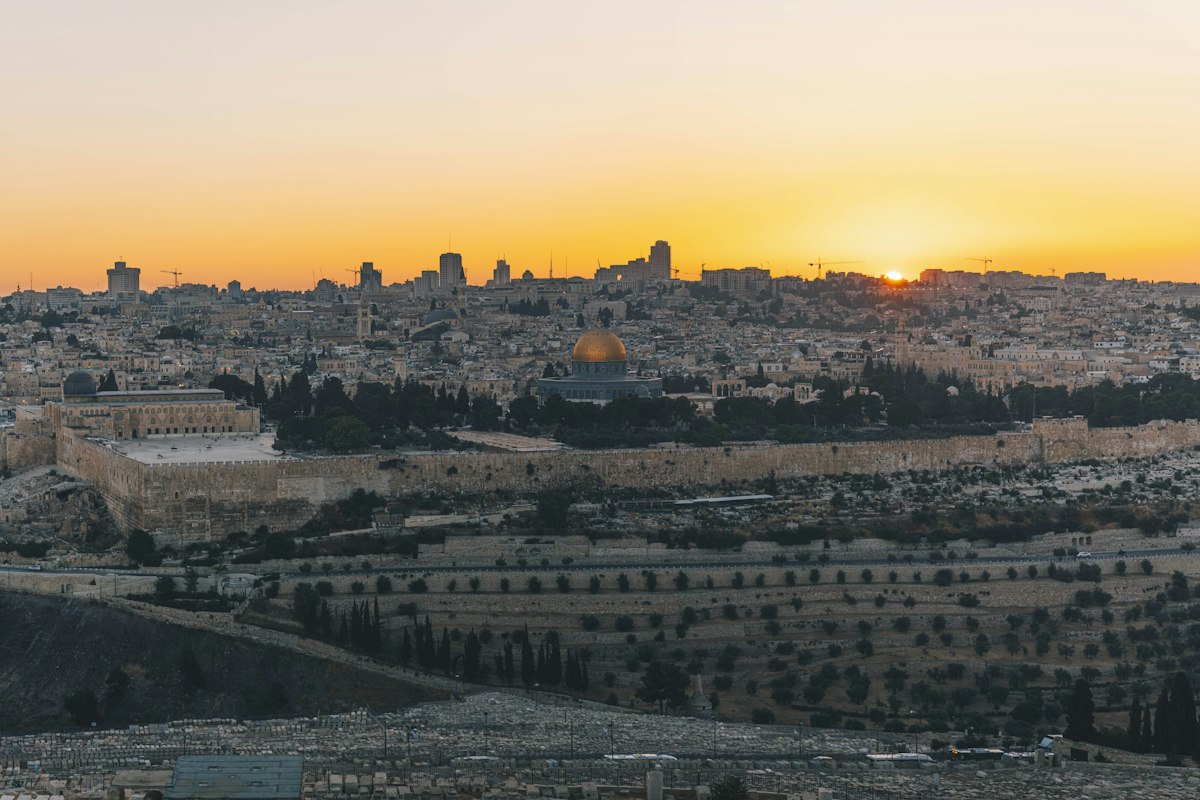
After the October 7 Al-Aqsa Flood shook the balances of the whole world stage by stage, the toppling of the 61-year Baath regime in Syria with a revolutionary spirit and outlook appears to have changed all the dynamics in the Middle East. Now, in all circles and centers, attention is focused on the color, course and direction of these changing dynamics and on what kind of world they are taking us toward.
And it must be. What we are living through are changes that require everyone to review their own position, even all the perspectives and paradigms held until now. The invincible Israeli army and intelligence forces turning into rags, the US and Europe, which support it without any regard for human values, becoming de facto partners in this defeat, the resistance, skill, quality, nobility and integrity that Hamas, monstrously portrayed as a terrorist organization, has shown both during the war and during the prisoner exchange... The hopes born out of this nobility, together with all the price paid, in an environment where faith and hope had faded the most...
The same holds for Syria. At the very moment when everyone, saying he would never go, began to re-establish relations with Assad as if nothing had happened, the crimes exposed by the revolution that came down upon him, and the brand-new situation that has now emerged. In a short time a difference as great as that between night and day came about, and moreover this difference has now changed all the dynamics in the Middle East.
THERE IS NO "DAY AFTER" AS ISRAEL HOPED
This was also on the agenda this year at the Al Jazeera Forum, which the Al Jazeera Research Center has been organizing in Doha for years and in which the important topics of the agenda are discussed each year with important figures: "From the Gaza War to the Change in Syria: Changing Dynamics in the Middle East."
A large number of politicians, researchers, journalists, academics, intellectuals and writers, from all over the world but concerned with the subject, take part in the Forum. Apart from the panel section of the forum, real brainstorming takes place in every corner among the participants. In a session where the latest situation in Gaza was discussed, the post-war challenges were addressed. The concept under which the conditions after the ceasefire would be discussed was handled for months by Israeli and Zionist-American circles under the heading of the "day after." That heading envisaged a scene in which Hamas would be completely liquidated and Israel would have achieved overwhelming superiority. But the scenario being discussed in Doha today, which is far more realistic, is, thank God, very far from this. On the contrary, what is being discussed now is how humanitarian aid will be delivered in Gaza and what form Palestine's self-determination will take. One of the speakers in the session was Hamas Political Bureau member Basim Naim, who set out a position that those hearing it on behalf of Hamas for the first time might perceive as conciliatory. But Hamas had in any case advocated this from the beginning. He said that Hamas has no insistence on being in government, but added right away that it has never presented being in government in Gaza as a condition, that it advocated Palestinian unity and rejected, and again rejects, any tutelage imposed from outside. No solution imposed on Palestine has any feasibility. In a government formed entirely by the will of the Palestinian people there is no need for Hamas to remain as an organization; in any case almost the entire population of Gaza now embraces the Hamas spirit of resistance. In the West Bank too the situation is no different.
GAZA IS A CURSED PLACE FOR ISRAEL, THE REAL TARGET IS THE WEST BANK
Speaking in the same session, the President of the Palestinian Center for Policy Research, Hani al-Masri, responding to those who see October 7 as the pretext or justification for the Israeli genocide, explained that the Zionist aggression we have recently encountered in the West Bank had been on the agenda long before October 7. Moreover, this aggression was being staged step by step in order to realize the Zionist creed: "The annexation of the West Bank was being discussed by the occupying power even before October 7. What is being done is not a result of October 7. It is a result of the corrupt and aggressive creed of Judea and Samaria, said to be mentioned in the Torah. So far more than 10 thousand people have been arrested, and the number of Palestinians martyred in the West Bank has exceeded a thousand. Every Palestinian city in the West Bank has turned into a separate prison."
In a conversation we had with other Palestinians present in the hall about what Masri said, an interesting piece of information was shared. The real motivation of Israel's genocide against Gaza is in no way the occupation of Gaza; on the contrary, it is to punish them. Essentially, Gaza is seen as a "cursed place" in Israel's mythological religious sources. Its having been forced to withdraw after 50 years of occupation confirmed this narrative of a curse, and the resistance that emerged in Gaza after the siege appears to have reinforced it even more. In these mythological narratives it is even said to be advisable to keep away from Gaza. But for the West Bank there are the opposite narratives, and Israel has long had a desire to occupy and annex it.
Meanwhile, in the sessions where the change taking place in Syria was addressed, the emphasis was on "transitional justice" in Syria and on what this change might lead to, particularly in the Gaza context. One participant said that comments in the Israeli press such as "Turkey becoming our new neighbor is a development that will radically change all the balances" create a situation in which Israel and Turkey will confront each other more in the balances of the coming period. Indeed, this is already leading Israel to take measures and to set up new bases in the buffer zones of the Golan. This alone is enough to show how much at peace and in harmony Israel has been with the Assad regime until now.
It is certain that the echoes of the change in Syria will extend far beyond the nature of the new regime, its style of governance and the relationship between state and society. The geopolitical consequences of this change will be enormous and will reshape alliances and balances of power in the region. Arab-Arab and Arab-regional relations will enter a new phase. How will this change affect Syria domestically, politically, in terms of security, socially and economically? What will Syria's position be in the developing regional alliances? To what extent can Arab countries benefit from this transformation and provide the Syrians with the support necessary to stabilize and rebuild the country? Questions such as these were the ones put forward and answers sought in these sessions.
Without doubt, the US administration taken over by Trump will be a new and quite decisive element of the balance in this process. However, one should not exaggerate this decisiveness more than necessary. Trump will have an effect within these balances, but what he wants will not come about. What will most probably result from his effect is that Muslim societies and states will draw somewhat closer to one another, even if against him, and that even freer alliances will form against the US in the world.
That both the Gaza and Syria events, which affect the balances in the Middle East and indeed the whole world, came about through undemocratic means, through the use of force, is another matter that is, and must be, underlined, particularly in terms of the dynamics of social and political change in the Islamic world.