
← All articles · Palestine and Israel
What is Ghannouchi being punished for? For being an intellectual, a democrat, a moderate?
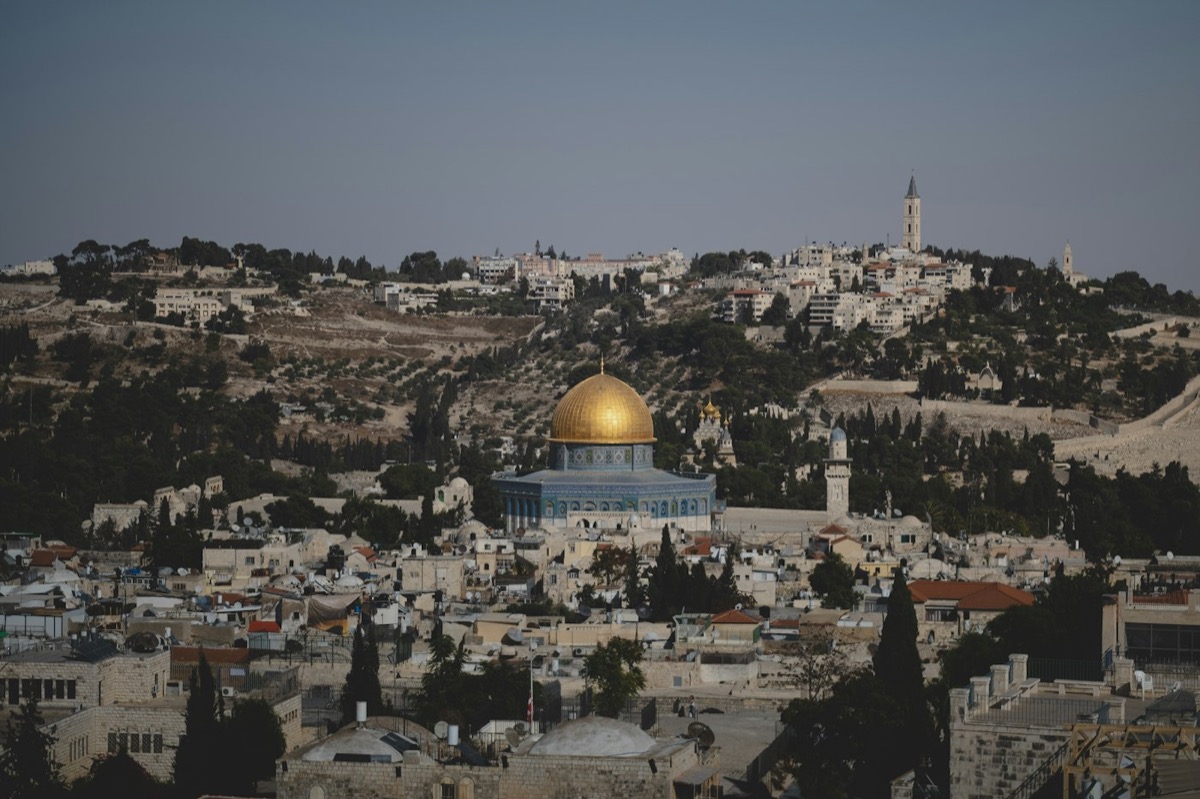
Following Trump's delirious statements about Gaza, the language he used yesterday in his threats that he would turn Gaza into hell if the hostages in Gaza are not released officially registers American responsibility, in aggression against Gazans and on the ground. The intentions he spilled out of his head to deport and pacify the Gazans show that from this hour on the US will pose a direct and urgent threat not only to Gaza but to the entire Islamic World.
The beneficial side of this is the awakening, in the Islamic world, of a perception of threat against this threat, this US despotism, which has in fact existed for a long time. All Islamic countries that perceive this threat in this crudeness and this insolence have more than enough grounds to resist it and form a new axis. They must know that if they do not do so, they will all be tipped into the dustbin of history together. In fact the first reactions of Saudi Arabia, Jordan and Egypt to these delirious statements of Trump are quite hopeful in this regard. We hope this sensitivity moves everyone toward real precautions.
However, in order for the Muslim world to respond to these threats in a real sense, it must also close ranks within itself, resolve the disputes among them, and indeed each country must consolidate its own strength internally. Countries uniting and integrating with their own peoples, opening a space for the idea of relying on their own peoples, is the first and most effective step in resisting the US threat and other threats. We said this earlier too, again in the Gaza context. And on account of Rached Ghannouchi, unjustly arrested in Tunisia at the age of 82.
We also said before that people like Ghannouchi are not merely Tunisian citizens but are among the most hopeful, most horizon-opening intellectuals of the whole Islamic world, at the level of a mujtahid in Islamic political jurisprudence. Ghannouchi himself is a figure who throughout his life waged, by peaceful means, the struggle for the development of human rights, freedoms and democracy in the Islamic World.
As leader of the Nahda movement, Ghannouchi, while Speaker of the Tunisian Parliament, resisted the dissolution of parliament by the President, but his opposition could not stop the coup carried out at the hands of the President. Had he wished, when he came out of the elections as the first party, he too could have gradually, or step by step, seized all authority and silenced all his opponents, but he trusted so much in democracy and in building the country together that he never resorted to such a path. Unfortunately, under the President, whose election he himself had supported, on his way to gathering all powers in his own hands, they are now trying to make him a complete victim of democracy. To silence the opposition he led after the dissolution of parliament, he was also put in prison through several cases fabricated against him.
Unfortunately, just when he was expected to be released from the prison where he had long been unjustly held, on February 4, 2025 a Tunisian court handed down long prison sentences to him and to several important politicians, a former official and a journalist, on charges of plotting against the state.
The sentences handed down in the case known as the 'Instalingo case' are seen as a politically motivated legal action aimed at silencing opponents, in a manner of which history offers abundant precedents. In the same case, former Prime Minister Hichem Mechichi was sentenced in absentia to 35 years, while around 50 defendants were given more than 700 years of prison in total.
Instalingo is a media company specializing in the production and translation of digital content, including election campaign services. Contrary to the allegations, the company never worked for Nahda's candidate in the 2019 elections; instead it served Abdelkarim Zbidi, a political opponent of Nahda.
This ruling appears to be part of a broader crackdown to eliminate political opposition, targeting in particular Nahda members, journalists, bloggers and independent state officials.
None of the basic trial procedures, the presumption of innocence and the right to defense, were observed at the hearing; Ghannouchi himself, who was first questioned in the case for 12 hours two years ago but released without any charge, had new charges brought against him and added to the case as a result of political pressure exerted on the investigating judge, and was arrested again. The most important indicator of the political pressures is that the 6 investigating judges and prosecutors at the Sousse Court handling the case were repeatedly removed and replaced by the Ministry of Justice on the grounds that they did not comply with the demands of the political authorities
Within the scope of the same case, other political figures, including former Minister Riadh Bettaieb and Member of Parliament Sayyid Ferjani, were convicted without any evidence linking them to the Instalingo company or to any plot against the state. No material evidence was presented to support the charges against Ghannouchi or the other defendants.
Meanwhile, in an unprecedented move, family members were also targeted and punished in this case. His son Moaz Ghannouchi was sentenced to 35 years, his daughter Sumeyye to 25 years, and his son-in-law and former Foreign Minister Rafik Abdessalam to 34 years in prison.
Again for the first time in Tunisian history, confiscation of property was introduced as a punitive measure against political opponents. This escalation marks an alarming new stage of repression; it not only throws opposition figures into prison but also deprives them and their families of their financial and personal resources. And as if that were not enough, the fact that some non-Tunisian individuals, tried on fabricated connections and crimes in the case, are Turkish citizens has been deliberately pointed out in the language of conspiracy. The language of the case, in which there is a covert accusation against Turkey in this way, also shows that there is an incitement from a center against Turkey, which has never been and will never be involved in any hostility toward Tunisia.
Bringing Wadah Khanfar, a Palestinian who is not even a Tunisian citizen and one of the capable and renowned intellectuals of the Islamic world, into the case as well and sentencing him too to 35 years shows that what is at hand is not a legal trial but an alarming movement of vengeance and purge.
Let us return to the beginning of our words. The name Ghannouchi is a symbol of moderation, democracy and human rights in the Islamic world. In an environment where freedoms have been won by the force of arms in Afghanistan, Syria and Gaza, does his being punished in this way mean that Ghannouchi's style of politics has no chance in the Islamic world? This seems set to be the debate of the coming days.
Ghannouchi is also one of the strongest philosophers of the spirit of unity and motivation that the Islamic World needs on the Palestinian Cause. If a stance is to be taken on the Palestinian cause, first of all such people must be given the chance to speak and to be present in the field; so much for keeping them in dungeons... Keeping them in dungeons and isolating them in this way is the greatest contribution that can be made to Israel and its friends.