
← All articles · Palestine and Israel
Awareness of Ramadan in Gaza
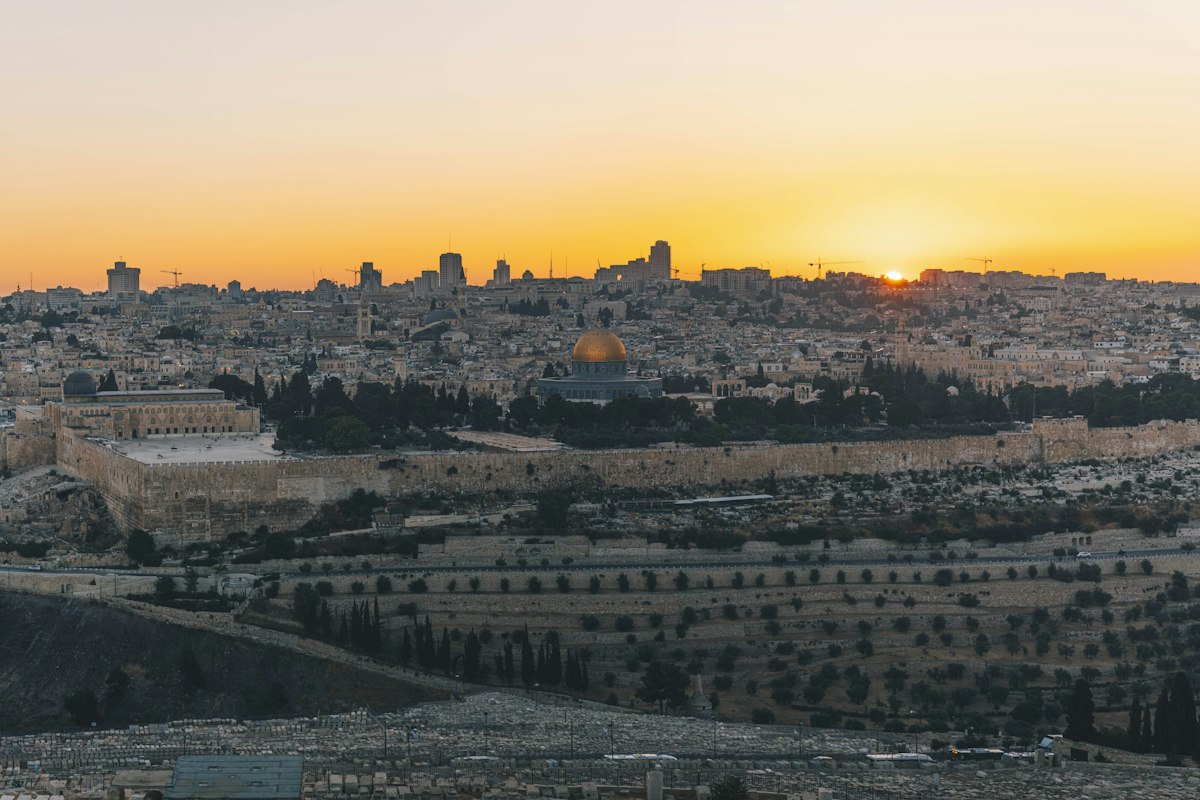
Do you notice that for years Gaza, Palestine, Jerusalem, Al-Aqsa Mosque and Israel's immoderate aggressive insolence have become the routine agenda of our Ramazan months? In the Ramazan months of last year, the year before, the year before that and the year before that, even when there was nothing at all going on, Israel found a pretext and either allowed provocations carried out by fanatical Jews entering Al-Aqsa Mosque with their filthy feet, or imposed restrictions on those going to Al-Aqsa Mosque to pray, harassed them and committed other kinds of provocations, turning the month of Ramazan into a torment for the Palestinians and an occasion of challenge for Muslims all over the world. Indeed, for a few years, because Ramazan coincided with the Jewish Passover, an interesting encounter was also taking place.
In its essence, the month of Ramazan, which teaches us to understand the condition of other people, to share their concerns, and to feel compassion and mercy toward people who are in a worse condition than ourselves, was turning into an entirely different event in the face of the wall of the Jewish Passover. The Jews insist on slaughtering the sacrifice that is part of this festival in Al-Aqsa Mosque, under which the remains of their Holy Temple lie, and while trying to force their way into Al-Aqsa Mosque, entry to which is forbidden to them for this purpose, they were ignoring the beliefs, feelings and situation of Muslims. Thus from the encounter of two religious days, a very interesting thing came about: each one's views and attitudes about other people, the world and peace met in a real setting. Those who wish to compare these two can walk quite a distance from here.
It is very clear that the climate of Ramazan creates a climate of concern for other people. It is also very clear that it serves to understand the condition of the hungry and thus creates a channel of understanding between different income groups. Its literature is often produced, and of course should be. But everyone knows that this is not the purpose of fasting. This is at most a side effect of fasting, one of its benefits. This dimension is the wisdom that even children learning the basic Islamic sciences are the first to become aware of. A whisper that has recently been spread often on social media and blown into ears, as if discovering a great trick, tries to suggest, if the purpose of fasting is to understand the condition of the poor, the question of why the poor fast. Of course it is a question that greatly comforts people who have never had anything to do with fasting in life, who have never bothered about understanding others, sharing their state and having concern for them, and leaves them content and happy in their own selfishness. Let us recite the Surahs Falaq and Nas and move on.
Wherever and in whatever time we live, Ramazan first of all makes us feel the awareness that it is an act of worship that was made obligatory also for those before us and for those who are not in the same place as us. A requirement of the history we live in: the meaning that Ramazan becomes integrated with Jerusalem, with Al-Aqsa Mosque, with Palestine and Gaza. If we have stripped Ramazan of its spirit, if we have neglected the dimension of it that revives the whole Islamic world's consciousness of unity and consciousness of history, all those words are included in Ramazan to reinforce this dimension. In fact, just as Ramazan has its own essence independent of our individual or social wills, it is not possible not to feel that Jerusalem and Al-Aqsa Mosque too are at work in this process with their own essence, by a divine will.
The first war Muslims fought in history against the polytheists took place at Badr on a day of Ramazan. That war is a magnificent war in which people of the same tribe faced one another purely because of their beliefs and principles. One side's justification for the war was to wage the struggle of Tawhid, freedom, justice and human dignity against the idolatrous ignorance, in which people were subjected to oppression and servitude to human beings and torn from their personality and dignity. Waging this struggle required confronting the jahili values, beliefs and orders, and one's own relatives and kin who were tied to their own chains unto death. That is why the heroism of the lions of Badr did not stem merely from their having stood against someone who counted them as his own and was far superior in strength. It lay in being able to stand, when necessary, against their own relatives for the sake of right and truth.
The struggle of Islam, which established the common bond of belief and principle as a truer bond of brotherhood in place of the bonds of blood and genes given to us at birth outside our will. The struggle of a community that was earlier enemies of one another and, by God's grace and generosity, was made brothers to one another. The most beautiful time for this war could again only be the time of Ramazan, which throughout history has made all people contemporaries of one another around this belief.
Does not the way Ramazan is welcomed and lived in Gaza, which for five and a half months has been turned into ruins under the attacks of occupying Israel, make the lions of Gaza, with their wives and children, contemporaries of the lions of Badr? There is a magnificent heroism even in these lions, who are waging one of the noblest struggles recorded in history against racist, arrogant oppression and tyranny, welcoming Ramazan by lighting lanterns over the ruins and turning that environment into a festive air. Just as Akif says of the Martyrs of Çanakkale: "The lions of Badr were only this glorious", that much.
How beautifully our dear friend Gökhan Özcan has written, seeing in the best way from the place where it needs to be seen. Perhaps even today many people see on those ruins a success, though destructive, of genocidal Israel and the helpless resistance of the Gazans. Yet what should be seen there is that faith, and that faith clothed in flesh and bone, in reality, standing before us like a verse:
"Faith, trial, patience, submission... As we witness what is happening in Gaza, we notice how easily we pronounce these words. For us, sprinkling these words into our sentences has almost no visible price, no cost. When that is so, it seems these heavy words perhaps grow somewhat lighter in our minds. They turn into repetitions said and passed over, losing their content, even into somewhat rote formulas. Gaza, paying the price life by life, reminds us again of the weight of these words, of how they should be grasped, how they should be lived, how they should be carried. In the most striking, the most burning, the most genuine form..."
How well faith suits the Gazan. "May God the Exalted grant us too to live up so well to the 'claims' we make about Him."