
← All articles · Palestine and Israel
Ramadan, Gaza, Islamic unity and the disunity of Muslims
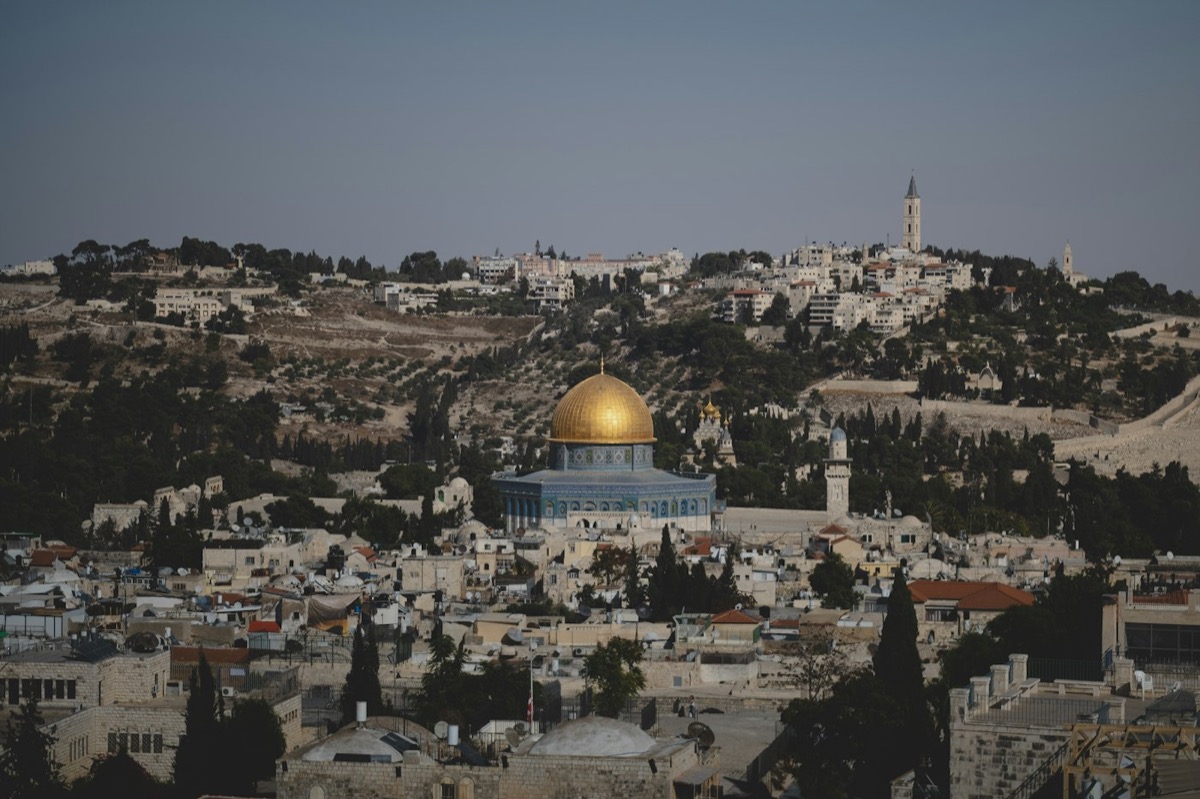
Ramadan, the month in which the Qur'an was revealed and which is therefore also described as the month of the Qur'an, has come knocking at our door once more, to add its own spirit to everything we have lived through over the past eleven months. With its fasting, its pre-dawn meal, its iftar, its tarawih and night prayers, its Qur'an recitations, and of course its zakat al-fitr, its charitable spending and its zakat, Ramadan is the most intense period in which Muslims all over the world live a very similar experience, one that makes them feel they are people of the same world.
This is perhaps what those who today regard Islamic unity as an empty dream or an impossible policy fail to see. Let them focus as much as they like, in their political analyses, on the diversity of Muslims, on the national organizations of today's world, on the strength of the factors that divide; a single month of Ramadan, in all its splendor, with its acts of worship, its ritual and its timing, brings all Muslims into one melting pot and reminds them that they are a single ummah.
Do not dismiss this simply as a spiritual panegyric to the month of Ramadan. From whatever angle you look at its sociological functions, you will see this world-building, unifying and encompassing side of Ramadan. The symbolic ritual processes, the shared symbols and the nationalist formal education processes that bring about Benedict Anderson's famous Imagined Communities ultimately manage, with difficulty, to form national communities at the local level. A history has to be forcibly written and attributed to these communities, and this displays a looseness and weakness that can easily be deconstructed within a short time. Most of the claimed historical origins are invented, and it is very hard for them to withstand even the first attack. Moreover, it is almost impossible for these communities to sustain their togetherness on a global or universal scale.
Yet even now, without the support of states or political organizations, Ramadan has for 1450 years been making believers all over the world acquainted with one another as inhabitants of a single world, drawing them closer to one another and connecting them in a framework of mercy and friendship. States, sultanates, emirates, even civilizations, cultures and differing customs come and go, but the principles of the world of the month of Ramadan stand firm and upright. Precisely what the verse on fasting says is being realized: "Fasting has been prescribed for you as it was prescribed for those before you." Thus fasting, which binds all people to one another within the present globe, also performs the function of binding all people to one another from the past to the present.
Today fasting presents itself as one of the most important indicators of the vitality of an Islamic world, in spite of all the negative developments and the lack of political unity. It is impossible for the people who belong to this world not to feel what it costs them today to lack a political body. When I spoke of the traumas caused by this lack, or by the abolition itself, on the occasion of the hundredth anniversary of the abolition of the caliphate, certain people showed the reactions that were to be expected. They tried to prove to me that this trauma, or this sense of lack, is empty. In fact, the only thing they proved is that they themselves do not live in a world that belongs to Muslims. How can we expect someone who does not live in the world of Muslims to feel this trauma?
When we say that Muslims today, being headless and unable to form a political unity, cannot make their numerical multitude of 2 billion into a significant deterrent force, we are of course speaking on behalf of Muslims. Which Muslim is not saddened and disturbed that there is no power to resist the genocide that the paltry Israeli terrorist organization is carrying on in Gaza, ignoring and humiliating all of these 2 billion Muslims?
At the Islamophobia conference in Baku, and in fact at other conferences on the same theme, the subject we always end up stumbling over is not so much the Islamophobic attitudes, stances and policies of non-Muslims as the Islamophobia of those we know as Muslims. Muslim rulers and elites who meet the religious freedoms, desires, demands and very existence of Muslims as if they were a stranger, even a hostile stranger, are the most important cause of Islamophobia. Unfortunately, because they are within Muslim society when seen from the outside, these politicians and cultural elites, who are also counted as Muslims, make non-Muslim societies adopt distorted perceptions of Islam in a more convincing way. Today in the world, the worst production of perceptions about Islam is carried out by the politicians of Islamic countries, and the elites who cling to them, who compete to portray their own countries' Islamist opponents in a bad light to the world. The most important source of nourishment for Western Islamophobic discourse is likewise the distorted reports these people put forward about their own Islamist opponents.
Let us not forget that the greatest support for this Zionist genocide against Gaza, which has already been subjected for five and a half months, under bombs, to a de facto famine, is, besides the unlimited support of the United States, the unlimited non-reaction of the leaders of the Arab countries. Yet there are also very serious signs that the leaders' stance is not limited to non-reaction, and that on the contrary they support these genocides.
Ramadan certainly has a side that continually nourishes a sense and consciousness of an Islamic world. But it certainly does not have the function of completely eliminating the enemies, the hypocritical munafiqs, and those in heedlessness and misguidance within this world. On the contrary, it also has the side that brings them out into the open, thereby completing the cycle of testing.