
← All articles · Palestine and Israel
Awareness questions for those seeking to govern the city
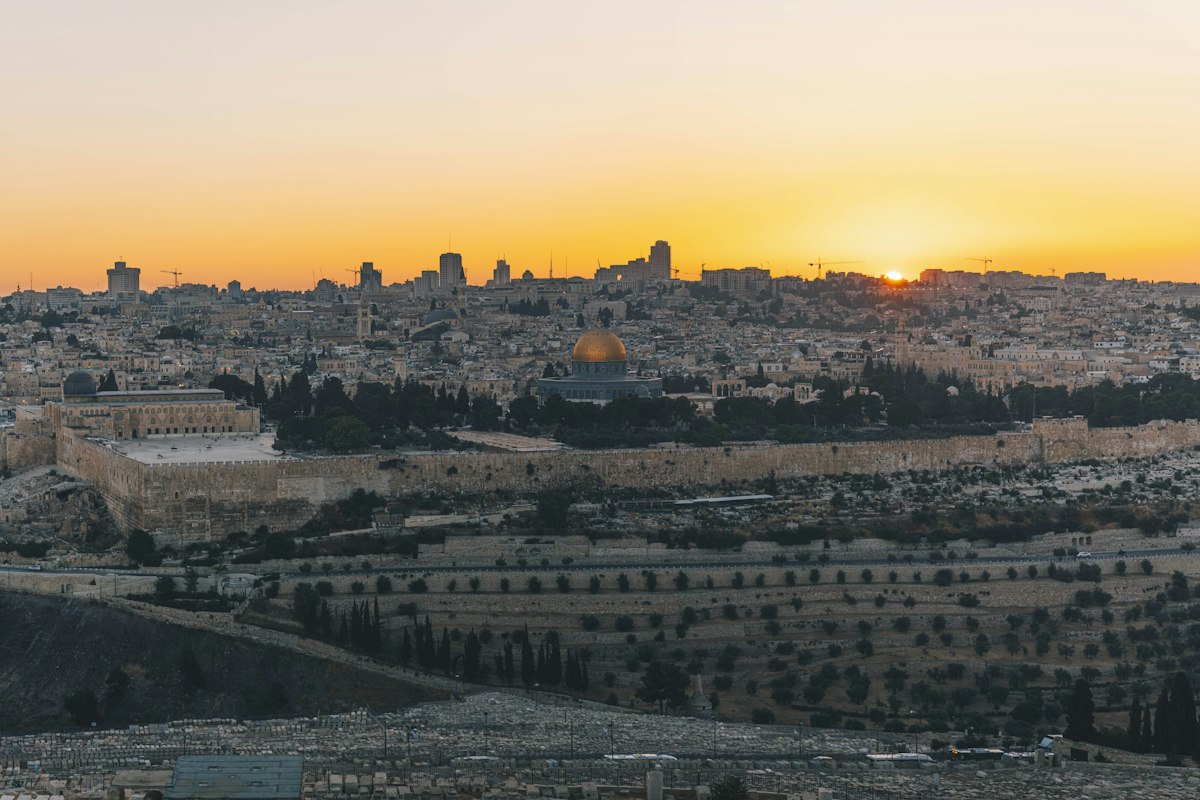
The elections we are heading toward, on by whom and how our cities will be governed, are taking place in the shadow of events in which we are being tested on a global scale, tested at both global and national scale by the very fundamental questions that bring cities into being. For example, will the genocide to which Gaza, the world's only free city, is subjected leave room for cities to emerge among us in which people can live freely? How can cities that protect and shield those who savagely murdered the bearer of glad tidings and warning who came to them prevent disasters that will touch not only the brainless within them? What kind of disaster are cities that cannot tolerate those weaker than themselves, that chase away those trying to survive by taking shelter in the shade of the comfort the city enjoys, preparing for all of us? Do all these questions have a place on the agenda of those who aspire to govern these cities today? I wonder whether they are aware of what kind of responsibility they are taking on with the duties they aspire to. That is the whole matter.
I am tempted to say that none of those who have founded great civilizations throughout history set out on the road to found a great civilization. I say I am tempted to say, because ending the sentence with a categorical judgment would be a great generalization, and a generalization that can hardly be falsified, or even tested.
For this reason it is in fact scarcely even possible to examine the thoughts, ways of looking at life, and perspectives on the future of the first founders of all the great civilizations. Because we do not have enough information and data about those very "first people." Nevertheless, we can say that the intentions and future perspectives of those who founded the civilizations we know were not this.
Both good and evil have a universal validity. If you have left the world a work that requires you to be remembered, then the choices you made about good and evil, together with the works you produced, shine centuries later toward today as brilliant ideas and actions. As if you had seen today, your voice reaches the present from the depths of history. Just as in the style of this article, the tense of time is withdrawn, people who lived thousands of years apart become contemporaries and meet one another without recognizing any historical obstacle.
Civilizations are of course greatly influenced by the intentions of the people who first founded them, by their ways of looking at life, and especially by the small principles and the quality of behavior reflected in everyday relations and in relations between people.
How do you see other people? Where do you see yourself within this network of relations, or cosmos?
What is God's influence, His role, upon you and upon other people? Do you have a belief in the hereafter, in which you will one day be called to account?
If you do, how does this belief reflect on your behavior, on your relations with other people, with nature, with your surroundings? Will the nature and quality of all these beliefs also have an effect on your city life?
The city is the place where you feel, in the most complex, most detailed, and most powerful way, that you are not alone in this world and that you have a responsibility toward other people. To put it more accurately, the city is the place where you are tested most frequently and most subtly by the existence of others and by your responsibility toward others.
What does the other mean to us? Who is the other? If the other is not from our tribe, our clan, our homeland, our religion, our sect, our party, what is our responsibility toward him?
The city is not always made up of people like us, that is, of people like ourselves. Places formed merely by people "like us" coming together are not called a city. In the Middle Ages there were those who sought precisely this kind of city. A sterile "City of God" where only people of a certain religion and a certain race could live was designed as a model of the ideal city and was also put into practice. The modern city, even if one wanted it, does not allow such closedness, but cities differ according to how they place difference within the city.
At precisely this point, how the "foreigner," the immigrant, who is given a place in the city is treated, and what organic role he is given within the bodily integrity of the city, is a separate test that also reveals the quality of civilization. Today our cities are going through an intense examination with precisely those immigrants, and the quality we are displaying is not at all promising.
The quality of civilizations is tested precisely in this division of labor. In the relationship with the other, in the other's place within the bodily integrity of the city, in what kind of body politics differences are answered with...
The other is separate from you not only ethnically but especially economically. The spatial separation of people who are differentiated by level of material income and level of wealth, and their relations with one another. Today, for example, our cities have turned into "economic ghettos" in which separate worlds that have no contact with one another at all have settled. Which worldview is this a reflection of?
If we have the indifference to sleep full while our neighbor is hungry, then even if we think we have a belief in the hereafter, in fact we do not. Because belief in the hereafter is not merely a simple game of opinion. Belief in the hereafter is an effective state of anxiety that we will be called to account for everything we do, even for everything we could have done but did not. It is a state of concern that leaves no room for the postponement of our responsibility toward others, precisely for this reason. We are responsible toward our neighbor, and this responsibility of ours determines all our behavior, our local and general politics.
We do not sleep full while our neighbor is hungry, thank God. Because we have no poor neighbor at all. And that is the problem. We have arranged our body politics concerning the city in such a way that, by living in gated communities, neighborhoods, or quarters where there is not a single poor person among our neighbors even forty buildings away, we get past that responsibility in an instant.
Today's city world is now given this way. There is no other alternative for newly born children, who will rebuild their lives from scratch and who will establish and live all the foundations of ethics from here onward. How will they know who their neighbor is? Because he has no hungry neighbor, will he consider himself exempt from this responsibility? If there is no hungry, destitute, helpless person among his own neighbors, will he also be exempt from the hunger and problems lived in other districts?
In a city structure where the poor and the rich cannot be neighbors to one another, will city management have a mission of working out and activating people's responsibilities toward one another?
The city is a place where a person can see himself, become aware of himself, and, if he wishes, develop himself further, or, if he wishes, deepen all his illnesses further. We can look at ourselves from that angle as well.