
← All articles · Palestine and Israel
Diyarbakır, along the road Khalid ibn al-Walid went and showed
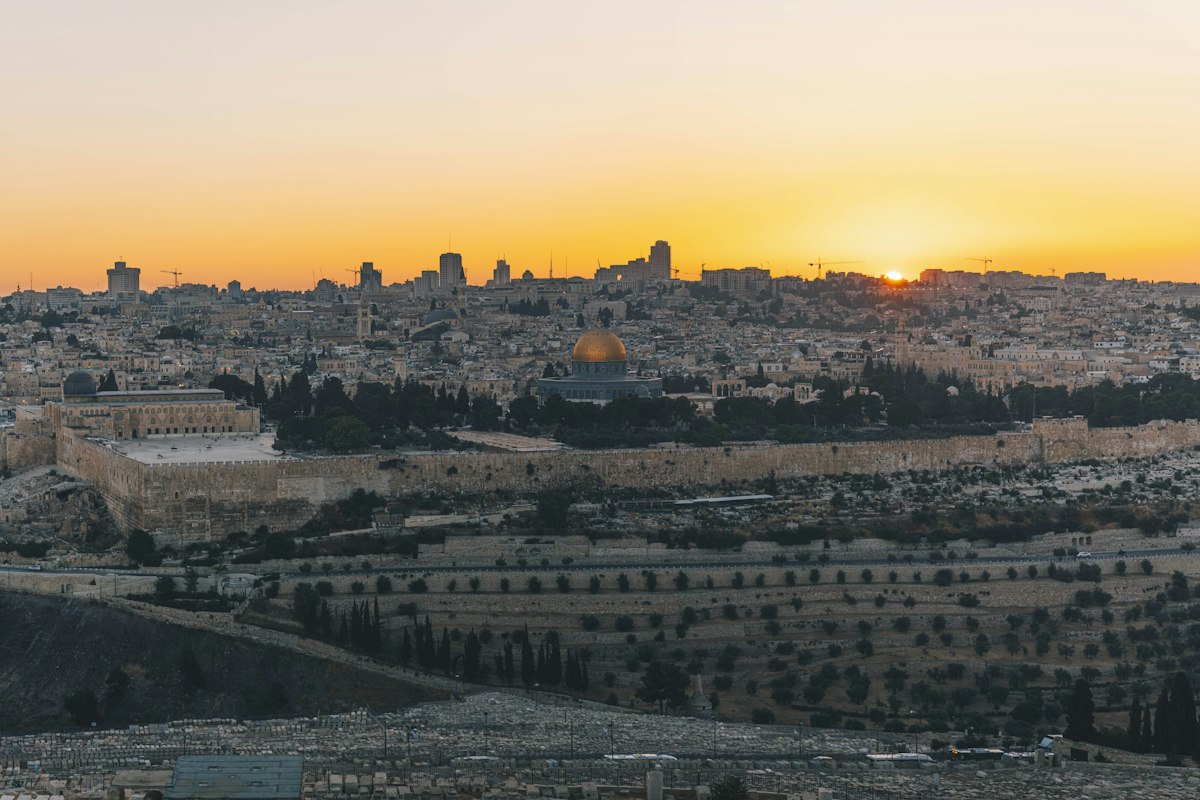
We are in Diyarbakır to talk about the new sociology with young people, on the horizon of Gaza and the Al-Aqsa Flood. At the camp organized by the Ministry of Youth and Sports, we are experiencing the bliss of witnessing how sensitive the young people are about Gaza.
Since the young people have come to Diyarbakır because of the camp, they inevitably become acquainted with a different face and history of Diyarbakır through Khalid ibn al-Walid, who conquered the city, and the martyred companions who lie here.
In fact, this is the first aspect that anyone coming to Diyarbakır should see of this Islamic city. Diyarbakır is a city that was honored with Islam as early as 639 CE, that is, 432 years before Manzikert. This is a truth that those who are trying to write a different history for the city today are trying to remove from view. In the city's walls lie the largest number of companions' remains after Mecca and Medina. Anatolia's beginning to become an Islamic homeland began from this date through the gate of Diyarbakır, and today this gate is again being used in the attempt to remove it from being an Islamic land. Moreover, they are trying to make the grandchildren of the Kurd Saladin Ayyubi, whose name is identified with Jerusalem and who conquered Jerusalem by re-establishing Islamic unity against the Crusaders, do this. For the Zionist project of Israel, which is committing genocide in Gaza, for the Zionist structure to be established from the Nile to the Euphrates, they are trying to prepare the Kurds as a servant population. And the poor young Kurds, in the name of "claiming their identity," are rushing to this task as volunteers to the death.
In this rush they are also assigning Diyarbakır a special role. Yet when one goes to the essence of Diyarbakır, the first thing to be seen is that it is the gate of Islam, and the first person to be seen is Khalid ibn al-Walid.
It is truly a great coincidence. When you get to know Khalid ibn al-Walid, of course you do not remain at merely his quality of being the conqueror of Diyarbakır and thereby of Anatolia. Nor do you remain at knowing all his conquests as a series of stories that are truly hard to believe. Indeed, the number of battles he took part in as commander after becoming a Muslim alone is recorded as 62. Each has a separate story, a separate plan, execution, and experience. He sets out from Medina, now in Damascus, now in Iraq, now around the Gulf, now east of the Euphrates, in Diyarbakır, and other places. First for three years under orders coming from the Prophet himself, then under instructions from Abu Bakr and Umar in the post of commander-in-chief, he rushes from campaign to campaign and wins all the battles he enters. It may be said that in no period of history has any administration had such a rapid expansion that was also lasting where it took place. In every place conquered by Khalid ibn al-Walid, all the rules of Islam and the aims of city and civilization were afterward implemented in a lasting way, and all those lands still stand today as Islamic lands.
What requires us to remember Khalid ibn al-Walid is, in my view, not these commands and his heroics in war. He is generally remembered for this aspect, yet his truly greater heroism lies in his struggle with his own self (nafs).
Before everything else there is a magnificent, epic heroism in his becoming a Muslim. Before becoming a Muslim, he was among the hawks and the vanguard of Qurayshi hostility toward the Prophet. He was the person who put forward the most hawkish views in every kind of hostility to be waged against the Muslims and who actually took part in all of them. He brought about the Muslims' defeat at Uhud, and thereby became a hero of the Quraysh and one of its prominent, favored leaders.
On the other hand, in the Noble Qur'an there is such a surah about his father al-Walid ibn al-Mughira, of whom he was very proud and who had brought him fame and honor among the Arabs, that it is an irreparable reason that should have required him to hate Islam and the Muslims for life. As long as that surah stands there, the Muslims will read it and will think ill and speak ill of his father.
Despite all this, his own brother had become a Muslim long before him, falling, in his view, into great heedlessness and error. But at precisely this point, Khalid, at the time when he was strongest, most esteemed in the eyes of the Quraysh, and the Quraysh did not yet appear defeated, through the questioning he undertook, witnessed the truth of Islam and decided to become a Muslim. In my view, this is in itself a dimension that makes Khalid ibn al-Walid an even greater hero than the battles he entered. To open one's ear to a call that goes against one's own family, one's traditions, even one's own position, and to be able to respond to it.
But Khalid's heroism does not end here. In my view, another heroism no less than this one is that he was able to give up at once, on an instruction from Umar, the natural authority he had built among the Muslims by winning all 62 battles he commanded, and that he continued his duty as an ordinary soldier in the army. Yet because of his unparalleled successes in the battles he commanded he had accumulated incredible power. By nature, no soldier who has won so many battles gives up so easily the natural authority he has acquired, the power he holds. It is such a picture that an outside observer would find it very natural that, when the decision of dismissal came, Khalid rebelled, saying "is this to be done to me too?" In his position, many people, with so much power, skill, and fighting ability, would have chosen no other path than rebelling in the face of such an order.
He, however, was angry at Abu Ubayda, who was late in conveying the order (which arrived during the Battle of Yarmouk, and was withheld to avoid causing confusion). One known reason for Umar's decision of dismissal was precisely to eliminate the danger for the Muslims of a perception forming, because of the many battles he had won, that "no battle is won without Khalid." But there are also some accusations against Khalid in the decision, and in the face of the accusations attributed to him, if he had wished, Khalid could have chosen the path of anger and rebellion and dragged the Muslims into a much earlier fragmentation.
Indeed, someone who reads Khalid's life story could easily be tempted to rebel, saying "is this to be done to Khalid too?" He, instead of doing this, immediately handed the post over to Abu Ubayda, who had the same humility and magnanimity, and continued his duty under his command as if nothing had happened. Without saying "is there no one else to be spent but me?" he continued his service in the Islamic army as an ordinary soldier.
Among us, unfortunately, the great number of people who, having lived for years being promoted from one post to another, immediately switch sides because their time in a post has ended seems to form a norm.
Khalid ibn al-Walid, the first conqueror of Diyarbakır and in fact of all Anatolia, shows us the way like a star. While that star stands there, what excuse can those who are lost on these roads have?