
← All articles · Palestine and Israel
Parliamentary duty and the Palestinian question in a new world
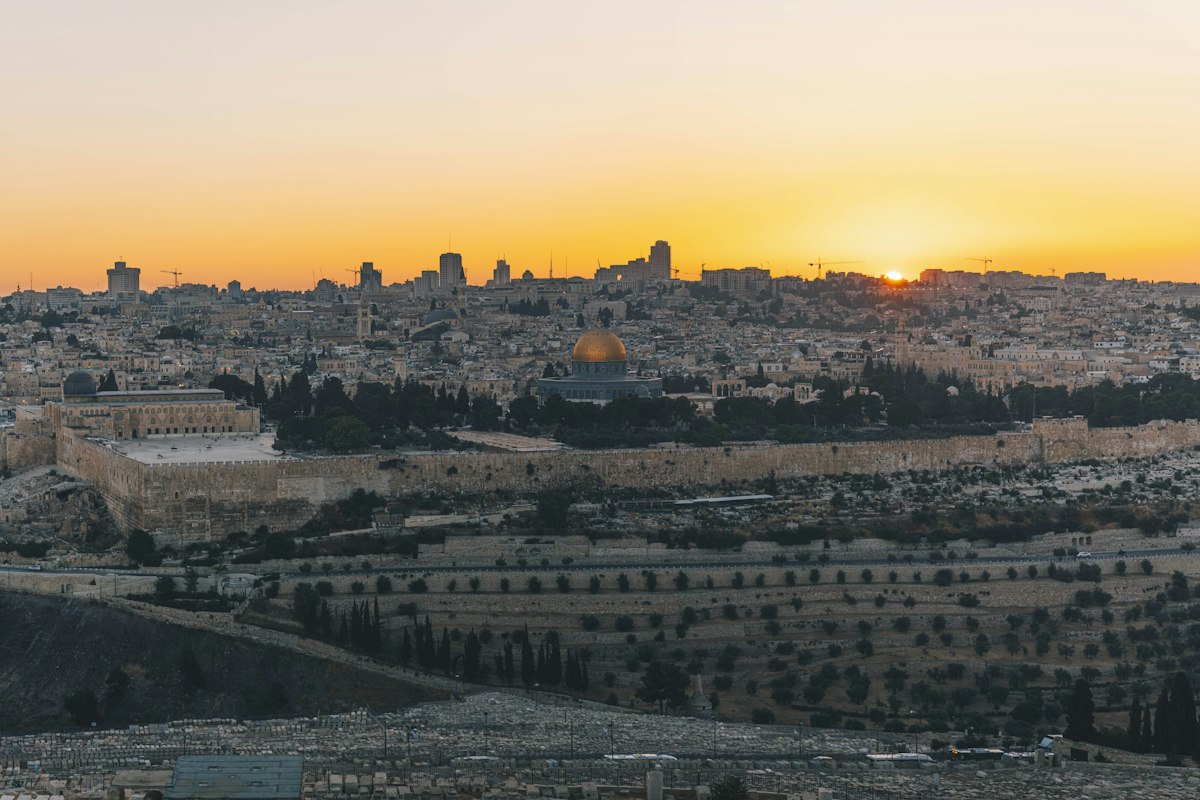
Al-Aqsa Mosque has a mission throughout history of calling Muslims to act as one body. We have touched on this mission often before. The goal of liberating Jerusalem from Crusader occupation brought forth emblematic names of Islamic history such as Nureddin Zengi and Saladin Ayyubi, and their struggle also showed that liberation is impossible without unity. Jerusalem was the most important stop on Yavuz Sultan Selim's road to realizing the world Islamic Union under the roof of the Ottoman Caliphate. Indeed, the collapse of that roof, which stood for 400 years, also came about through the renewed Crusader-Zionist occupation of Jerusalem.
Jerusalem is the keystone of the political unity and structures of the world's Muslims. When that stone was pulled out at the end of the First World War, the fall of the Ottoman state, the structure of the Islamic Union, became inevitable. It is no coincidence that from that day to this, in their search to re-establish their own unity, the world's Muslims keep circling back to gather around Jerusalem. After the abolition of the caliphate, the first attempt at an Islamic Union again came onto the agenda, in 1969, on the occasion of the defense of Jerusalem. The initiative of King Faisal of Saudi Arabia was inviting Muslims to a new formation in the absence of the caliphate.
Even though it did not fully take its place, the Organisation of Islamic Cooperation fulfilled an important function by constantly keeping alive the idea of the Islamic world and the Islamic Union. But over time the function and mission of this Organisation became defunct because of the different calculations of the Islamic countries, calculations that do not make Islam a priority concern among their spheres of power and their priorities. This savage, genocidal aggression that Israel is waging against Gaza shows in itself the meaninglessness and uselessness of the Organisation of Islamic Cooperation. Yet if the member countries of this organization had remained faithful, even by a thousand-fold small measure, to the organization's founding purpose and meaning, it would not be possible for Israel even to imagine this insolence toward Palestine, and there would be neither a US nor a European country that stood behind this insolence and these acts of aggression.
If we said "an organization unaware of its own power," we would again be making the matter somewhat innocent; unfortunately the matter is graver still: an Organisation of Islamic Cooperation whose decision and executive bodies are held by members who do not care in the slightest about Islam and Muslims. In fact this truth is a manifestation of the open, unbridgeable gap between rulers and peoples. A significant portion of the member states care not about their own Muslim peoples but about their own governments, which they have cobbled together through alliances and agreements with forces hostile to Islam. And these alliances and agreements require them to serve not their peoples but the enemies of the Muslims.
In fact this truth, which amounts to stating the obvious, has essentially increased the search for alternative political unity among Muslims who possess an ummah consciousness. I mentioned earlier the efforts of the Justice and Democracy Forum, formed by democratic political parties in Islamic countries.
Before that, with the World Islamic Parliamentarians Forum founded in the 2010s, there is a very meaningful movement pressing for Islamic Union from the grassroots, and the more meaningful side of the matter is that this movement too has been revived on the occasion of Jerusalem-Palestine.
The World Islamic Parliamentarians Forum, which held its previous meeting in 2018, held its general assembly over the past three days under the theme "Parliamentary Duty and the Palestinian Issue in a New World." As in previous meetings, room was given to intellectual discussions, as far as possible, on how an Islamic political theory could be developed in light of the Islamic political practices in each country.
The Forum's previous meetings had been held by the peoples and countries of the Arab and Islamic nation in very difficult conditions, particularly following revolutions and counter-revolutions and the subsequent restriction of freedoms and the decline of human rights and the entry of some into the country. The unlawful and aggressive jailing of parliamentarians in some countries causes the field of work of Muslim parliamentarians in general to shrink. Among the priorities of the forum meetings held under these conditions, and forming the focus of the discussion, were these topics: the new international order, dialogue with others, (especially) developments in the Palestinian cause, the reality of the Islamic political project and the solutions it offers to the nation, parliamentary work, realities and expectations, the fight against corruption, managing political conflict, parliamentary work, parliamentary oversight and the development of public relations. Thus, through the sharing of experiences around certain topics among parliamentarians in all Islamic countries, it becomes possible to develop a shared sensitivity and understanding.
At this meeting too, through the speeches of Sami al-Arian, Wadah Khanfar, Venis al-Mebruk, Nureddin al-Hadimi, Wasfi Ashur Abu Zeid, Nasser al-Mani, Isam Abdulshafi and many other scholars and intellectuals, wide-ranging tours of the horizon were made on constants and possibilities of renewal in Islamic politics in the light of fundamental objectives (the fiqh of maqasid).
As the title also makes clear, all the sessions took place in awareness that the Al-Aqsa Flood has opened a new horizon not only for Palestine but for the entire Islamic world, indeed for the whole world. Khalid Meshaal, one of Hamas's political leaders, who joined the meeting by teleconference, in a speech lasting nearly an hour, explained in particular the military, political, international, economic, media and consciousness-level results of the Al-Aqsa Flood. Explaining with examples that the Qassam Brigades had inflicted the greatest rout in the occupying state's history and that in its attacks, begun against this and sustained without pause for 50 days, it had not reached any of its objectives, Meshaal also showed that the Al-Aqsa Flood cannot be understood within a rationalist political horizon.
Meshaal explained that the Al-Aqsa Flood is not a cause but a consequence, but that of course behind this consequence there is an Islamic political horizon and will. Even though it has unfortunately come to a stage where even Muslims looking from the outside have rendered the Palestinian issue utterly needless and meaningless, the people of Gaza, through the initiative taken by those in Gaza or the West Bank who actually live the Palestinian issue, showed what the right called "self-determination" truly corresponds to. In fact the calculation was simple: had the Algerians, the Afghans and the Vietnamese listened to their comfortable friends who demanded that they surrender to that invincible great power, neither Algeria nor Afghanistan nor Vietnam could ever have been freed from colonialism and occupation.
The Al-Aqsa Flood brought down not only the iron domes erected against the Palestinians but those erected against politics, the media and international balances all over the world. But more importantly, it collapsed the iron dome that Zionism had placed over minds and wills. People learned from the people of Gaza that freedom and honor are a matter of will, a matter of will that begins from within the human being.
Meshaal asked how the Western countries' leaders rushed to support the Zionist occupation, yet why the Arab and Islamic nation has not united around Palestine and the resistance. It is in fact a question whose answer he knows better himself, but it is like a desire that will realize itself the more it is asked. And the flood that the resistance is unleashing today has set out on the way to realizing this desire.