
← All articles · Palestine and Israel
The historic role of Jerusalem and Palestine repeats itself
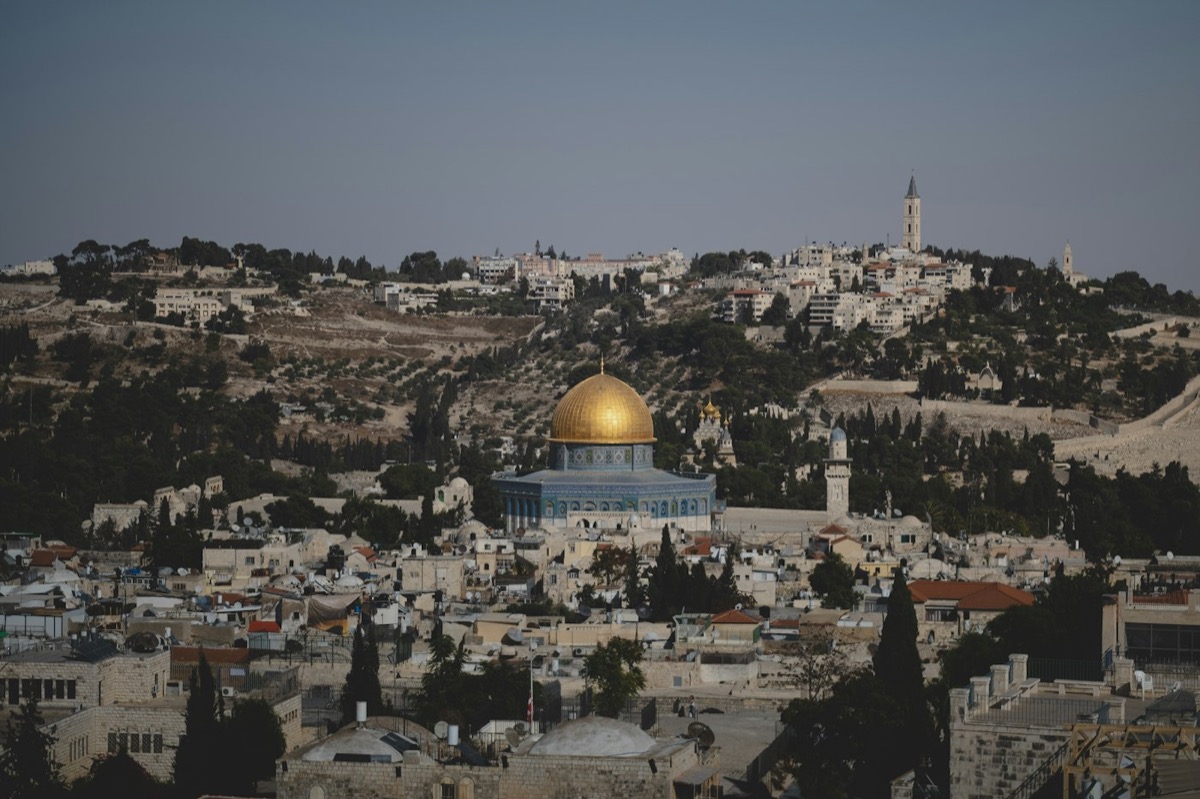
Although the Al-Aqsa Flood operation that began on October 7 is military in its essence and nature, it is a flood whose results and effects have not remained at the military level alone. Earlier, attributing it to Khalid Meshaal, we said that this flood has political, economic, international-balance and media dimensions. In fact another very important dimension of it is that it has revived the role the Jerusalem issue played in history in the process of the Islamic World truly becoming a "World" worthy of its name.
Although it is on our agenda today as the Palestine-Gaza issue, the Jerusalem issue has throughout history always been a cause that gathered Muslims who had fallen into complete disarray and reminded them that they were one ummah, one nation, one body. As is known, during the period of nearly a hundred years when it was under Crusader occupation, the Muslim world was politically fragmented. Political unity was not only divided between the Abbasid and Fatimid caliphs; all the Muslim communities, among clans, tribes and principalities, were consuming and wearing one another down in a race to seize power and territory. The Crusaders, who found ways to infiltrate among these competing powers, increased their influence within the Islamic world more with each passing day and deepened their occupation.
Although Jerusalem was an important matter for all the principalities, the greatest rival of those who could take an effective step toward liberating it from the Crusaders' occupation was not the Crusaders but the other Muslim principalities that also believed in the Jerusalem cause. The lords who came closer to liberating Jerusalem were more entangled by the tripping-up of the others, because no one wanted to cede to another the prestige and influence that liberating Jerusalem would bring. Instead of the maturity to think of the matter as a solidary race in good deeds, the ambition displayed to avoid ceding this prestige to another formed the Crusaders' greatest support.
The new but equally ancient Islamic style of politics begun by Nureddin Zengi made it felt that in the power race he truly had no aim other than liberating Jerusalem, and called the principalities to stay away from their endless and wearing rivalries with one another. He himself, making sacrifices when necessary, tried to keep away from every dispute and conflict that would push the Jerusalem issue to a secondary level. Jerusalem could not be liberated from occupation without the unity of all Muslims. The liberation of Jerusalem in fact thus meant the re-establishment of Muslim unity, and thereby the re-founding of the Muslim political body.
There could be no liberation without unity, Jerusalem could not be liberated; hence, without Jerusalem being liberated, unity could not be achieved either.
Zengi was not granted it himself, but he spent his life on this path. Then Saladin Ayyubi, who was raised in his political and spiritual school, followed the same style of politics. By showing very well that he had no inclination toward the lords' helpless and useless struggles for economic or political power, and that his real concern was Jerusalem, he united all the lords around this lofty aim. He achieved the Islamic Union and Jerusalem was conquered anew.
These days it is fitting that we think and talk as much as we can about the relationship between Saladin Ayyubi's liberation of Jerusalem from Crusader occupation and his re-establishment of the Islamic Union. There are many lessons to draw.
Let us not forget that Yavuz Sultan Selim, again in that period, counted Jerusalem among the most important stops on the way to achieving the Islamic Union. Jerusalem was not under occupation at that time, but the Islamic union was again under great threat. The most important event that places Yavuz in an exceptional position in Islamic history is that he united Muslims under a single political roof. Among the sacred trusts transferred to the Ottomans on this path, Jerusalem stood first.
The fall of the Ottomans, however, came about not through the abolition of the sultanate or the abolition of the Caliphate, but through the capture of Jerusalem by the British. From that hour on the Islamic Union could no longer hold together. The new plans that the British put into operation there did not consist only of Jerusalem being taken again by the crusaders. They were also the fragmentation of the Islamic union, the creation of unclosable gaps and hatreds among the Muslim peoples, among Arabs, Turks, Kurds and Persians. These were processes that went hand in hand with Jerusalem losing its meaning for all of them. For this nation, whose Jerusalem, their common value, was occupied, the heart-channels that flowed love to one another were becoming blocked. When General Allenby kicked Saladin Ayyubi's tomb and said "Get up, Saladin, the grandson of the crusaders you expelled has come," he knew very well what he was doing.
When Jerusalem was occupied, the occupied Muslim body was again prodded by an attack on Al-Aqsa Mosque. The famous attack of 1969 also led to the formation of the Organisation of Islamic Cooperation. Even if the ummah is fragmented, even if a deadening soil has been spread over it, Jerusalem once again showed its effect of awakening an ummah consciousness across the whole Islamic world. Even Turkey, invited to the Conference in Rabat at that time, could not remain indifferent despite the stubbornness of all the secularist minds in the country, and took part, even if at the level of foreign minister. Thus, for the first time since the First World War, which destroyed the Islamic Union, the idea of an Islamic Union, an Islamic World or an ummah began to come into circulation again in its strongest form. But of course it was not sufficient.
From that day to this, the issue of Palestine, Jerusalem and Al-Aqsa Mosque has continued to be a cause that is always a warning for the world's Muslims and nourishes the idea of the ummah and the idea, ideal and feeling of "One World."
It has become necessary for us to read what we see and live these days within this historical continuity. Even though its final communique is not at all satisfactory, and even contains very disturbing articles and some events, because of the latest events Palestine, Jerusalem, Al-Aqsa Mosque and Gaza are compelling the Organisation of Islamic Cooperation to play its historical role. Even though some of its powerful members are not at all willing to play this role, the attraction of Jerusalem, the spiritual weight of Al-Aqsa Mosque and the epic historical mission that the Palestinians bear cry out to the whole Islamic world the fact that it is an ummah.
Though, even if their crying out were not enough, the arrogant, insolent and oppressive aggression of the Crusader-Zionist alliance facing them, which is bound to touch Muslim zeal, confirms the meaning of Jerusalem.
Amid so much noise, there is probably no power that will wake those who continue to sleep.