
← All articles · Palestine and Israel
"Our Heart Is Gaza" at the Siirt Short Film Festival
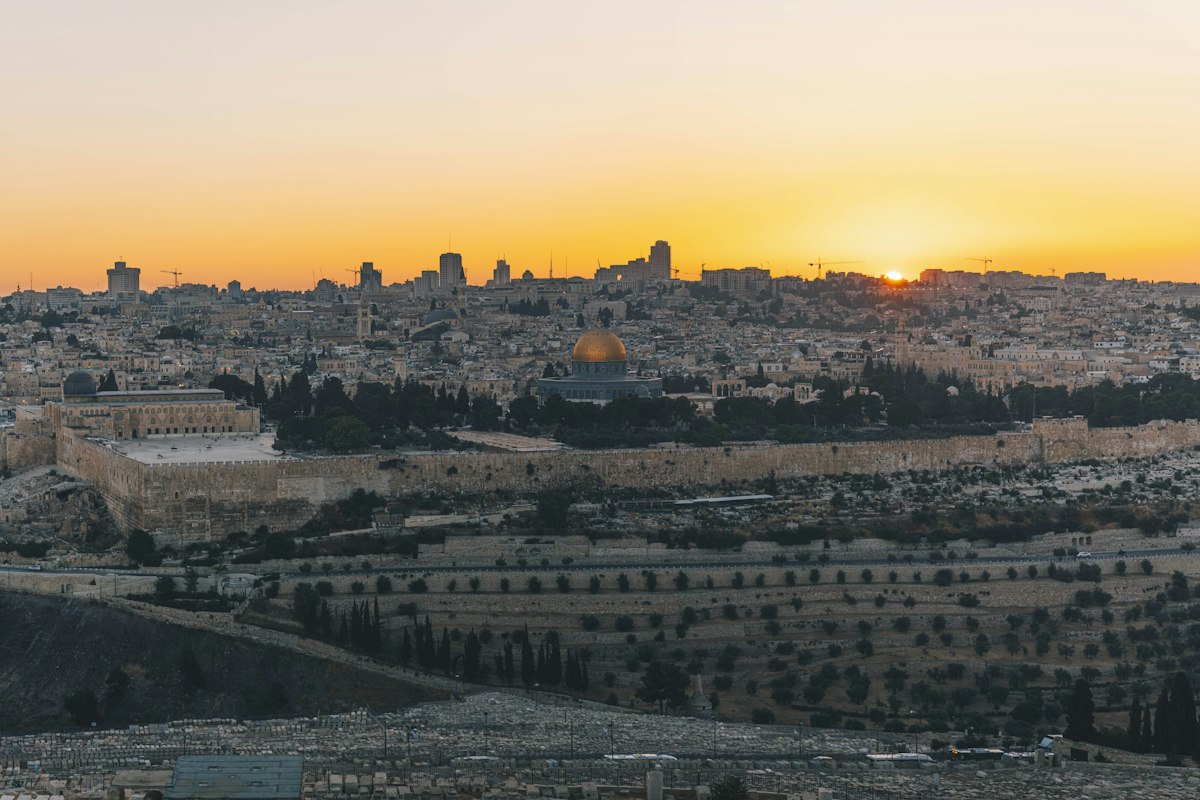
In a programme he took part in, Khaled Meshaal, one of Hamas's political leaders, explained that the Al-Aqsa Flood launched on 7 October against the Zionist occupation force was not limited to the military dimension alone, but had also swept through the social, political, economic and mutual-aid spheres and, above all, the spheres of media and communication, shaking Israel to its roots. He described in full detail how each of these had unfolded, but said that the most important dimension was the one that took place in the field of media, communication and perceptions.
All the perceptions that Israel had built for decades with its armies, paid or unpaid, deployed across the world's media were scattered like carded cotton before the first and subsequent waves of the Al-Aqsa Flood. The Israeli army, said to be invincible, collapsed within a few hours, according to reports in a third of even the time that had been planned for. The intelligence of MOSSAD, without which supposedly "not a leaf stirs", could neither see nor hear the Qassam Brigades as they tore down its impassable walls and poured in, even as they withdrew. The Qassam Brigades, before everyone's eyes, outplayed the intelligence capacity of Israel and the CIA behind it, and buried the MOSSAD-CIA legend in the ground.
The perceptions that Israel had carefully engraved on minds for years, through the language and literature of news agencies, the news itself, all of its propaganda apparatus and especially the craft of cinema, were turned completely upside down from 7 October onwards. In Khaled Meshaal's phrase, the Al-Aqsa Flood swept away the image of Israel that had been fashioned with this propaganda. Let this be said to those who ask why Hamas launched such an attack out of the blue.
Last week the sixth International Short Film Festival, which has been held in Siirt for years, took place. While preparations for the event, which is held every year in full festival spirit, were proceeding at full speed, the Al-Aqsa Flood broke out, and then came the massacres in which Israel displayed all its savagery and cruelty.
Could there be revelry, feasting and a festival in this atmosphere? However you looked at it, a festival included a measure of entertainment. When Baran Mayda, the cinema worker who has been the festival's organiser from the beginning and the president of the Anatolian Association for Culture and Arts Assembly, came to me with the idea of cancelling or postponing the festival, my first reaction was: "why should we cancel, let Israel give up its genocide." From that moment on, the idea of changing this year's festival concept and turning it into an occasion of solidarity with Gaza seemed far more fitting.
After all, Israel has fed its supremacist claims, which today show themselves as a repulsive arrogance, on a victimhood it claimed in its past, and it has done this best through cinema. The Holocaust-themed films that have entered the ranks of Hollywood's most successful classics have formed, and continue to form, the emotional and imagistic infrastructure that feeds Israel's unjust privileges today.
Israel has dazzled people's eyes through cinema, through art. Just as Pharaoh's magicians dazzled the eyes of the people with the illusions they performed. Pharaoh and his magicians are in fact a magnificent metaphor for every ideology of power. This trait that the Noble Qur'an attributes to Pharaoh's magicians is being carried out very widely and effectively, in the case of Israel, through cinema.
Art is normally the way of showing people, in a striking manner and by stirring their emotions as well, a reality that not everyone can see. Yet wherever it enters the service of politics and ideology, it becomes a way of covering up the reality that is self-evident, or of showing it in another way.
If, through films such as Schindler's List, Life Is Beautiful and The Pianist, people in the emotional atmosphere formed around the persecution the Jews suffered in Nazi Germany come to be unable to see the Nakba, Sabra and Shatila, the oppression of settlement and land seizure, the concentration-camp regime that has been in place in Gaza for 17 years and the genocide taking place today, then art there is working only like Pharaoh's magicians. But against Pharaoh's dazzling magicians there is also the staff of Moses, which awakens people. A staff of such a kind that it opens the eyes even of the dazzling magicians.
These days, in order to make what has been happening in Gaza since 7 October more visible, there is no need even for art. As happens only on rare occasions, reality opens eyes by itself in all its striking force, without needing the mediation of art at all, presenting itself and producing the necessary emotional-aesthetic effect. For example, the image of doctors trying to treat a patient on an operating table, in the operating theatre of a hospital whose ceiling had collapsed under bombardment, with even the sheet over the patient turned to dust and dirt. Some of those who shared it added a note: "If all the world's directors came together, they could not design such a scene."
Even so, with these thoughts, the festival committee decided to hold the 6th Short Film Festival stripped of entertainment and wholly dedicated to Gaza. And it turned out very well. Although art could have no claim to reflect the reality we live better than it is, it seems it can expose the art that dazzles the eyes and falsifies reality, and can blow in the direction of the Al-Aqsa Flood.
The opening meeting of the festival, held under the theme "Our Heart Is Gaza", took place in the township of Veysel Karani. Nurdan Albamya İnce's one-woman theatre piece titled "We Must Talk About Palestine" represented the road to 7 October in as striking a manner as possible. Prof. Dr. İhsan Süreyya Sırma gave his talk on Jerusalem, Palestine and Saladin, moving from history to the present day. Throughout the festival, Palestinian, Egyptian and Jordanian film directors and artists met with Siirt University students.
The finale was held at the Selahaddin Eyyübi Imam-Hatip high school in the Kurtalan district. For Professor İhsan this choice could not go unnoticed. At the award ceremony he gave a very emotional speech on the trust that Saladin left to Kurdish youth, and promised to give the students of this school, as a gift, his newly published book "Selahaddin Eyyübi" at the 7th Book Fair to be organised by the Siirt Governorship next month.
Meanwhile, the International Siirt Short Film Festival, which becomes more firmly established with each passing year, received close to 750 entries this year. Around 300 were deemed worthy of the competition, and in the final awards were presented to the directors of the 4 films that placed.
From the festival, an open invitation also went out to all of Türkiye's artists to take the stance that authentic art requires, from the place where Gaza has opened their eyes. Let us pass on this invitation as well.