
← All articles · Palestine and Israel
Why do Ramadan and Passover clash in Jerusalem?
The Ramadan fast, which has been made obligatory upon us just as it was made obligatory upon those before us, thus unites and makes contemporaries of the most ancient people and the people of our time through a shared perception of time that extends into the future as well. At the same time, it connects with one another all the people in our age who live in different geographies. Not only through the fast kept in the same format in all bodies, but also through the feeling of solidarity, mutual understanding and taking one another's troubles to heart that it creates among people.
In Ramadan, the feeling of shedding, for a moment, our own selfhood, our ego, and of caring about other people reaches its peak. In our thoroughly globalized world, this feeling makes us belong to the same world as people in other geographies. With the contribution of the experience of the fast kept, it brings us close to one another despite all distances. It turns our troubles into shared troubles and lightens their burdens, making our destiny and our course a common one.
We host Myanmar, Syria, Iraq, the Kahramanmaraş-Hatay earthquake survivors, Yemen, Somalia, Kashmir and of course Palestine at our tables and in our prayers, and through our charitable spending we become partners in their hardships.
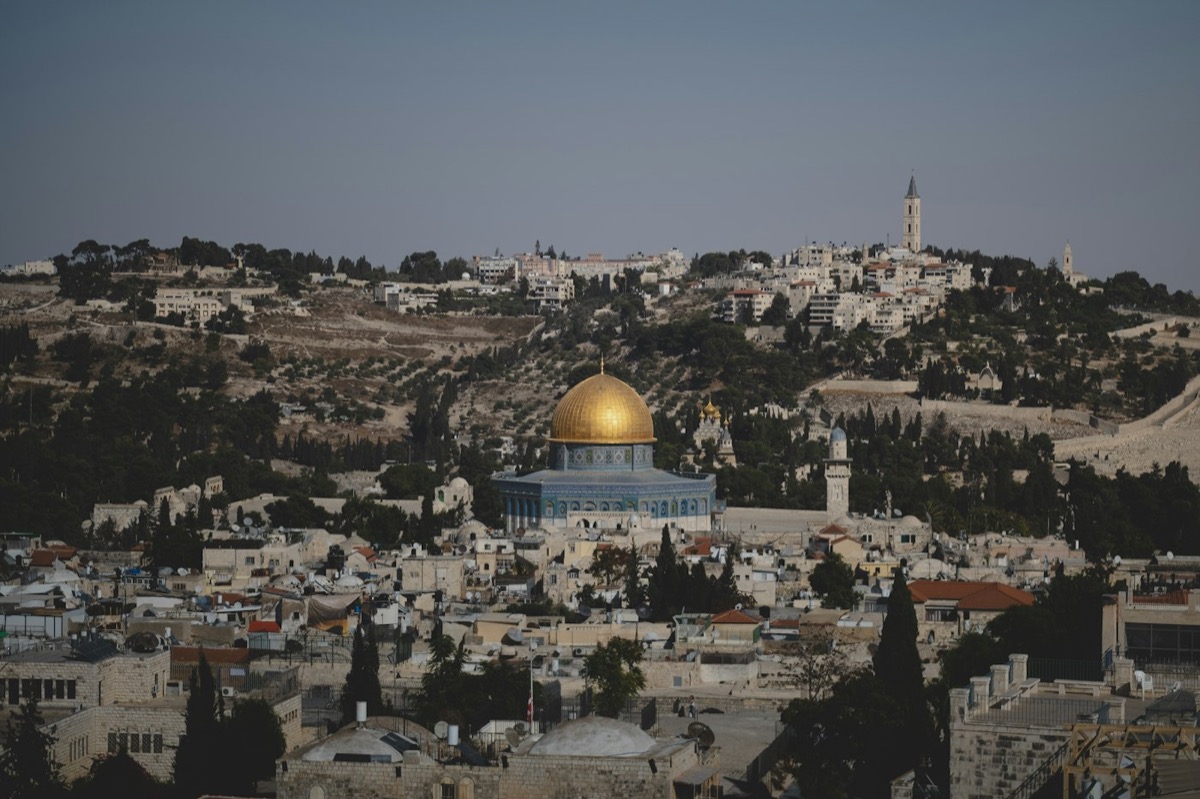
Meanwhile, Israel's attacking Al-Aqsa Mosque and spreading terror under some pretext is almost one of the routines of the month of Ramadan. In fact Israel needs no pretext for this. In past years it attributed a threat to crowds that had gathered in one way or another, and to the density of young people in those crowds, and intervened.
For a time it imposed an age restriction on visits to Al-Aqsa Mosque and prevented the entry of young people below a certain age. A clash arose because of that too, and feelings of struggle, resistance and rancor also contributed to all the spirituality of the month of Ramadan at Al-Aqsa Mosque.
Muslim life does not consist merely of the peaceful environment of a spirituality that meddles in nothing and keeps clear of worldly affairs. There is no Muslim spirituality that has no stand against oppressors, no resistance and no intention, spirit and practice of struggle. The Battle of Badr, too, took place on a day of Ramadan, and our Prophet ordered the Muslims that day to break their fasts and make them up later. That breaking of the fast, the battle, martyrdom and ghazw all belong to the spirituality of Ramadan, to the conception given by the Qur'an revealed in that month.
Israeli attacks on Al-Aqsa Mosque are one of the routines of Ramadan, but in terms of the history of occupation that has passed from the day Israel was founded to today, they are a small exception within the history of Ramadan. Granted, it has no trouble finding a justification for its attacks, but what has been causing the attacks for the last few years is that the month of Ramadan coincides with the days of the Jews' Passover.
Passover, which begins on April 15, lasts 8 days, and some fanatical Jews insist on slaughtering the sacrifice that is a part of this festival at Al-Aqsa Mosque, beneath which lie the remains of their Holy Temples. To do so they need to enter by force Al-Aqsa Mosque, which is forbidden to them. The Israeli government not only does not object in any way to their demands, but accompanies these fanatical Jews with police protection or aggression against the Muslim people who object.
That is, the aggression never comes from the Muslim side. It arises because fanatical Jews insist on slaughtering the Sacrifice, a complementary ritual of their festival, at Al-Aqsa Mosque. Entering into a debate over whether the Jewish religion has such a requirement or not is of course pointless. But we are faced with a mentality that, to celebrate its own festival, demolishes the festival of others, and sees its own sacred time as an occasion for making an attempt on the peace, the sacred and the life of its neighbor. This is in fact the summary of Zionism.
Passover is in fact a festival that expresses the days of the Jews' deliverance from the oppression of Pharaoh. When Moses obtained the charter of freedom for the Children of Israel, they left their homes in haste, before the dough they had kneaded at home had leavened, and set out toward the Red Sea. Passover expresses precisely this state of hasty departure. To symbolize it, in these days Jews do not bake leavened bread in their homes.
Ultimately, that the manner of celebrating a festival day that expresses deliverance from enslavement should have become a symbol of taking away the freedom of other nations is one of the typical contradictions of the Children of Israel. The essence of Zionism is that the celebration of this moment of deliverance, which burdened them with a mission on earth of protecting, safeguarding and upholding virtues for people, and which granted them a historical privilege for this mission, has turned into the denial and opposite of that very mission. Yet that mission required a stand, a sensitivity and a struggle not only for their own freedom, their own honor and dignity but for the freedom and honor of all humanity.
For a few years the month of Ramadan has been coinciding with Passover, and Israel is turning its own aggression almost into a routine of the Muslims' Ramadan fast. In fact, in this way it unwittingly and unwillingly revives the function of the whole of Ramadan of uniting Muslims all over the world in a common trouble and grief, creating among them a feeling of solidarity, selflessness and unity. Thus Ramadan, which is already by its essence, by its ritual wholeness and by its dimension of forming a pattern of mentality and behavior a unifying event, has met another unifying cause, Jerusalem.
That this year in Jerusalem the Jews' Passover and the Muslims' Eid al-Fitr will coincide also inevitably leads to comparisons between the two cultures, the two faiths. The Muslims' festival fulfills a universal mission that is unifying, and gives trust and safety, not only for Muslims but for all people. Muslims do not stand only against oppression directed at Muslims; they stand against every kind of oppression. While they themselves are being freed, they do not demand the enslavement of other people. They do not base their own festival on the sorrow, on the unease of others. On the contrary, the mercy and blessing of the month of Ramadan return to all people as the revival of human virtues.
The terror that Israel has made a routine at Al-Aqsa Mosque on account of an event like Passover tragically exemplifies how blood, pain, tears, occupation and unease can issue from a festival to other people.
The essence of the matter is that Eid al-Fitr and Passover are not against each other but events that complement each other.
But in order to realize this, one must be able to look from the viewpoint of Ramadan. Looking from there, one also sees that Passover has long since leavened and become impure.