
← All articles · Palestine and Israel
Palestine is now a state
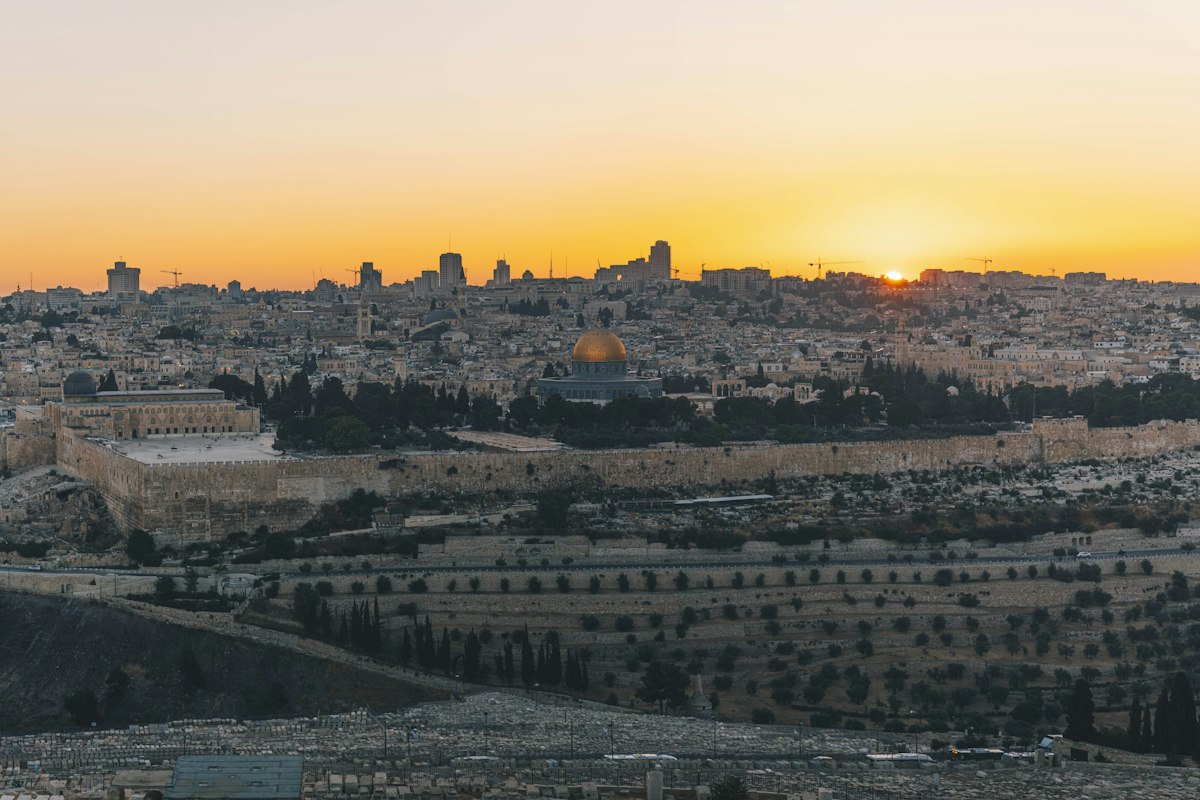
Palestine's recognition at the United Nations General Assembly, with the votes of 138 countries, with the status of "non-member observer state" is an important outcome that requires us to suddenly rethink the power equations in the Middle East.
First of all, it must be noted that Turkey's recent emphasis on the Palestinian cause certainly played a very important part in reaching this outcome. It is known that Turkey and Foreign Minister Ahmet Davutoğlu have been following this development from the beginning. That is why, while showing through his speech at the UN session that he had embraced the matter more than anyone, he was the first person to congratulate Mahmoud Abbas upon the result of the vote.
Second, the US objection to Palestine's recognition as a state, even if only an observer, is simply a result of international politics being blocked by Israel. Otherwise the US must in fact know that, so long as the Palestinian problem remains unsolved, there is no prospect of a peaceful future for itself in the Middle East either. In fact only about a year ago Obama had said that for the Palestinian problem the only way out was a solution in which Israel withdrew to the 1967 borders, stopped new settlements, and Jerusalem became also the capital of Palestine. Even if he was later forced to reinterpret this word in another way as a result of the pressures that followed, Israel too is sure today that the solution plan in the back of Obama's mind is this.
That is why Netanyahu and his circle openly supported Obama's rival Mitt Romney in the US elections, but they could not make him win.
In fact even this should be encouraging enough for both Obama and the Democratic Party. The US is not condemned to Israel, and should not be. Because of its support for Israel it has become the target of endless hatred in the Middle East and the Islamic world. As long as it supports Israel so unconditionally, it will never be possible for the US to win sympathy in the Islamic world.
A third point that must be noted regarding this development is that the demands of Palestine or Israel for a two-state solution are not as clear as is supposed. In fact both in 1947 and in 1967, in the period when Israel was the occupier and victor, two-statehood always stood aside as an option. While the Palestinian side resisted because it knew that accepting two-statehood meant regarding Israel's occupation as legitimate in advance, Israel never went near the idea of a single state either, thinking that a situation in which Palestinians would be counted as equal citizens would run counter to Israel's raison d'être.
In fact, within the de facto situation that formed after a point, such a situation was much better for the Palestinians; after all, thanks to the population advantage, it could soon have become a matter of Israel ceasing to be a Jewish state and turning into a state based on democratic constitutional citizenship. Yet when all the possibilities emerged, it also came out that no solution was satisfactory for Israel. That is why the attitude decided upon appeared to be leaving the situation to drag on without going near any solution, and waiting for the Palestinians to give up and, if possible, abandon their land and leave.
Finally, the fact that, while resolutions in the UN General Assembly come out in favor of Palestine, many resolutions in the Security Council end in exactly the opposite way will be an occasion for the structure of the UN to begin to be questioned more strongly. Turkey, especially with Prime Minister Erdoğan's recent statements, has already begun this questioning. This latest event provides a good example. In a situation where 140 countries decide, what one of 5 countries wants is what happens. It is obvious that this is not at all just.
Truly, the constitutive situation on which the UN rests is based on the post-World War II conditions of division. The victorious states of the war, rather than establishing a democratic and just UN order, built a world order in which they imposed their privileges. This order has no priority such as justice or humanity, but today's conditions are in a very different place from the moment that order was established. Germany and Japan, the defeated sides of the war, now have an influence that can no longer be ignored. Moreover, the Islamic world has, from this time on, a weight in the world economy and politics that can no longer be ignored. The countries that were the war's defeated or were never even mentioned now demand a more just order. An order in which a country that recognizes no law, principle or humanity, such as Israel, cannot continue its oppression so brazenly because of the patronage of a UN Security Council member...
Palestine's recognition by 138 countries despite this patronage is an important step taken on this path. This step means the official certification that Israel is now present as an occupier on land belonging to a state. It is a step, not one to be underestimated; we wish for its continuation.