
← All articles · Remembrance and tribute
Bearing witness to Rasim Özdenören's witnessing
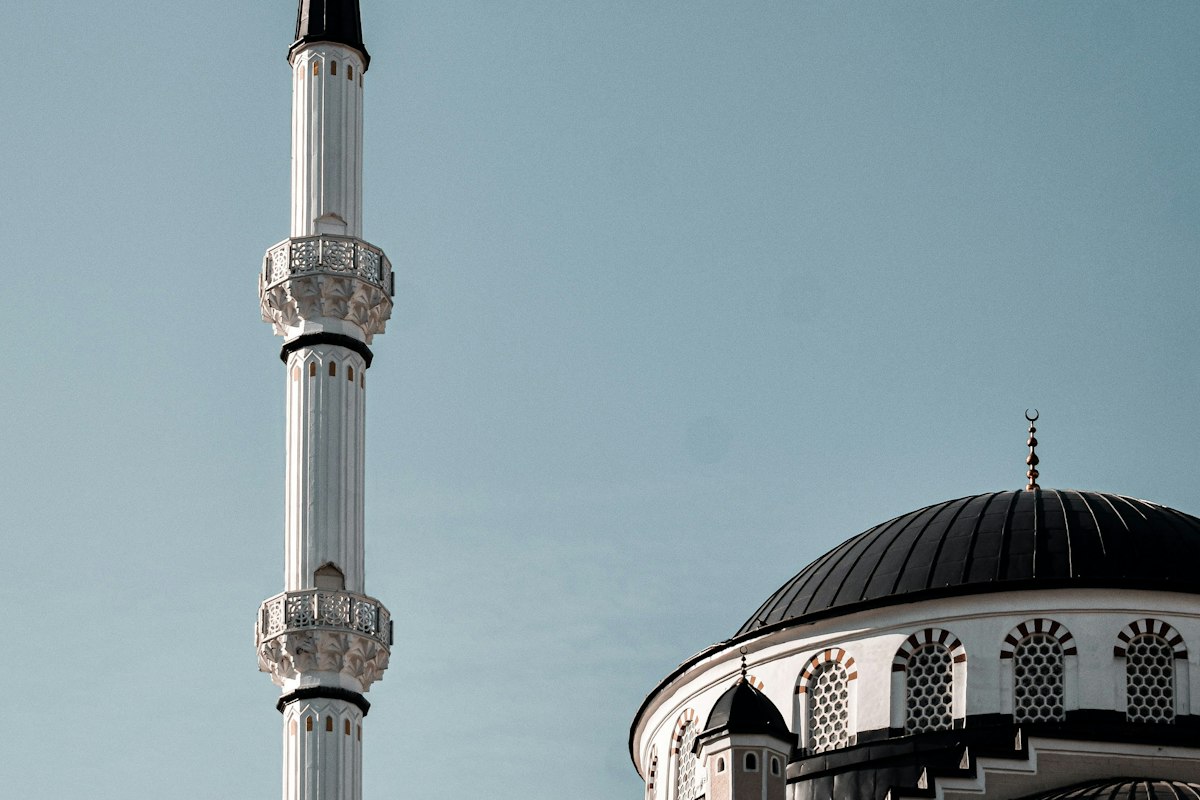
Deaths keep being joined to deaths. As required by the iqama recited into our ears the moment we came into life, every time we rise to pray for someone we continue to feel a bewilderment, a shock. Yet God is everlasting; in this world everyone and everything is mortal. The beautiful and the ugly, the oppressors and the oppressed, writers and readers, prophets, believers and unbelievers, in short, everything. A person arrives at the secret of death when he comes to know God. When he comes to know God, a person understands that death too is mortal. What is everlasting is not even the pleasant sound beneath this dome; that too is mortal. What is everlasting is only the face of the Lord of Majesty and Bounty. To know this, to attain this secret, is the most valuable, the most beneficial of knowledge.
We have sent Rasim abi too, the man whom the poet was able to name "beautiful," who was worthy of that name, to the eternity of the Lord of Majesty. If there is a testimony that falls to me in sending him off, it will be to mention a testimony he made throughout his life as a writer, as a Muslim who made thinking and living in a Muslim way his concern. It is this:
As a storyteller, as a writer, he bore witness, with his beautiful words, his literature, his stories, to the oppressor and the oppressed of his age, and to a despotism that tried to condemn Muslims to seclusion and nonexistence. His title The Man Who Grew Roses, which he used while describing the new world of action or existence that a certain generation, like Elmalılı Hamdi Yazır and Nuri Pakdil's father, sought by withdrawing into seclusion in reaction to the hat revolution and the new body politics put forward in that period, riveted with literature the memory of what Muslims lived, ensured they did not forget it, and formed a horizon-image and a source of motivation for the roses that were growing. He took on the mission of telling the story of those men and of leaving a will to later generations, that is, of forming the literary ground for the emergence of a subject of resistance and revival.
There is much I could tell about Özdenören's personality and his life as a writer. Today you will surely read much about him and listen to much, as is done after everyone who dies. But in my view, what could make what I can tell original is, I think, my drawing attention to its being so ordinary that it could be told by everyone.
His routine every weekend, as an ordinary reader, of visiting the bookshops of Ankara, and his ability to plunge immediately into conversation with everyone, great and small, titled and untitled, to share what he knew, and his extraordinary openness to learning what he did not know, have I think left nearly everyone with a memory, a trace, a story about him. The essence of this story expresses his modesty, and his sincerity, from within an ordinary life, toward words, literature, the pen.
I would like to repeat what I said in a piece I wrote 8 years ago on the occasion of the 50th year of his writing:
BEAUTY, WRITING AND RASİM ÖZDENÖREN
We live in times when everyone who takes a keyboard, even a mobile phone, in front of him can write, and can easily make what he writes heard by everyone. Among the infinite examples these times present, there is a need to refresh a debate that took place long ago among postmodern philosophers or sociologists over the meanings of being a "writer," that is, an "author."
At one point in those debates, the "death of the author" was being declared.
To a degree in classical but more so in modern times, a kind of messianic role was attributed to the writer, but it was said that this role had already ended even before the period when virtual media, the internet, had entered our lives, and so the writer's messianic role was taken back.
It was said that, at most, with what he says the writer can reflect a kind of social and historical consciousness, and that beyond this he has no role of informing humanity in advance. The writer is no longer a person, an author, an authority, whatever he says is accepted as true, whose knowledge produced and word spoken are far more special than other people's. He has no authority to say the last word and to close the word.
The death of the author contradicts the fact that those who write have multiplied immensely, of course, but the indicator of this death is not the increase in the number of writers but the loss of the author's position as an authority. Whether this is good or bad certainly needs to be assessed separately.
However, however much the authority dimension has diminished, the notion of the writer in pursuit of an original thought, style and manner has still not been entirely abandoned, nor does it seem it can be. This has to do in part with readers' expectations. People's search for guidance on many matters has not been abandoned even in postmodern times. This, no doubt, puts into operation an ideology, an ideology of authorship, that affects the reader and the writer at the same time and loads reciprocal roles on both.
Without doubt, to regard him as nothing but a writer would require positioning him within this ideology of authorship. Özdenören is not just a writer, or is not a writer in the usual sense. He appears as a writer, generally with a modesty stemming from Islamic manners (adab, literature), with the awareness that a "semantic presence" (presence), in the postmoderns' phrase, cannot be attributed to the knowledge he produces or the language he speaks. That is, even before the death of the author was declared, he speaks feeling, and making others feel, that the writer too is a mortal.
He writes as if he had found his own special readers and were carrying on a special intimate conversation with them. Rasim abi writes as if he knew that the presence of his word is possible only through this special dialogue. Still, knowing that the true semantic presence can never be realized with the reader forever, he writes with a kind of trust in God.
Rasim abi has read many of the existentialist writers in depth. Indeed, through his references, he has also caused a great interest in them to arise among a significant part of Islamist youth. Despite this he has not fallen into the pessimism that any of those writers had. The consciousness that the human being is a tragic being has not dragged him into a cynical indifference and bohemianism. Those who read Özdenören's texts do not feel stuck in a swamp or lost on a complicated road. The Writer advances lighting his own path.
Özdenören has a little more of certain features carried by many Muslim intellectuals of his generation. He is one of the most important names of the generation of literati, social scientists, intellectuals who carried out the duty of leadership of opinion on behalf of the ulema for Muslims deprived of their ulema. With his The Man Who Grew Roses, he both inspired and moved the child who had received important knowledge from the ulema who had been forced into their corner during the republican period.
His book Essays on Muslim Thought, which he wrote in the mid-eighties, formed a frame-drawing, important reference book in the Islamic thought and youth's view of many subjects.
May the beautiful people meet God's beauty, His mercy. I wish God's mercy upon him, and condolences to his relatives and to all Muslims. May his abode be paradise, his station exalted.