
← All articles · Remembrance and tribute
Atatürkism in spite of Atatürk
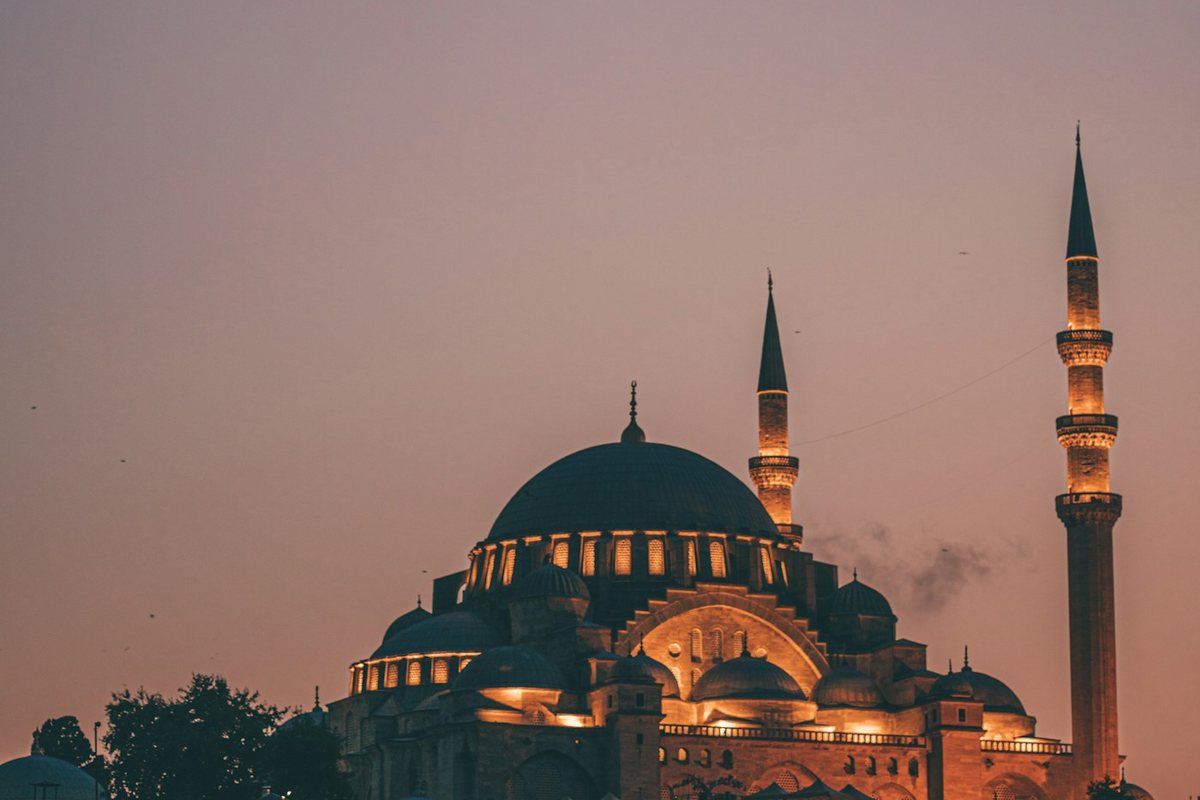
10 November, the anniversary of Atatürk's death, became this year the subject of different commemorative events and, because of that, of different debates. Atatürk has not died, but every 10 November his death is immortalized by being relived and kept alive with an interesting ceremoniality. The immortalization of death through Atatürk, and its being kept alive by being constantly refreshed and dramatized, also recalls a climate of mourning that never ends or never passes in one go. In this case what does not die is not Atatürk but his very
death.
By dying, he leaves citizens an unending obligation, a debt paid ceaselessly at the price of heavy obligations on citizens. A debt that grows a little more with each passing day and multiplies itself as it is paid. If the late Turgut Özal in the eighties had not made an attempt to free the 10 November ceremonies from an atmosphere of mourning and turn them into a day of commemoration, in what atmosphere would the 10 November ceremonies be held today?
The instruction given this year by the Kocaeli Governorship and Muftiship that a Mawlid-i Sharif be recited for Atatürk in all the mosques of the province undoubtedly led 10 November to become the subject of much different debates than usual. Setting aside why those who object are objecting, is it not in itself an interesting situation that the very idea of reciting a Fatiha for Atatürk's soul being reconciled with Atatürkism can cause such an uproar? Why has this been so? When this question is pursued, where we can get to is that we see how high the tendency of history to be contaminated by superstition, hagiography and legend is. People become so happy, so accustomed and so familiar with manufactured legends, superstitions and hagiographies that they react very harshly to encountering the real face of history.
A politician who regarded Atatürkism as a solid door to political gain once went, on a Friday, to the Friday prayer, to which he normally never went, and during the supplication part asked, shouting, as if chanting a slogan, why no prayer was being made for Atatürk. By doing so, by breaking the silence that is a condition of the Friday prayer, he was not even aware that he had committed a violation like speaking during the prayer. Could the same politician not have heard of Atatürk's instruction that no one, no person's name, be read out in sermons?
Atatürk, for example, did not ask that prayers be made for him on Fridays. Perhaps because he did not want politics to enter the mosques, and perhaps because his whole religious strategy was to reduce the influence of the mosque and the congregation, because he did not think of putting his name into a dying institution. For in the first years of the Republic, there appeared to be no future for the mosque, the Friday prayer, the congregation.
Whatever the reason, it is not recorded that Atatürk had a mawlid recited either for himself or for any of his relatives, and there is no report or sign that he valued it. On the contrary, today the more openly accessible sources everywhere show very clearly that his view of religion was shaped by 19th-century positivist understanding. The very valuable Atatürk Biography by the esteemed scholar Şükrü Hanioğlu, Professor of History at Princeton University, lays out very well his thoughts on this subject and all the parameters of his mental world (Bağlam Publications, 2023). There is neither insult nor the slightest smear in it. On the contrary, there is an account in all its details of the historical, intellectual portrait of a human personality whom everyone, by exalting him, has actually dehumanized further. When Atatürk is read from such a book, what emerges before you is the portrait of a human being, with all his mistakes and merits. But this portrait is clearly very far from the mythological portrait of Atatürk produced with superstitions. For someone who set the experimental (positivist) knowledge of his own Party (CHP) against dogmas supposed to have descended from heaven, even the Qur'an is a book written by the Prophet Muhammad at some point after long deliberation or, at best, "supposing it to have been inspired in him." What place could a mawlid have?
There may be those who want to pray for him with great respect, of course. Anyone can pray for whom they wish, and no one can interfere with that. But when he himself said openly that he had no belief in these prayers, what benefit could these prayers be to him? When he did not believe in the mawlid and never supported it, what contribution or benefit could attempting to recite a mawlid for him, in spite of him, be to him? What would those who want to recite a mawlid have achieved? From now on we are faced with the psychology of practicing Atatürkism in spite of Atatürk, and this is an important complex that must by all means be overcome before our social maturation, our coming of age.
What kind of conception of Atatürk does it reveal that those who today complain about the stalling of democratic processes make a beeline for Anıtkabir? Evidently they think Atatürk represented something far beyond the level of democracy experienced today. Well, what kind of shock might those who think so experience when they learn that throughout his entire administration he never once went to an election and that whatever he did, he decided everything alone?
Would they? Do they not already know? I do not at all think that we still have a serious problem today about acquiring information, about reaching the facts of history. All information can now be reached easily. Even so, do people cling more strongly not to history but to their own superstitions, mythologies, beliefs?
In his article yesterday, our colleague Aydın Ünal says that Atatürk has no connection with these superstitions formed by statues and the cult of personality. The emphasis that after Atatürk many circles, especially the Democrat Party, in the name of using Atatürk against the CHP that had tried to bury Atatürk in history, made a very serious contribution through their policy to the formation of this cult is no doubt right. But this does not show that Atatürk has no connection at all. The statues and busts planted all over the country from as early as 1926, numbering in the thousands, are his work, made in his own lifetime. However much İnönü and his CHP tried to tear Atatürk off the money and the portraits, they did not have the power to tear down those statues.
But even that much of an attempt by İnönü and the CHP was enough for Atatürkism to be discovered as a door of political gain by the Democrat Party members, and it grew. This is how the door of political gain works. After a certain point, what he himself is no longer matters at all. Everyone who covets that gain ties their expectations to that door as one ties rags to a shrine, and thus, in their mixing with the expectations, they create a profile that has nothing to do with the reality. As in Ludwig Feuerbach's definition of the worshipper who creates his own creator by projecting according to his needs. However much Atatürk may have said that this country "will not be a place where help is sought from shrines and the dead," his own tomb has become a refuge where people expect democracy, prosperity and everything from him, in spite of him.