
← All articles · Palestine and Israel
What if we looked at refugees through the window of sacrifice too
Eid al-Adha is also, and in fact, the festival of the Hajj. The Hajj, with all its rites, also has dimensions that are sacrificial, that bring near, that distance while bringing near. In the journey of the Hajj, where every moment, every scene, every rite is laden with a separate trial, a person, through the choices he makes, draws near to God, to His friends, to goodness, mercy, breadth, embrace, brotherhood, compassion, while he moves away from His enemies, from the wicked, from evils, from bigotry, racism, narrow-mindedness. Or he fails the trial and finds himself in a drawing near of exactly the opposite kind.
Every drawing near, every sacrifice, requires a distancing from certain other things. Every day, every moment we are tested: what is our choice, toward what does our sacrifice go?
This year, on account of Covid 19, we can for the most part comprehend, of the Hajj dimension of sacrifice, only the sacrifice itself, the hady, the udhiyah.
On every occasion we learn and know that whatever happened when the two sons of Adam were tested with sacrifice for the first time, nearly the same things happen in every sacrificial event since then. Sacrifice has not continued to exist in human history merely as a form of worship; the feelings, debates, whisperings and temptations that accompany every act of sacrificial worship are also staged once more every year with the event of sacrifice.
Leaving aside those who do not know sacrifice at all, do not recognize it, who refuse from the outset to experience it. If they stay entirely away from the worship of sacrifice, no further favor is asked of them. But they generally have some stance on this event, and thus they too do not fail to play, at some point of the trial, exactly the role they are supposed to play. With their whisperings and efforts of seduction they continue to act as the representatives of Satan.
Each time, we witness a magnificent variety of people between those who wish to close the trial of sacrifice cheaply, like Cain, with the most easily dispensable possessions in their hands, and those who try to fulfill it properly, like Abel.
Years ago we saw on this stage people trying to seize the rank of ijtihad by producing sacrifices from chickens and roosters. Those who whisper the temptation to donate the equivalent sum of money instead of slaughtering an animal as a sacrifice have always continued to take their place on the stage. This year too, those whispering these temptations were not lacking. Yesterday our friend İsmail Kılıçarslan wrote, and so we saw this as well. The invitation that someone miles away from sacrifice made to his own satanic position, by giving Muslims the idea "Give your sacrifice money to SMA patients, thus keep people alive rather than killing animals." God forbid, will the person who answers that invitation have moved away from offering sacrifice? Or will he have drawn near to a servant rather than to God, and been sacrificed to him?
The story of Abraham with Ishmael is undoubtedly a very original story in the history of sacrifice, and in a sense it determines the history and the format of sacrifice. By looking at that story it is possible to decipher all the codes of meaning of man's existence on earth.
This account of Abraham also contains the secrets of how much anyone can or cannot understand anyone. It also explains why those who cannot give up for God's sake what they love most can be inclined to every kind of temptation about sacrifice. It also explains that the path of sacrifice is always a choice made by free will, and that this choice, while bringing one near to one place, inevitably requires moving away from another.
If there is a choice, Satan and his whisperings are never lacking either. At every stop, every stage of the road, there are people who insinuate that the path being followed, the choice being made, is wrong. Sometimes, with very convincing scientific, philosophical, humane or self-interested arguments, hesitations are produced by insinuating that the choice made is wrong.
Those who adopt the path of sacrifice as the path of life persevere on the point that every choice they make is worthy of countless other choices they have not made. Sacrifice is an act that, in making one choice, involves at the same time giving up other choices. In this respect it also sheds light on the existential side of the act that shapes and builds the human being.
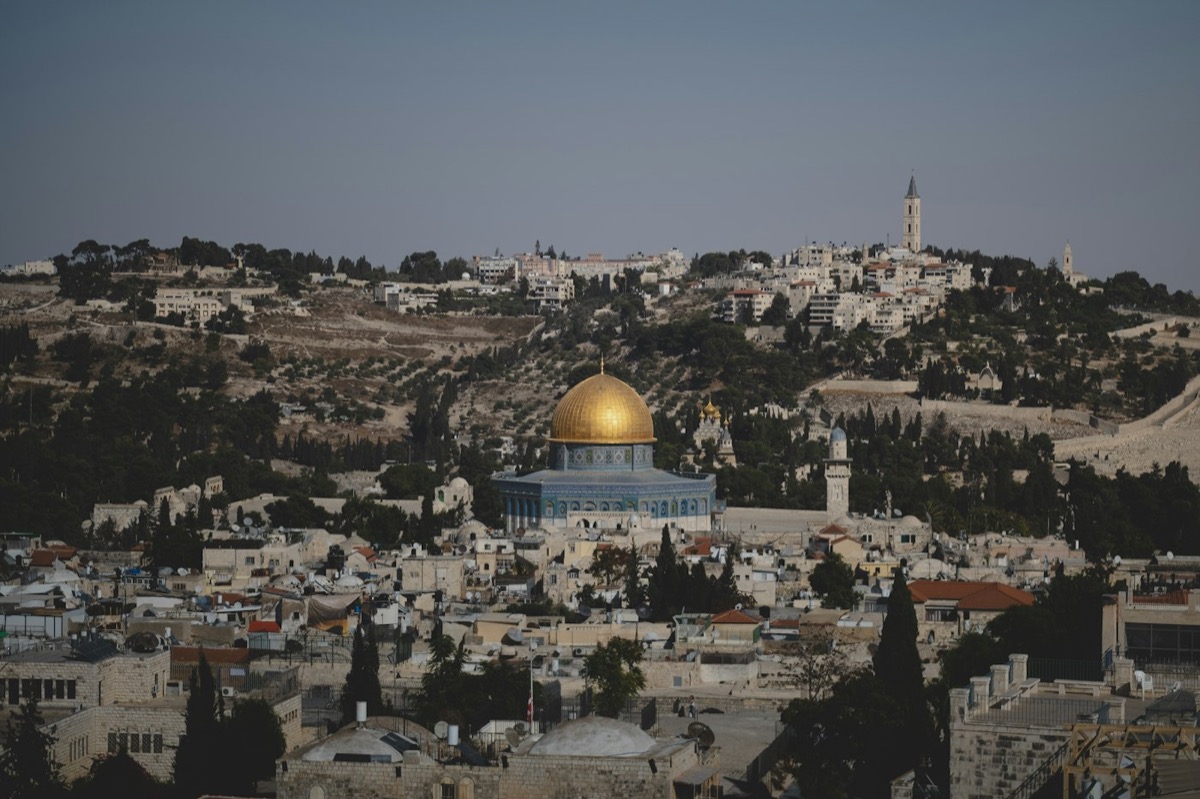
Abraham lived in this geography. In this geography he stood against Nimrod; although his own father was an idol-maker, he broke the idols he made, and in return was thrown into the fire. That the fire has no effect of its own unless it receives the command to burn from the Exalted Lord, and that it consists of nothing but a quality of coolness, was witnessed in these lands.
Abraham passed the trial of sacrifice too in this geography. This does not, of course, prevent his trial, and the meaning of what he lived through during this trial, from being universal.
But undoubtedly, with what we have been living in this geography for years, the relationship between the event and trial of sacrifice seems far more alive.
The differing views these days on the approach we should display toward the refugees who have been forced to take refuge in Türkiye to save their lives show how even such a simple subject can turn into a very harsh trial.
Does someone begrudge what the newcomers eat? But worse, some are inciting others against what they eat, and those some are politicians who ought to be responsible. Taking refuge in the ignorance that "the newcomers take away from our provision," Kılıçdaroğlu teaches and drills this ignorance into others too, without feeling any pang of conscience. Let us not forget, ignorance too is a skill that is learned, taught and passed on to others.
You can, for instance, instill and teach ignorance by asking these questions: How much longer will we continue to host them? Should we or should we not pay attention to who the newcomers are and whom they are fleeing? The newcomers are needy, but what about their turning the whole order of our lives upside down, their begging in the streets, their getting ahead of "our own people" in employment with cheap labor?
If you like, we can extend these questions further, each of which is a matter of a separate trial.
Let us not answer these questions without pausing for a moment to reflect on the meaning of sacrifice. Let us do so in such a way that we will have truly grasped the meaning of sacrifice in the most fitting manner.
Let us thus make Eid al-Adha a true festival. Let us draw near to the Truth and move away from falsehood. Let us move away from the oppressor, whoever he may be, and draw near to the oppressed, whoever he may be.
May your Eid be blessed.