
← All articles · Remembrance and tribute
The passing of a Qur'an scholar, Muhammad Ali al-Sabuni
We seem to be in an autumn season in which we watch with sorrow as scholars depart from among us one by one, slipping like stars from our sky. In the space of a single month, first Professor M. Emin Saraç, then, during the past week, our great historian Professor Mehmet Genç, with his approaches that fit no mold, and now one of the great Islamic scholars, Muhammad Ali al-Sabuni, has joined the mercy of the Most Merciful.
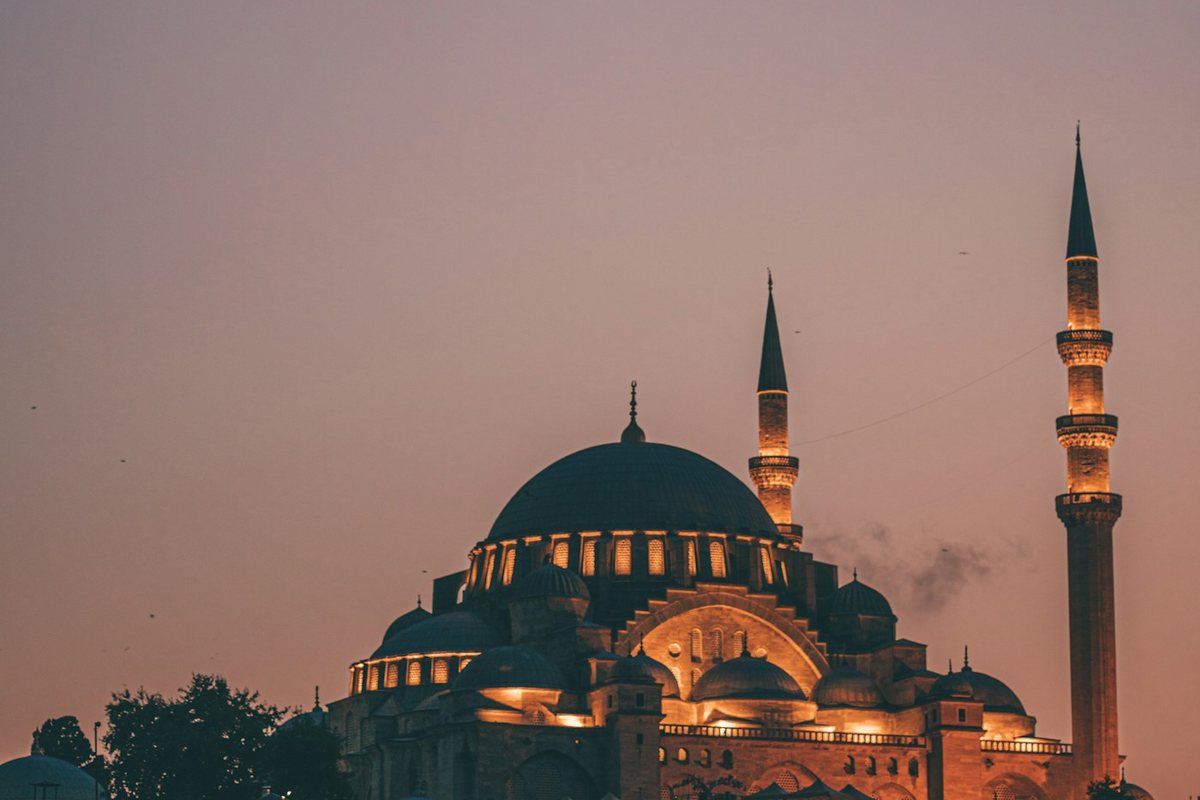
His is the kind of passing of which we cannot say that he has left us, because for those who appreciate his worth sufficiently, he has left behind a light on the road, food for heart and mind, and a great many students and works. His scholarly works and his jihad, his ongoing charities that will be able to continue their influence in the world for many years, saw his bodily presence off to the eternal realm on Saturday from the Fatih Mosque with an immense crowd.
Sabuni was born in Aleppo and received his first education from his father, himself a great Islamic scholar. There is no need to say, though perhaps there is a need to remind, that the basin of learning and culture in which he was raised was still the Ottoman basin of learning and culture. At the same time, the environment in which he was born and grew up reflected all the conditions of this Ottoman world in the aftermath of occupation and fragmentation. After secondary school, under the same conditions, he went on to Al-Azhar University in Egypt, where he continued his studies in the Islamic sciences. After that, although he returned to Syria and continued his scholarly work and teaching there for a while, after some time he began working as a lecturer in the Faculties of Sharia and Education of King Abdulaziz University in Mecca. While there he wrote most of his great works. Among them is his book called Safvetu't-Tefasir, which has also been translated into Turkish and has reached a wide readership.
Although he is generally known for this book, Sabuni has many other books too, but at the center of all of them are works of understanding and interpreting the Qur'an, which he himself placed at the center. Even Safvetu't-Tefasir is not in fact his only book of tafsir. This book is a work in which, as a result of examining all the tafsirs written on Qur'anic exegesis, the essence of the views that he found acceptable is conveyed. It appears to be a narration-based tafsir, but choosing among those narrations undoubtedly requires strong discernment. Perhaps in this sense it is a very good example for dwelling on the dimension of spontaneous interpretation that is neglected in the choice of narrations.
As a similar example, we had dwelt on Hüseyin Kâzım Kadri's Nûru'l-Beyan (Vadi Yayınları), one of the first translations of the Qur'an of the Republican period. This tafsir of Sabuni, as a narration-based tafsir with discernment inherent in itself, gathered the variety of interpretations together with a kind of Ahl al-Sunnah common sense, and for that reason it has become a tafsir that has been very widely accepted.
In addition to this, there is another tafsir book in 8 volumes called "Kabesün min Nûri'l-Kur'âni'l-Kerîm" (Excerpts from the Light of the Noble Qur'an), in which the dimension of discernment comes more to the fore, both in method and in claim. Again, another tafsir book in two volumes called "Ravaiu'l-Beyân fî Tefsîr-i Âyâti'l-Ahkâm mine'l-Kur'ân" (Masterpieces of Expression in the Tafsir of the Verses of Rulings in the Qur'an) is an example of thematic tafsir at the Faculty of Islamic Law, concentrating on the verses of rulings in the Qur'an that serve as a source for law and fiqh.
In addition, besides his work called "et-Tibyân fî Ulumi'l-Kur'ân," which discusses the general subjects of the Qur'anic and tafsir sciences, and his works in the nature of summaries of the tafsirs of Ibn Kathir and Tabari, he produced very important works toward conveying the message of the Qur'an to the people of our age, including a 600-hour video recording in which he interpreted the entire Qur'an.
The magnificent congregation in the courtyard of the Fatih Mosque was, in effect, bearing witness to how many people these works of his had influenced.
What completed Sabuni's stance, which undoubtedly placed the Qur'an at the center of a Muslim's life, was his struggle, in which he acted upon his knowledge. He did not remain unresponsive to the regime's tyranny in Syria; he bore witness against the heavy oppression and despotism that began in the late seventies, and when the regime's new massacres began 10 years ago, he again voiced his reaction and stance. During this time, Sabuni, who was also the President of the Syrian Islamic Scholars Association, supported the Syrian Revolution process from the very beginning and tried to set out a horizon for all Syrians to attain a humane, free and dignified life.
He had moved to Yalova from Mecca, where he had lived for many years and done his scholarly work, and had turned the house he lived in into a center for his scholarly work and guidance. He was a true Ottoman, and he explained to everyone who visited him the importance of the role Türkiye plays today in the whole world and, of course, especially in the Islamic world.
There is a very intense symbolic meaning in the fact that this esteemed Islamic scholar, who has an important place not only for Syria but in the whole Islamic world, was seen off to the eternal realm from Istanbul, from the Fatih Mosque, with such a magnificent turnout. The channels that reported his death treated this symbolism at length and in detail.
May God have mercy on him; may his abode be paradise and his station be one of radiant light.