
← All articles · Remembrance and tribute
A witness of our own world: Muhammed Emin Saraç
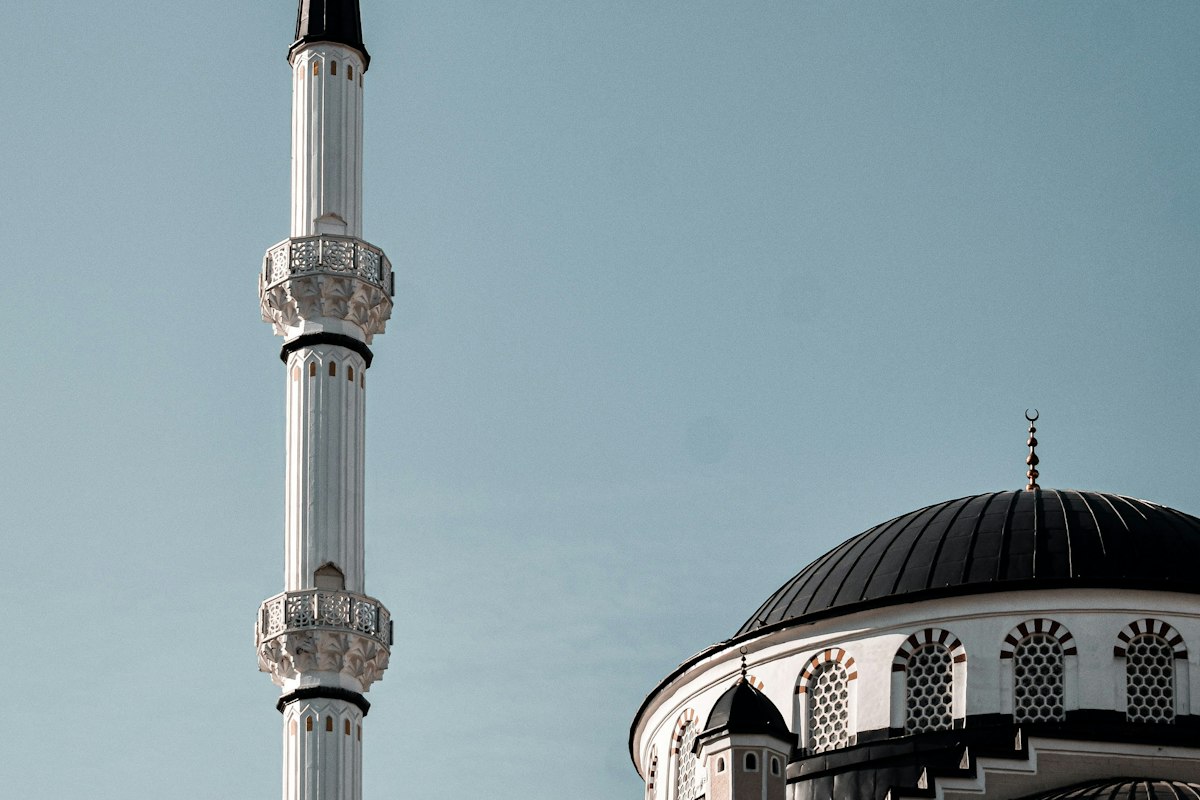
A scholar has departed from this world. Muhammed Emin Saraç, one of the most precious witnesses to the hidden and manifest dimensions of the world we live in, the world that shaped us, built us, wearied us and entertained us, a scholar and gentleman of his own world through the students he raised and the learning he produced, has passed to the abode of eternity.
I mention the noble hadith that expresses the death of a world with the death of a scholar, aware of the danger that it turns into a cliché, losing its meaning as it is repeated again and again after the death of every scholar. Yet its meaning really needs to be grasped well. What kind of relationship exists between a world and a scholar? When a scholar dies, how does a world die, and what happens to the people who have drawn their share from that world and become acquainted with it?
Every scholar builds a world with his own knowledge, his own concern, his own anxiety, his own struggle, his own striving. Those who truly possess knowledge observe very well how the construction of a world through learning takes place, and who is able to take delight in it, who enters which side or which end of it and takes how much of which share.
M. Emin Saraç was in fact a scholar of a world that all of us live in and with most of which we are acquainted. In one sense he was "one of us," but he was also something beyond that. He was among the most vivid witnesses and agents of what our world has lived through in the last century, of all the roads and stations it has passed through. He was one of the pioneering actors in the striving of Muslims to regain a body, Muslims who had turned into bodiless organs in the process, during the Single Party era, that aimed to deprive them of political and social bodily integrity.
Within this striving, Hodja M. Emin Saraç represented an important segment of his generation. The new political body, which aimed to deprive Muslims of a political body, tried to display itself through its dominion over individual bodies. That is why the clothes that were being forced onto individual bodies, the hat, were not seen merely as a hat; they were also seen as a voluntary surrender to an enemy that had been resisted on the battlefield against his occupation. The admiration felt afterwards for an enemy defeated on the battlefield, and the imitation of him out of that admiration, nullified the whole claim of victory.
Could the changing of the alphabet be regarded as a reform? Suppose it was so regarded; the hostile and punitive exclusion displayed against what came before, whose struggle against whom did it constitute?
The scholarly journey of Hodja M. Emin Saraç took shape in this encounter, in this atmosphere of tension and pursuit. Whatever anyone may say, and however much time may have passed, that atmosphere of pursuit still continues to constitute the founding tension of today's political climate.
Our colleagues İsmail Kılıçarslan and Yusuf Kaplan wrote yesterday, in all its details, about the environment in which the Hodja was raised in this process, the sources that nourished him, and the struggle he waged to reach those sources and to maintain a teacher-student relationship with his teachers. How distant the story of people who were tried, convicted, punished and tormented merely for teaching their children the Qur'an seems today! Yet these things happened in this country, and Hodja M. Emin Saraç, with his life and with all his accumulated learning, was among the most vivid witnesses of this lived experience.
In my view, the best story of that era, of those struggles, of the ulema and students who waged that struggle, is told by Rasim Özdenören's Gül Yetiştiren Adam. I have remembered it on many occasions; it is worth recalling again.
Gül Yetiştiren Adam tells the drama of the ulema of the Republican period, but ends with a message that gives hope. In the novel, the effort of the ulema, who were sidelined especially after the letter revolution and lost the language of communication with the world that dominated the outside, to hold on to the world and to future generations by growing roses is depicted in a marvelous language. The child who comes into play at one point in the novel is the only way for the ulema to pass on to future generations what they received from the past.
The hardships that the ulema undertook during the Republican period in order to raise roses and children have produced such experiences all over Turkey.
On the one hand, Hodja M. Emin Saraç, as a generation, is one of those raised by precisely this era's rose-growers, yet one who quickly began to raise the following generations "like roses" himself. In his scholarly journey he was not content with the environment that had been reduced to utter scarcity in Turkey; in 1950 he went to Egypt, to al-Azhar, where Islamic learning was relatively at its best in the Islamic world at that time, and while studying there for 9 years he also witnessed very important processes that Egypt was going through. The military coup that overthrew King Farouk, then Gamal Abdel Nasser's coming to power through another coup and the merciless massacre he launched against the Ikhwan movement made Hodja M. Emin Saraç a witness to another important historical process of the Islamic world.
Meanwhile, in the scholarly basin from which all Muslim ulema in the world drew nourishment, he met and befriended very important figures. For example, he was a classmate of Yusuf al-Qaradawi. At the last Vefa night organized for Qaradawi in 2016, I had the chance to see the two of them together.
After returning from Egypt, Hodja M. Emin Saraç continued to study and teach in Turkey and raised a great many students. Given the positions his students later came to occupy, he has influenced everyone's education in one way or another, directly or indirectly. Among the most noteworthy of these influences is the translation of Sayyid Qutb's Fi Zilal al-Qur'an, undertaken together with Bekir Karlığa and İsmail Hakkı Şengüler.
May his abode be paradise, his station exalted.
NOTE: On this occasion I also pray for God's mercy upon Kadir Topbaş, who we know received his share, directly or indirectly, from the Hodja's lessons. What our teacher Hayrettin Karaman wrote about him yesterday is a very valuable testimony. I trust this testimony to the end and add my own testimony to it.
May God have mercy on him, make his abode paradise and his station exalted.