
← All articles · Palestine and Israel
A star slips from the sky of Jerusalem, but…
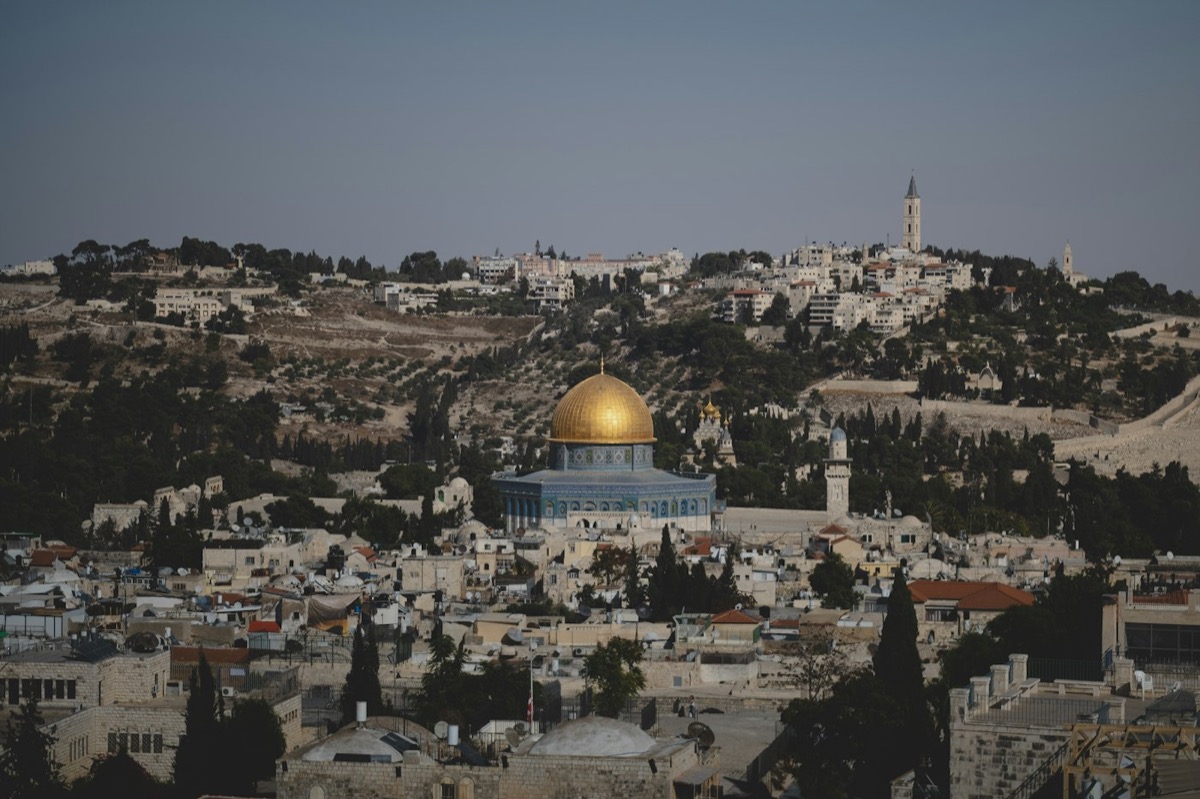
In this autumn season, Nuri Pakdil, one of the Beautiful Men, has also passed away, gone to his own beautiful steed. His departure, like his life, took the form of silence. He left having given his last revolutionary salutation. He did not, of course, completely demolish the Idol Workshops, but he certainly made them creak considerably, with the Class Stance to which he bound himself and remained bound for a lifetime without compromise.
With a dervish's skill, he saw capitalism, the West and Kemalism as a trinity produced by the Idol Workshops, and he tried to build a Tower of the Pen out of literature against them, and from this tower he launched his own attacks on this trinity. Unlike many ideologues of his generation, he did not make a defense against the West; on the contrary, he always criticized and accused it.
In truth, there was nothing that required defending. Muslims had long been strangers in their own homelands in this age. For Pakdil this strangeness did not call for any sense of inferiority; on the contrary, it formed the most suitable ground for an upright and dignified class stance. If anyone was going to bring down this unjust world, it would be the strangers.
The first embodied publication of the literary tower that Pakdil developed as a position of defense and attack was Edebiyat Dergisi. Together with the literary circles that gathered around this journal, mostly from the provinces and predominantly from Kahramanmaraş, they looked for ways to restore with words the melancholy caused by the occupation of Jerusalem and, in its person, the occupation of the entire land of Islam.
In this way, Pakdil and this literary circle represented in the most striking manner one of the distinguishing characteristics of Turkish Islamism.
Unlike the Islamic movements in other countries, Islamist thought in Turkey developed as a literary movement. Its leading thinkers and representatives have been men of letters rather than politicians or theologian-ulema.
Before reaching the Republican period, in the last years of the Ottoman Empire, one of the greatest sources of inspiration and reference for Islamist thought was the poetry of Mehmet Akif Ersoy rather than the ulema or political-Islamist figures.
In the Republican period, Necip Fazıl Kısakürek, who can be regarded as the first teacher of Islamism, owed his main influence to the rhetorical power with which he adorned and made literature attractive. By the same classification, the power of the discourse of Sezai Karakoç, who can be considered the second teacher, again came from his literature. Then came the names raised in Edebiyat Dergisi, which Nuri Pakdil founded and directed, İsmet Özel and those who followed...
None of them had gone through an Islamic education in the traditional sense, and I think none of them even knew Arabic. Nevertheless, they determined the Islamist imagination, and the Islamist thought and agenda, more than the theologians did. This is, of course, a matter that must be taken into account, with its advantages and disadvantages, when evaluating Turkish-Islamist thought. For example, it is a situation not seen in the Arab world or in the Islamism of Pakistan and the Indian subcontinent.
Perhaps this situation was, to some extent, an inevitable result of the conditions to which Turkey was exposed. In conditions where Islamic education had been interrupted, people's desire to be Muslim in Turkey could not be interrupted. Where all institutions and ways of life in the outside world had been invaded, words were adopted as a refuge, as a land of hijra for a renewed conquest.
Vibrantly alive worlds were built out of words. Those worlds revived a ray of hope in response to the occupations that were suffered, to the colonization of the self, and to the abasement before the West.
Nuri Pakdil and his friends, the Seven Beautiful Men and others, grew up at precisely this point, like roses in the secluded gardens of invaded lands; they raised roses in the gardens they had themselves established.
Our friend Yusuf Kaplan rightly asks: Although Nuri Pakdil wrote the most beautiful poems about Jerusalem, why was he never known, why is he not known, in the Arab world?
Yet he reflected the worth, the value, the condition, the sorrow and the grief of Jerusalem in the most beautiful way in his poems. He should have been known on account of these poems alone. Moreover, he took great interest in Arab poetry and was among the pioneers in having Arabic poems translated into Turkish and presenting them to the attention of Islamist Turkish literature.
Although the interest in and following of Arab thought by Turkish-Islamic thought has been at its peak, there is in fact a problem that can generally be summed up as the Arab world's indifference to Turkish-Islamic thought. Or rather, there was until now. Lately, however, this indifference has begun to give way to great curiosity about, and attention to, Turkey.
Partly thanks to the very timely contributions and support of the Ministry of Culture in recent times, but more because of the role Turkey has recently been playing in the Islamic world, Turkey's literature, as much as what is happening in Turkey, draws more of the Arab world's interest.
For that reason, as far as I know, hundreds of works have recently been translated from Turkish into Arabic. I am sure that from now on the works of Nuri Pakdil, of Sezai Karakoç, and of Necip Fazıl will find a stronger echo in Arabic.
With the fortresses he built out of literature and words, Nuri Pakdil, in his own expression, became one of the important teachers who played a part in training the attitudes and stances of "revolutionary" Muslim generations. That his name is Nuri, as a poet of Jerusalem, is an interesting coincidence. Although he devoted his life to it, the conquest was not granted to Nureddin Zengi, but it was granted to the Saladin whom he had raised. Who knows...
He performed his duty properly, with his own distinctive personality and style, and left; we are witnesses. I pray for God's mercy upon him.