
← All articles · Palestine and Israel
To own Jerusalem, to serve Jerusalem
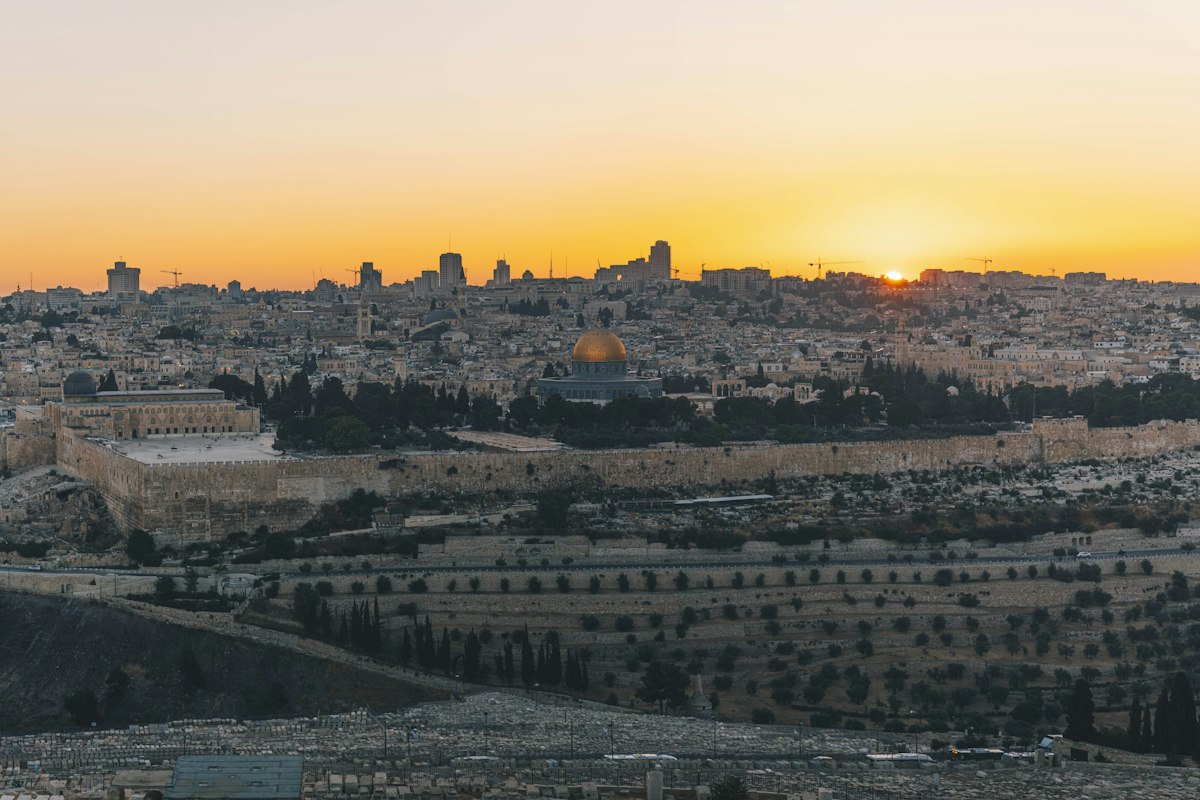
I last went to Jerusalem exactly three months ago, on 9 November. As the TBMM Inter-Parliamentary Palestine Friendship Group, with a delegation of 22 members of parliament headed by our Istanbul deputy Hasan Turan... What I lived through and saw on that visit prompted me, on my return, to write two articles titled "Why Go to Jerusalem?" and "How to Go to Jerusalem?"
In the first article I said that visits to Jerusalem are ultimately a matter of destiny, just like the pilgrimages of hajj and umrah. Sometimes, without any planning, Jerusalem crosses your path when you had never foreseen it.
Again, as it always does, it draws you in once more, walks you through the streets of human history that it has recorded. From there it brings you back to today, sheds the light of history on the bitter realities we are living, makes you feel the tragedy of today's occupation, but, in all its splendor, Jerusalem also tells you without fail how small, how fleeting a span of time within its own ancient history these events are. Thus it both consoles and hones the patience that resistance needs.
For that reason, we should not neglect going to Jerusalem, but we must by all means go to Jerusalem by the right path, we had said.
Once again it was destined, Jerusalem called. The occasion this time was the program "Jerusalem 2018 Capital of Youth of the Islamic World," organized in Ramallah in cooperation between the Islamic Conference Youth Forum for Dialogue and Cooperation (ICYF-DC), based in Istanbul and affiliated with the Organisation of Islamic Cooperation, and the Palestinian Ministry of Youth and Sports.
On Friday our Minister of Youth and Sports, Mr. Osman Aşkın Bak, called and informed us that we would go to Jerusalem on Monday to attend this program.
Since our last visit we have witnessed Jerusalem being declared the capital of Israel by Trump. Jerusalem once again settled at the center of world politics.
This was an event that should have led those who assume a Europe-centered conception of the world and criticize it to think again. Of course that day should not be seen as an event that has come and gone, and it was not. Trump showed the audacity to implement a decision that has been taken since the mid-nineties and constantly postponed. This mentality, this Jerusalem-centered perception of the world, has always existed in the US. Indeed it is because this perception exists that a state called Israel stubbornly exists, in spite of history, geography, and the reality and flow of the world.
Europeans, or Westerners in general, despite all the comfortable worlds they have built, cannot give up thinking and acting in a Jerusalem-centered way. What could Trump, for example, have gained materially for his country, on behalf of the US, by declaring Jerusalem the capital of Israel? Is it not, plainly, an act that placed Jerusalem at the center of all tensions, conflicts, and the geography?
For the sake of Jerusalem, what state did the US fall into with this move? It razed its prestige throughout the world. As the term chair of the Organisation of Islamic Cooperation, President Recep Tayyip Erdoğan convened the members of the organization in Istanbul just one week later and, with a strong reaction, challenged both the US and Israel on this occasion. Immediately afterwards, in the UN, a draft against this decision of Trump's was adopted with 129 votes against 9, and a great blow was struck to the US's so-called claim to world leadership.
This loneliness and these risks undertaken for the sake of Jerusalem, from whichever side you look, show the importance of Jerusalem for the US. Of course the same holds for those who oppose it.
There is a race to sanctify Jerusalem; perhaps from this angle the intentions of both sides seemingly converge. In this tension a kind of race to claim, exalt, and sanctify Jerusalem can also be discerned.
Then perhaps it will be worth dwelling on the difference that emerges in the manner of sanctification. When Muslims sanctify Jerusalem, they do not give up on the human being. While exalting Jerusalem, they do not destroy human dignity, freedom, and honor. We can say that the maxim set forth for the state holds for Jerusalem too: Let the human being live so that Jerusalem may live.
When you degrade the human being, Jerusalem's sanctity is gone. Sanctifying Jerusalem does not pass through shedding human blood on its stones. Above all, it passes through sanctifying human life, freedom, and dignity without any distinction.
Blessing Jerusalem passes not through owning it but through belonging to it. Both the Crusaders and Zionism tried to own Jerusalem, to make it belong to themselves. While saying let us sanctify it, they drove away everyone unlike themselves from it, deprived people of its blessing, and tried to subjugate Jerusalem to themselves by massacring or deporting.
Yet Jerusalem has its own rule, and that rule is the rule of securing human dignity, freedom, and rights.
In history only Muslims have submitted to this rule of Jerusalem. That is why Muslims did not make Jerusalem the capital in any state they founded in history (apart from the exceptional days when Palestine came under the Zionist threat). They never excluded the people or places of worship of any religion from Jerusalem.
Moreover, Muslims modeled Jerusalem's features of coexistence and freedom of religion and applied them in all the cities they founded in the world. That is why in all the cities of Islamic civilization the mosque, the synagogue, and the church, with their congregations, are found together close to one another.
While Israel's way of claiming Jerusalem includes all dimensions of racism, bigotry, and religious arrogance, it is a form of claiming that gets not an iota of benefit from Jerusalem. Yet if they only knew, took heed, thought, and used their reason, Jerusalem would be for them too a clear sign, a guiding light, a blessing.
CONDOLENCES
Zerdeşt Miroğlu: While in Jerusalem, we received the news of the death of Zerdeşt, the beloved, suffering, innocent 25-year-old son of our Mardin deputy, the valued man of thought and cause, Orhan Miroğlu. From there we prayed for him. The trials of Orhan Miroğlu and his esteemed wife with Zerdeşt, who had a very difficult life, were like an epic worthy of being written and remembered for all humanity, to be seen at all times. Almighty God was, as it were, raining upon Zerdeşt's life the compassion, mercy, and affection of his mother and father. Among his many other qualities, I came to know Orhan Miroğlu, whose very beautiful book has been published these days, often before all of them through this relationship with his beloved son. May the deceased's abode be paradise, and may he be a witness and forerunner for his mother and father.