
← All articles · Palestine and Israel
Jerusalem called out to Muslims from Istanbul: Come to salvation
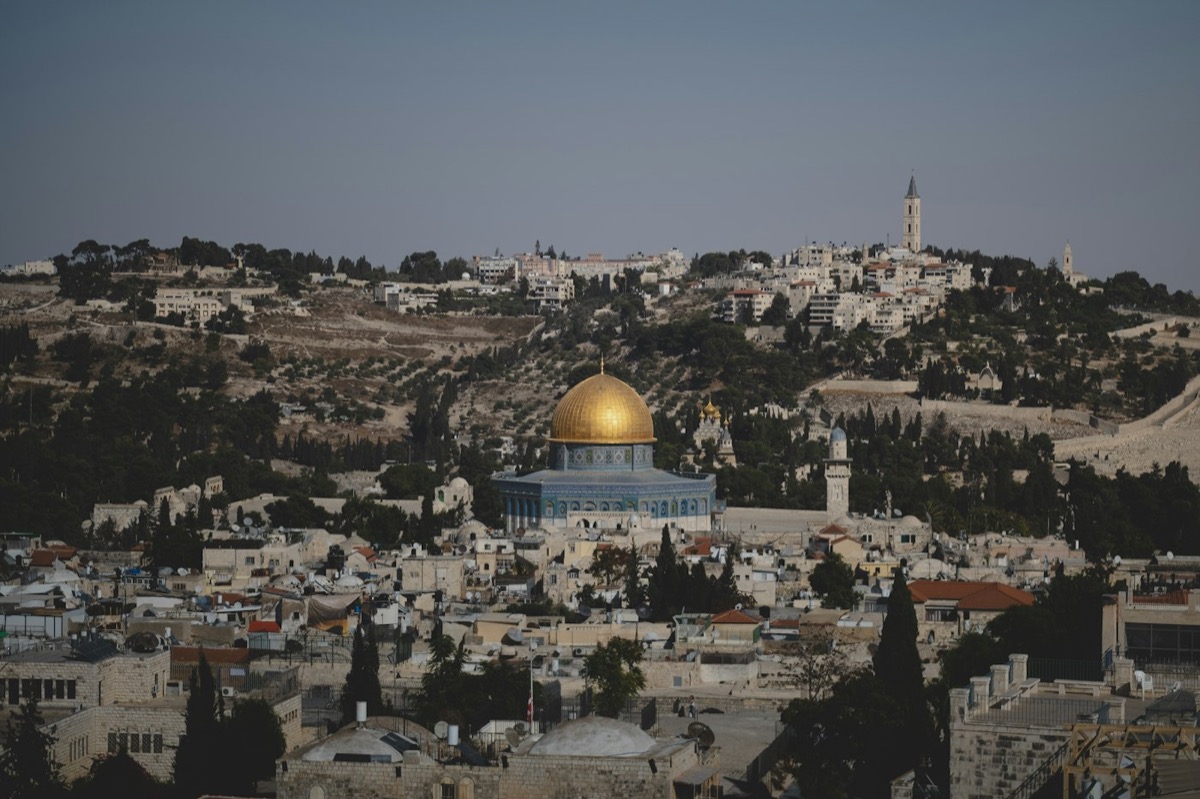
The Summit of the Organization of Islamic Cooperation convened in Istanbul, within the short span of a week after Trump announced that he recognized Jerusalem as the capital of Israel and would move the US embassy to Jerusalem, upon the call for an extraordinary meeting by Turkey's President Recep Tayyip Erdoğan, who holds the term chairmanship.
First of all, that such a meeting took place in so short a time out of sensitivity for Jerusalem, and that the Islamic world displayed an image of unity and solidarity, is in itself an important event.
The fact that some countries sent ministerial-level rather than high-level participation to the meeting does not change the outcome. After all, even at a lower level, they joined the picture there through their participation, and signed a final declaration expressed so clearly and with such determination only rarely in the Organization's history.
They took part, through representatives they sent and authorized even though not in person, in a declaration in which "the US, which declared Jerusalem the capital of Israel, is strongly condemned," "East Jerusalem is proclaimed the capital of the State of Palestine," and it is strongly stated that henceforth "this state and its institutions will be supported in every way on the international stage."
This shared participation also showed that, especially where Jerusalem is concerned, that is, when a call comes from Jerusalem, the Islamic world, whatever condition its leaders may be in, has no choice but to take part. For any Islamic country's leader knows that if he remains indifferent to such a call, he will face a complete legitimacy problem with his own people.
The matter is not merely that the call came from Erdoğan or Turkey. The matter concerns the role Jerusalem plays for the Islamic world. This is a role that, especially when Jerusalem is subjected to an attack, forces everyone to prove themselves in a test of honor and dignity.
Here a person is compelled to cling to Jerusalem, to join Jerusalem, in order to prove himself, even to save himself. Jerusalem is like Noah's Ark. Whoever remains outside it is drowned in the waters of the flood.
It is true that Jerusalem is under occupation, but Jerusalem has lived through and survived such occupations many times throughout history. What matters is what those who have found their personality with Jerusalem do while Jerusalem is under occupation. When and how will those people shake off the dead soil spread over them?
Abdurrahman Dilipak's article published in recent days put it very accurately. Jerusalem is not waiting to be saved; it is inviting us to salvation. It invites us, from an undignified personality whose nerves and will have been taken away like torpid slaves, to take ownership of our own will and become a subject, an agent. Rather than being saved, Jerusalem, through the situation it is in, invites us to salvation.
It is true that exactly 40 Islamic countries took part at leader level in response to Trump's call for an "alliance against Islamic terror." In my view this presented a shameful, sink-into-the-ground sight for the Islamic world. That, while 40 countries took part at leader level in that meeting, those who took part at leader level in Erdoğan's call for Jerusalem remained at 18, and that others preferred to attend the invitation at a lower level, must of course be assessed separately.
This is a piece of data that will reveal all the clues as to what kind of a world the Islamic world still is. But this situation also requires us to look at how we came to this point.
A SOUL BREATHED INTO A DEAD BODY: THE OIC
On the occasion of the Organization's first meeting in Turkey during its term chairmanship, I had used the expression "a soul breathed into a dead body" for the Organization's initial formation as the Organization of the Islamic Conference.
The attempt in 1969 by a fanatical Jew to burn Jerusalem set in motion a reflex among Muslims toward becoming a separate international political power in the world. This reflex, setting aside civil formations such as the Muslim Brotherhood and Jamaat-e-Islami with their worldwide organization, was at the level of states something like an effort to revive a body that had died in 1918. The founding of an organization of cooperation and solidarity among Muslim countries in the world matured on this occasion, through a conference launched largely on the initiative of Saudi Arabia's King Faisal.
The political weight in the world of Muslims, whose population now reaches 1.7 billion, is, even today and despite this organization, almost nonexistent. Nearly 70 percent of the world's energy resources are in the Muslim geography, yet only 7.5 percent of global income and only 11 percent of trade belong to this world.
There is no Muslim country among the G8 countries.
There is no Muslim country among the permanent members of the UN Security Council.
Yet, the great majority of the wars and instabilities in the world in recent times take place in geographies made up of Muslim countries.
Conversely, there is no Muslim country that can set the will of the UN in motion for the necessary intervention in them. Saudi Arabia, Turkey and Indonesia are among the 20 most developed countries, but the effectiveness of this structure and the effect of the Muslim presence within it are quite limited.
In a world where the importance of regional organizations and of organizations of international solidarity and cooperation is growing, the importance of a structure that can represent the Muslim world and ensure cooperation, even unity, among Muslims makes itself felt more every day as a need. There is serious pressure, arising from the sociology of the Muslim population itself, for this structure, set in motion in 1969 by sensitivity toward Jerusalem, to become somewhat more effective.
Unfortunately, those who govern Muslim countries, instead of responding to these sociological demands, are engaged in other pursuits.
Nevertheless, the Islamic world, convened in extraordinary session out of sensitivity for Jerusalem, reminded the world from Istanbul of this potential, this power, with all its overtones and undertones, and delivered the necessary message to its destination. One for the leaders of the Islamic world, another for the US and Israel, and yet another for the Muslim peoples...