
← All articles · Palestine and Israel
Why should one go to Jerusalem?
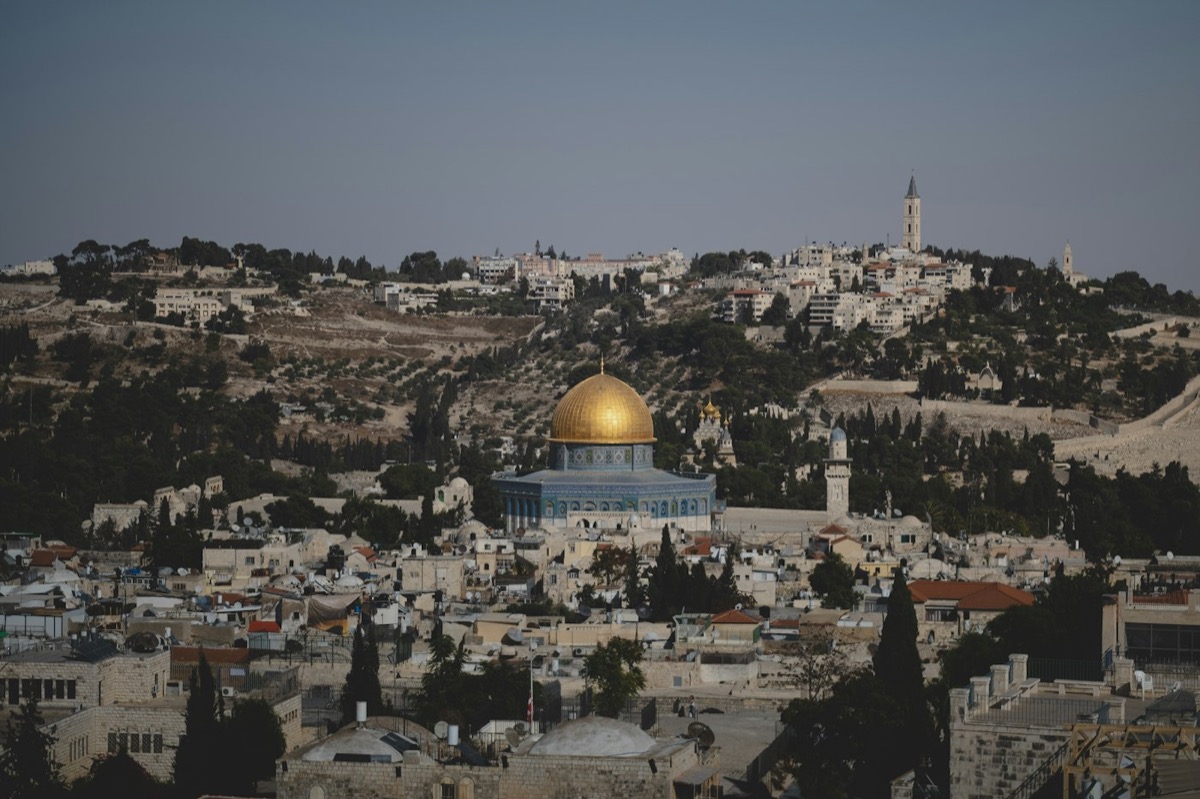
We had ended our latest piece on Jerusalem, in July, when the latest Zionist attack on Jerusalem took place, as follows:
"The state of Jerusalem is always a summary of the state of the world. Jerusalem is the mirror of the world. Salvation begins in Jerusalem, or is completed in Jerusalem.
It is not possible to free Jerusalem while leaving the world's oppression and distortion as they are. To save Jerusalem, these injustices in the world must be ended. Unless the order in the world changes, nothing changes in Jerusalem; let us not deceive ourselves. That Jerusalem continues to remain under this occupation today is the result of the world order's persistently and stubbornly working for a history and an international order that serve Zionism. It is the result of the world being counted as no more than five. But above all, the present condition of Jerusalem is a reflection of the fact that more than 1.5 billion Muslims are not living as Muslims and do not know who to befriend and who to take as an enemy."
The rapid developments since July have confirmed these words even further. As long as Muslims do not distinguish who is a friend and who is an enemy, and as long as they busy themselves with one another and leave the field to the oppressors, Jerusalem will go on weeping in its present sorrowful state.
Seeing is not like hearing. One must go and see the state of Jerusalem on the spot. Through what heedlessness and misguidance of humanity did Jerusalem fall into this condition? One must reflect on the spot.
One must see that no word said about Jerusalem is enough to reflect the situation in Jerusalem, how words have fallen short of describing the levels humanity can sink to. To see, one must set out on the road to Jerusalem.
Al-Aqsa Mosque is, after Mecca and Medina, the third important place of worship of Islam, whose visit our Prophet (pbuh) recommended and encouraged. This place of worship must not be left helpless under the despicable Zionist occupation there.
Israel's ultimate goal is to annex completely Jerusalem, which it holds under occupation, together with all the lands around it. Israel, which continues even during the peace talks it holds from time to time to seize and occupy the lands of resident Palestinians in order to open new settlements, has ill intentions. There is no one left who does not know its intentions are ill, but the leaders of the leading countries of the Islamic world, who are expected to oppose it, are not troubled by this. They think they are living their days to the full with the delusion that the more they hand Jerusalem over to Israel as a gift, the more they will consolidate their own rule. They do not even realize that with this ambition they are living hell in their own hearts every day, every hour, every moment.
When I was invited to the Jerusalem visit organized by Hasan Turan, chairman of the TBMM Palestine Friendship Group, together with the members of the Jerusalem Friendship Group, I realized that it overlapped with a Tunisia program decided in advance, and at first I was saddened. Because the Tunisia Investment Forum was also an important event I had promised to attend. But just like the hajj and umrah journeys, visits to Jerusalem are entirely a matter of destiny.
When the visit is completed and you take stock of the stirrings it has caused in you, you get an idea of what kind of thing this destiny is. Let me say that you still cannot understand it completely. It is not possible for a person even himself to be aware, in all its dimensions, of what kind of transition he is going through in such events. Tevekkelna Alallah (We have put our trust in Allah)... I cut my Tunisia program short and joined, catching up in Istanbul with our 22 fellow members of parliament who had set out for Jerusalem.
The history engraved on the stones of Jerusalem, and humanity's interest in that history, turn Jerusalem into a broad-band field of history in which time seems to have been completely frozen. While living here, you suddenly feel you are witnessing everything. We said that Jerusalem is the mirror of the world we live in. Jerusalem is also the mirror of history.
Prophet Moses leads his people around the mountains surrounding the lands of Canaan for forty years, waiting during that time for them to tear out of their personalities the slavery they had internalized for centuries under Pharaoh's oppression. The moment they tear it out, they begin to arrive here at the perversion of making all people their slaves.
You live as plain as day, in the intifada scenes that Palestinian children repeat every day, Prophet David's challenge to Goliath, whom no one dared to face, and his felling him at his weakest spot with the weakest weapon at hand, that is, a sling.
Here you live at once Prophet Solomon's building of his temple, his encounter with Bilqis (the Queen of Sheba), the Jews' settlements here and their successive exiles.
You see Isaac, Jacob, Imran, Zechariah, John. Then you live also the betrayals experienced by Mary, the symbol of innocence, and by Jesus, who came as the word of Allah, and his apostles.
You go on living Babylon, Rome, Byzantium, the ascension of Muhammad (pbuh) from here to the heavens after coming from Mecca, the conquest by Umar and the rule of Islam, the Fatimids, the Crusaders, Saladin, the Mamluks, the Ottomans.
The story of none of these ends here, ever.
After one ends, you can turn back and relive the other scene, then again move on to the following scenes. You feel that you can make this transition from one street to another, from one building to another. Of course, at every corner, on top of all these layers of history, you continue to confront the bitter reality of our day: the Zionist occupation.
Zionism is in itself a form of perversion. It is precisely the most extreme form of the feeling that nothing that happened in Jerusalem has actually ended, that no account has been closed, and that at any moment that page will be reopened. The claim of turning lived history back, of rebuilding a demolished building-temple, of going back to the very beginning by ignoring what has happened on it... Insisting, in the delusion that it can reverse time, on condemning the whole world to this reversed time loop.
Is it healthy to live inside so much history? Is Zionism not precisely the officiousness of reliving history by proxy of these historical layers?
Is the real lesson to be drawn from visits to Jerusalem to return to history, to relive the historical experience today or to live always in history, to carry the burdens of history into the present?
For the one who comes to Jerusalem, while experiencing the matching of ancient history with the present, why should he do this?
What lesson should the one who comes to Jerusalem take from Jerusalem?
Should not this question actually be answered together with the questions "why should one go to history?" and "what should one take from history?"
Should one take a lesson from Jerusalem, or make Jerusalem say what we want?