
← All articles · Remembrance and tribute
Akif Emre, Ramadan and death
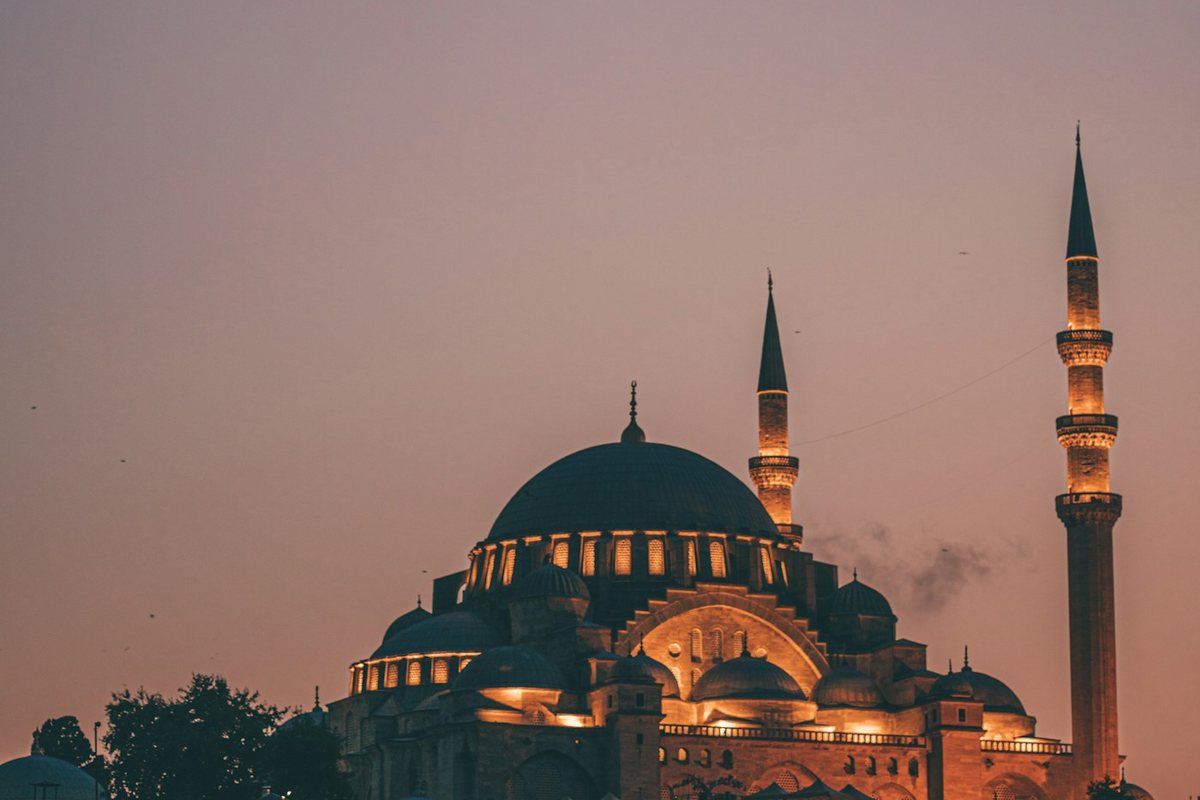
Here another appointed span of our lives has passed, and another month of Ramadan has come in all its splendor and burst into the middle of our lives. Together with it, with the crescent, fasting, the pre-dawn meal (sahur), the drum, iftar, the Ramadan calendar, tarawih, Qur'an recitation, fitr alms (fitre), zakat and giving (infak), the whole ummah, rich and poor, Easterner and Westerner, Southerner and Northerner, Arab and Turk, old and young, women and men, suddenly becomes people of the same world and begins to breathe the same climate of spirit and meaning.
If they asked, we would say we know this very well, but amid the cares of the world we forget it, let alone mastering the world we live in and time, we forget even that we do not own our own bodies..
Does not Ramadan, coming every year at its predetermined time, remind us enough that we should not grow too accustomed to the world we have found ourselves set up in?
Ramadan, which is called
"the sultan of the 11 months"
, reads to us the indisputable sovereignty of the Absolute Being over time, over life and death, even over our own bodies.
The cares of the world scatter us. They loosen our unity and dilute our wholeness. The city's division of labor and rush, which throws everyone aside and renders them strangers to one another, differentiating and separating, closes a person off in his own self and individuality.
In the modern period, when you add to this the humanism that provokes everyone's narcissism and inflates individual self-confidence, it is easy for a person to be carried away by the notion that he lives in a world where there is no death and no hereafter.
Yet death exists and the hereafter exists, and the cares of our world make us forget it.
As we get carried away by those cares, we make our way toward our own disaster.
We do not even remember the fact that we have a responsibility toward others than ourselves in the world. We shut ourselves in the darkness of our own dungeon. Moreover, our ego makes it look to us like a palace. We keep loitering there.
Thank God there is Ramadan. As a mercy from Him...
Ramadan reaches us even when we are indifferent, often surpassing even our indifference.
There is no escaping it. It comes every year and calls us to rise out of that dark dungeon of the self, out of the care of a life that we suppose to be eternal and real but that is in fact mortal and nothing but a game and amusement. It does this so forcefully that it is only possible to remain heedless of that voice by closing one's eyes, ears and conscience.
Ramadan alone is a warner, a caller, a messenger.
By reminding us that nothing we suppose to be ours is ours, of the mortality of the world and that we will ultimately die and go, it invites us to live this world in the light of this truth. Not only does it invite, but if we lend eye and ear, it prepares and trains us for a life in this direction.
It teaches us that there are others in this world too and that we are responsible toward them as well.
It engraves in our consciousness, through fasting, that each of us has been granted a will
and that this will is more than enough to fulfill the duties entrusted to us within the limits of this world.
Teaching us to die before we die, it prepares us to accept death as a part of life
. Every attempt to separate death from life opens the way to man's servitude and abasement to man on earth. We all belong to God and to Him we shall all return. Yet for those who are conscious of death, worldly life is not worth bowing before any servant or spinning a thousand weathervanes for a gain.
As the late
Muhsin Yazıcıoğlu
said only a few hours before his death,
"it is not worth spinning weathervanes for this world, of which we cannot command even two seconds"
. The late one said these words to make us witnesses that he was aware of the reality of death.
***
Exactly 3 days before Ramadan we experienced the death of our esteemed friend and brother
Akif Emre
. We entered Ramadan, which teaches us to die before we die, with the lesson that he gave us through his death. Akif Emre and I did not have a very close working relationship. But I knew that we read each other well. Our acquaintance, I think, came about some 25 years ago at a book fair when he visited the stand of the
Tezkire
magazine we were just launching, and our last meeting a month ago was at the funeral condolence for the deceased wife of our esteemed friend
Prof. Köksal Alver
of Selçuk University.
At our first meeting 25 years ago, he said that he had followed and appreciated the launch of
Tezkire
. He had also made very valuable contributions to its later issues.
During our time writing together at
Yeni Şafak
we sometimes engaged in shared debates. I fully agreed with his cautionary emphasis on a politics of values as against identity politics, and I agreed with his observation about the danger of Islamism turning into a kind of
"Muslim nationalism"
or
"Muslimism" (Müslümancılık)
. He had named this danger
"the politics of those who are ours"
or
"clan politics"
and tried to explain that substituting a kind of Muslim nationalism (Muslimism) for a just politics that heeds Islamic values was a deviation from Islamic politics. Those who knew him more closely have said many things about Akif's life, cause, struggle, stance and quality, and will continue to say them.
With his death, with the manner of his death, he made the legacy he left behind far more meaningful and worthy of being read and understood. This legacy is, without doubt, in every respect worth reading, dwelling on, working on and learning from.
Although he never withheld such warnings, his critical stance and distance, these distances were not the kind that would render one indifferent to what he said. No one doubted that the criticisms he made without any agenda, without bending or yielding, were truly cautionary, reminders of good, criticisms that looked after the good, and so they were not of the kind to be ignored.
With his death on the eve of the month of Ramadan, he not only experienced his own death but also did not neglect to remind us how near our own death is. May God gather him with the company of the righteous, with the pious (abrar), and may his abode be paradise.
May your month of Ramadan, in which the Qur'an was revealed and which is therefore also the "month of the Qur'an," be filled with the meaning and blessing of the Qur'an, and may it be blessed.