
← All articles · Palestine and Israel
Debating the Israel question in London, where it was born
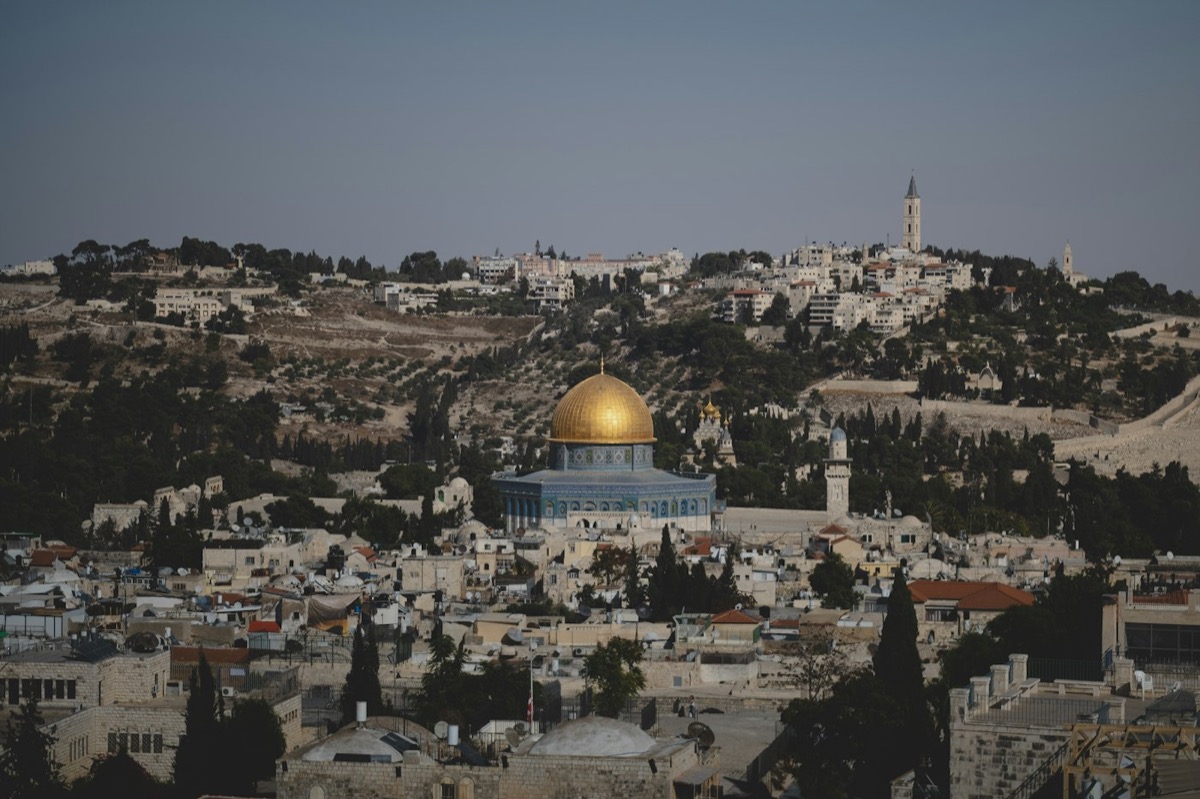
The conference titled "The Consequences of the First World War for Palestine," organized in London by the Palestinian Return Centre and the Al Jazeera Research Center, is being held in days when commemorations of the First World War on its 100th anniversary are frequently held. Every year in the first half of November, people in Britain hold commemorative meetings and ceremonies for the nearly 900,000 British soldiers who died in the First World War. Within these commemorations people wear poppies on their lapels. This year, being the centenary, the British soldiers are remembered with added significance.
The First World War is in fact a war whose outcomes were largely determined by the British. The British would play the most influential role in drawing the borders of the Middle East that would later be established. Without doubt the war's most definitive loser would be the Ottoman state. The most obvious result of the First World War is that the Ottoman country, which before the war, though sick and considerably weakened, was among the world's handful of powers, came to an end, that its lands were torn to pieces, and that Turkey, remaining as the Ottoman remnant, was forced to accept hard conditions and to be squeezed into the Misak-ı Milli borders.
Another important result, again determined by the British, is that the preparations for the State of Israel were officially launched with this war. Until the First World War, the Ottomans did not allow Jews to settle on Ottoman Palestinian lands with a European identity. All efforts in this regard came to nothing; the Ottomans, as always, already allowed Jews fleeing pressures in Europe to come to their lands as their own citizens. But this time the permission demanded of the Abdülhamid administration was permission to come and settle without giving up their European identity, in order to benefit from the privileges that the capitulations also provided. Abdülhamid appears to have had a strong foresight of what would follow this permission. The degree of authenticity of the famous anecdote about the meeting of Abdülhamid and Theodor Herzl is disputed. Given Herzl's position, it seems impossible that he made such an offer to Abdülhamid, but it is nonetheless known that an offer was somehow conveyed to Abdülhamid: in return for the establishment of a Jewish nation in Palestine, the cancellation of all the Ottoman state's debts amounting to 23 million British gold pounds, the establishment of a protection fleet worth 230 million francs, and a loan of 35 million gold liras to revive the treasury; and that in response Abdülhamid is known to have said the following words:
"Even if you give me not just 150 million British gold pounds but all the gold of the whole world, I can never accept this. I have served the Islamic nation and the Ummah of Muhammad for thirty years, and I have not put any black stain on the history of my father and my ancestors, the Ottoman sultans and caliphs. For this reason I will never accept what they ask of me."
In the face of this offer there could probably be no words more poetic and more powerful than these. Abdülhamid also tried to prevent Zionist organizations from buying land routes inside Palestine, so as to frustrate their efforts to create footholds. But after the overthrow of Abdülhamid, the Zionists managed to extract these permissions from the Young Turks.
The Ottoman legacy in Palestine is still alive and real. The Ottoman records are still the valid records of the Palestinians on these lands and the records that prove their property rights. In fact, today these records are the most valid legal records aimed at resolving the Palestinians' refugee problem. Since 1948, Palestinian organizations have been demanding the land and property records that were valid when Israel was established, in order to be able to assert their own rights.
In 2005 the Turkish government handed over to the Palestinian Authority a copy of the Ottoman archive dating from 1916, that is, from a time when there was not even any mention of Israel. In fact these records constitute the real records of the real owners of the Palestinian lands.
Numerous researchers with special sensitivities in this field took part in the London conference, such as Dr. Jaafar Hadi Hasar, Dr. Mahmoud O. Haddad, John Keay, Karl Sabbagh, Anthony Gorman, Ghada Karmi, Peter A Shambrook, Malath al Agha, Maced Al- Zeer, Oliver Miles, Jeff Handmaker and Mark McDonald.
That this meeting is being held, on the centenary of the war, in Britain, which pioneered and architected the World War that began a hundred years ago, which with the Sykes-Picot agreement, the McMahon and Sharif Hussein correspondence, and finally the Balfour Declaration inflicted Israel as a plague on this world, and in particular witnessing the Ottomans being remembered in this process with great longing and goodness, is extremely moving; I will not say more.