
← All articles · Palestine and Israel
Islamic unity in the context of Gaza and the caliphate remembered anew
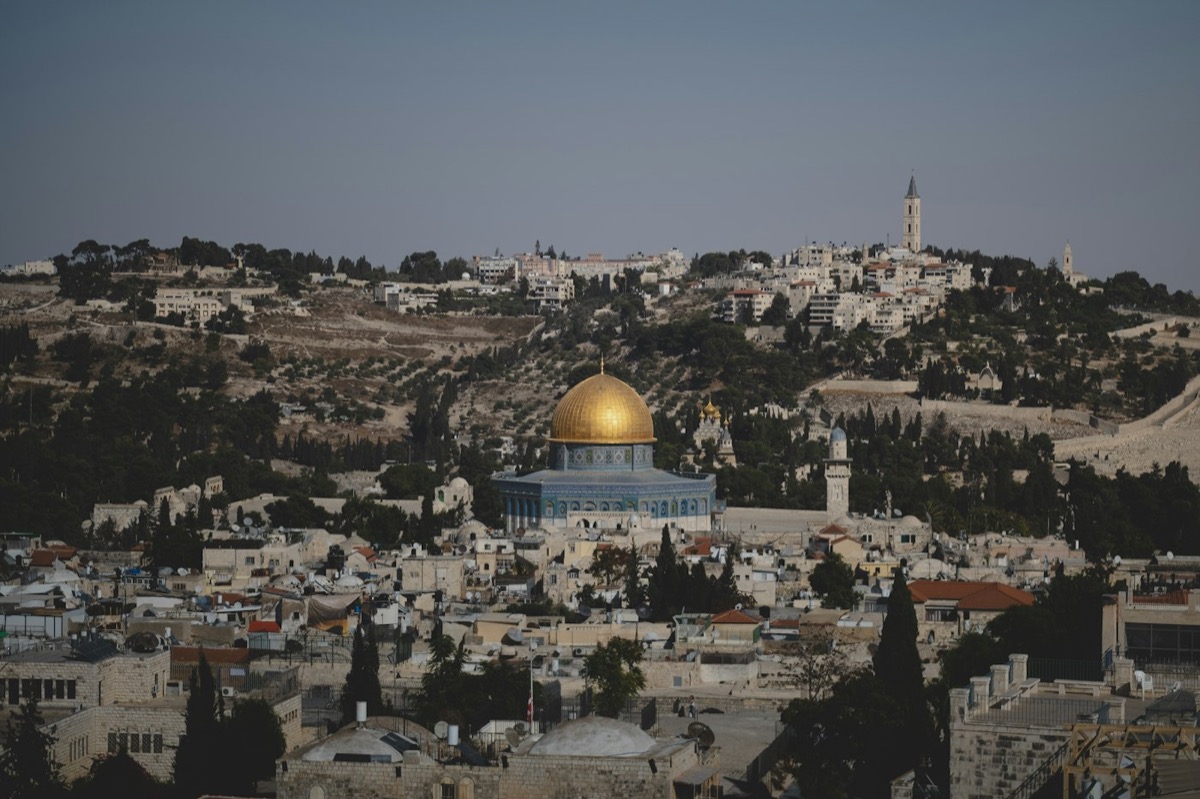
In the face of the genocide that Zionist murderer Israel carried out in Gaza for two years, the state of helplessness into which the 2-billion-strong Muslim world fell has inevitably stirred in everyone doubts or longings about the existence of an Islamic World. If 2 billion people cannot be sufficiently alarming in the face of Israel's insolent aggression, which has gone far beyond its bounds, how many people would be needed? Undoubtedly, the very existence of 2 billion people is plain evidence that the weakness against Israel does not consist of a shortage of numbers.
Gaza showed us that what two billion people could not do, 40 thousand brave hearts could do far more easily. 40 thousand people, with their minds, their hearts, their Yasin 105s, their patience and their resistance, kept pounding for two years a world power that had rendered two billion Muslims ineffective, beat it black and blue. They brought down the legend of Israel. Israel, which with all its arrogance and insolence waged a genocidal war on Hamas for two years, failed to reach the two most important goals it had declared from the start. It could neither take back the hostages by fighting nor destroy Hamas. The hostages were handed over through an agreement to which Hamas also sat as a party, and Hamas recruited as many fighters as it had lost, and even more.
On the other hand, the Palestinian cause has now become a global and universal cause. Israel has been disgraced and isolated all over the world.
OF COURSE THE SUCCESS BELONGS TO HAMAS
That is, to Hamas with its 40 thousand fighters, with the Qassam Brigades. Everyone was tested in this process in one way or another. The Islamic world too did nothing, could do nothing, in the face of these attacks aimed at its very dignity. One of the most important aftershocks of the Al-Aqsa Flood has naturally been to open up an intense debate, awareness and wagers about the quality of the Islamic World. If Muslims were united, could such an event against Gaza, or against Muslims anywhere in the world, take place so easily? Would the world stay silent and watch so comfortably?
IF MUSLIMS ARE NOT UNITED, IT WOULD MEAN NOTHING EVEN IF THEIR NUMBER WERE 20 BILLION INSTEAD OF 2 BILLION
Now political consciousness across the whole Islamic world has to revolve around this question and this reality. This should set a search in motion, and it is doing so. In Konya, Muslim civil society organizations that felt themselves subjected to a coup process during the days of 28 February made this situation an occasion to unite among themselves and to put forth a presence together against this fitna.
THE HORIZON TOURS OF THE KONYA NGOs
Since that day, on the strength of this occasion, they have been making a horizon tour in Konya in the face of every event on the Muslims' agenda. They do this monthly, and in total also in the form of an annual congress. In the first tours I tried to give what contribution I humbly could. Over time these tours were not limited to Konya but opened up to all of Turkey and were even held abroad. These days a horizon tour is being held in Kızılcahamam under the title "Islamic Union (Ittihad-i Islam) and the Future of Turkey," precisely to take up the pitiful state of the Islamic World in the face of Gaza and, of course, to discuss the policies and solutions to be put forward against it.
In fact, the abolition of the Caliphate also set in motion, throughout history, a series of measures to take its place. Even though Muslims were left headless with the abolition of the Caliphate, the search for a body, a structure, a corpus that would represent the political unity of all Muslims was felt even more in precisely this atmosphere. In this framework, the Muslim Brotherhood organization, founded in Egypt in 1928, that is, exactly 4 years after the abolition of the Caliphate, by Hasan al-Banna, then 22 years old, and 6 friends, became international within a short time and, if it could not secure the unity of Muslim states, made operative a religious, emotional channel among Muslim peoples.
The momentum the movement caught in a short time largely stemmed from its capacity to answer the demand arising from the void created by the disappearance of the Caliphate. In the same way, the Jamaat-e-Islami in the Indian subcontinent acquired a similar capacity with the same mission.
One of the most important subjects usually brought up against us in discussions of Islamic Union or the caliphate is that the Caliphate is a political rather than a religious institution, and the political distortions it has suffered throughout history. Those who, starting from this, very easily conclude that the caliphate is not obligatory for Muslims are generally people who are distant from the values, beliefs and emotional climate of Muslims. A Muslim never concludes, cannot conclude, from these considerations that the caliphate, or a political entity representing the unity of Muslims, is unnecessary. Even when we recite the Fatiha alone in our prayers, we address God not as "I" but as "we." This "we" points to the necessity of Muslim unity even at the level of creed and worship.
The second thesis gives plenty of examples that the Caliphate already had no effect before it was abolished. For instance, the Muslim Indian soldiers brought from India, who should have been loyal to the Caliphate, to fight against the Ottomans, or the example of some Arabs who, although a jihad fatwa had been issued, listened to the traitorous Arab leaders instead of the Caliph.
Of course, these examples skillfully distract attention from the much more numerous opposite examples. For instance, that the Indian soldiers in the British army were driven to the front unconsciously like herds of slaves, and that many of them, the moment they realized it, displayed on the contrary examples of loyalty to the Ottomans. Moreover, even though there was the treachery of some Arabs, the fact that as a factor influencing the fall and defeat of the Ottomans, the ultimate effect of this treachery was as good as zero compared with the mistakes and treachery of some Ottoman officers. In fact, the Arab treachery narrative is nothing but a pretext continually put forward precisely to hide this real treachery, scandal or rout. So much so that if you probe it, you would have to rewrite the whole of history.
The money coming from the Indian Muslims, which had a very important place in financing the War of Independence, came for the sake of the Caliphate. Hoca Rasih, the deputy of Antalya who went to India with a delegation to collect and bring this money in the name of the Red Crescent, complained thus when he returned shortly after the abolition of the Caliphate: "They respected us very much in India. Significant money was being collected. When the telegram of the abolition of the Caliphate arrived, the Indians were devastated. They grieved greatly, and they insulted us too. We were left without recourse, we fled and came back."
The Horizon Tour in Kızılcahamam lasts 4 days. At the opening panel of the first day we made a historical essay with "Caliphlessness: The Longest Century of Muslims." Caliphlessness is of course a lack, an abnormal situation, and points to very specific conditions that distinguish the way of existence of today's Muslims from the 1300-year period in the past.
WHAT IS THE REMEDY FOR CALIPHLESSNESS?
Is the remedy the appointment of a new caliph? Together with the other two speakers of the session chaired by Faruk Karaaslan, Kudret Bülbül and Vahdettin Işık, we took up the possibilities and conditions of establishing a Muslim Union in today's conditions. Of course, a great deal of water has passed under the bridge. We are in altogether different circumstances; perhaps at this hour, if not a caliph, we must look for different sociological and political possibilities that will develop the already existing religious and emotional unity of Muslims, nailed down by the symbols (shi'ar) that God has placed (prayer, fasting, hajj, zakat, tawhid, the Qur'an, Jerusalem, Palestine, Gaza), toward a political unity. 7 October has opened a new horizon for those possibilities, created motivation and made their necessity felt.
While we spoke from the seats on the platform precisely to probe these possibilities, our eyes kept catching on an inscription like this that covered the whole length of the balcony of the hall opposite us:
"Ittihad-i Islam, a Glory in the Past, Is a Necessity in the Future"