
← All articles · Palestine and Israel
Gaza, the heart of a heartless world
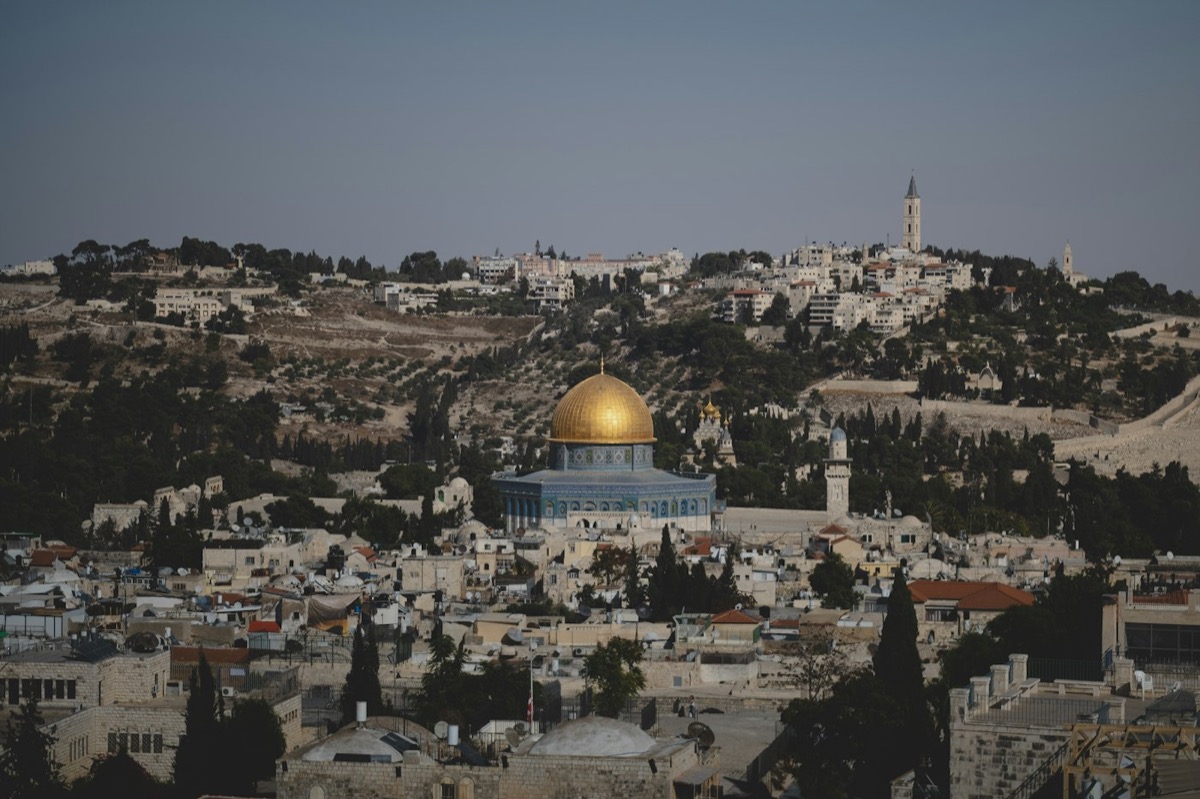
The philosophy, quality and nobility in the Gazans' struggle against the corrupt order of the world teach the world lesson upon lesson at every moment, every stage and every scene.
Gaza becomes the soul of a soulless world, the heart of a heartless world. While resisting, it topples the fortresses of oppression one by one. While killing the enemy who slaughters humanity, it revives humanity's dead hopes; while striking the enemy who has withered life, it brings back to life every moment of a life that has grown utterly barren.
When the Gazans fight, resist and defend, they are not doing something only for themselves; they are giving hope to every other part of the world. They breathe a new spirit into a withered literature, and give a philosophy buried in a great lie a strong reason with new and valid realities.
These are of course not simple eulogies of Gaza or of the resistance. We are living them. At every stage. The praise of God by people who have lost all their loved ones in the most savage, most vile, most barbaric Zionist attacks repels all the enemy's assaults and leaves them helpless. They cannot make the Gazan bow, cannot frighten him, cannot make him give up. "Hasbunallah wa ni'ma al-wakil" cries a Gazan mother, father, child, in their most painful state... All the state-backed assaults, with all their steel-armored shields, crash against the bulwarks in those faith-filled chests. In Gaza, death is like passing from one room of the house to another. Being in such a close bond with the Creator makes a person the strongest human being in the world. How can all those trained killers of the Zionist war machine, afraid of their own shadow, suffocate such a faith?
With all its nobility and philosophical depth, with its faith, the Gaza resistance, in the face of the savage barbarity of Israeli terrorism, creates new and valid reasons for a new philosophy. Besides the uprisings of conscience it has carried to all the squares across the world, it opens a new and very wide field for a strong and valid discourse. The writers who reflect the situation around us, I suppose, are content to be swept along by the flow of events, and extraordinarily beautiful writings, depictions and analyses are coming. The writings of Vahdettin İnce, İsmail Kılıçarslan, Yusuf Kaplan, Gökhan Özcan, Ersin Çelik, Aydın Ünal, Erol Göka, Resul Tosun, Selahattin Eş, Mehmet Metiner, Rıdvan Kaya, Hamza Türkmen, Turan Kışlakçı and many more names in the Gaza days flow into hearts like water. But as it flows into the heart, there is also a strong philosophy that satisfies the mind. A philosophy that shines and reflects directly from reality itself and expresses itself in writing.
Besides these names in Türkiye, in the Arabic- and English-speaking world too a stronger testimony about the situation is emerging, adjusted forcefully against the discourses, philosophy and literature that have so far been force-fed to humanity.
For example, what our friends İsmail Kılıçarslan and Vahdettin İnce said in yesterday's article is so important: when the Gazans resist and fight, they are not fighting only for themselves, not resisting only for themselves. This is in essence the core of the Muslim's fight as well. That disposition which contains an ethic within itself; which does not leave the Muslim even in the hottest moment of battle. The Muslim wants the good for which he fights not only for himself but for all humanity, even for his own enemies. Whoever comes to kill the Muslim is revived in the soil of his mercy, compassion and goodness embracing the worlds, provided only that he has a little workable, unsealed heart left, provided only that he has a little ear to hear, a little eye to see, to water this heart.
You will see the fighters of the Gazans, in the heroic struggle they display while fighting, fearless, against the most colossal material power with the least force, and you will also see them loving their own children, elderly, people, and we do see it. But you will also see it in their treatment of their prisoners, that is, prisoners who have no power left to fight. The whole world has seen it. That friendship is by no means a scarce resource in the Muslim's heart.
All the concrete examples exist to see that it is a boundless resource, enough not only for his co-religionists but for all people. The name of this resource is Islamic ethics. An ethic that overflows from the heart of the monotheist mujahid who rejects servitude to creatures, becomes freer as he rejects, and as he becomes freer realizes that all people were brought into being from the same essence, from the same being.
If you ask what a revolution is, I would say it is being able to make people who are enemies of each other into friends and brothers, making them love one another. Revolutionism is not merely the ability to overthrow governments. Governments are overthrown by this or that coup, by this or that scheming junta game, and in their place governments no different from the previous ones are set up. A revolution is that which stirs storms in people's hearts, makes the hearts of people who are enemies of each other, who hate each other, grow close, fuses them, and makes them friends and brothers.
This revolutionary path is the path of the believers who follow the politics of friendship, the sunnah, of the Prophet Muhammad (pbuh), who gave the magnificent example of ending up as "companions" (ashab) with all the people he fought for years.
Even while fighting the Zionist enemy, the Gazan has in his vision the dream of a world in which even the Jews will live in peace, tranquility and honor. That is why when the fighting Muslim wins, no one loses; all humanity wins. What humanity needs is this politics of friendship, and in today's world there is no one else who could undertake this politics.