
← All articles · Palestine and Israel
Why was Israel forced to accept a ceasefire?
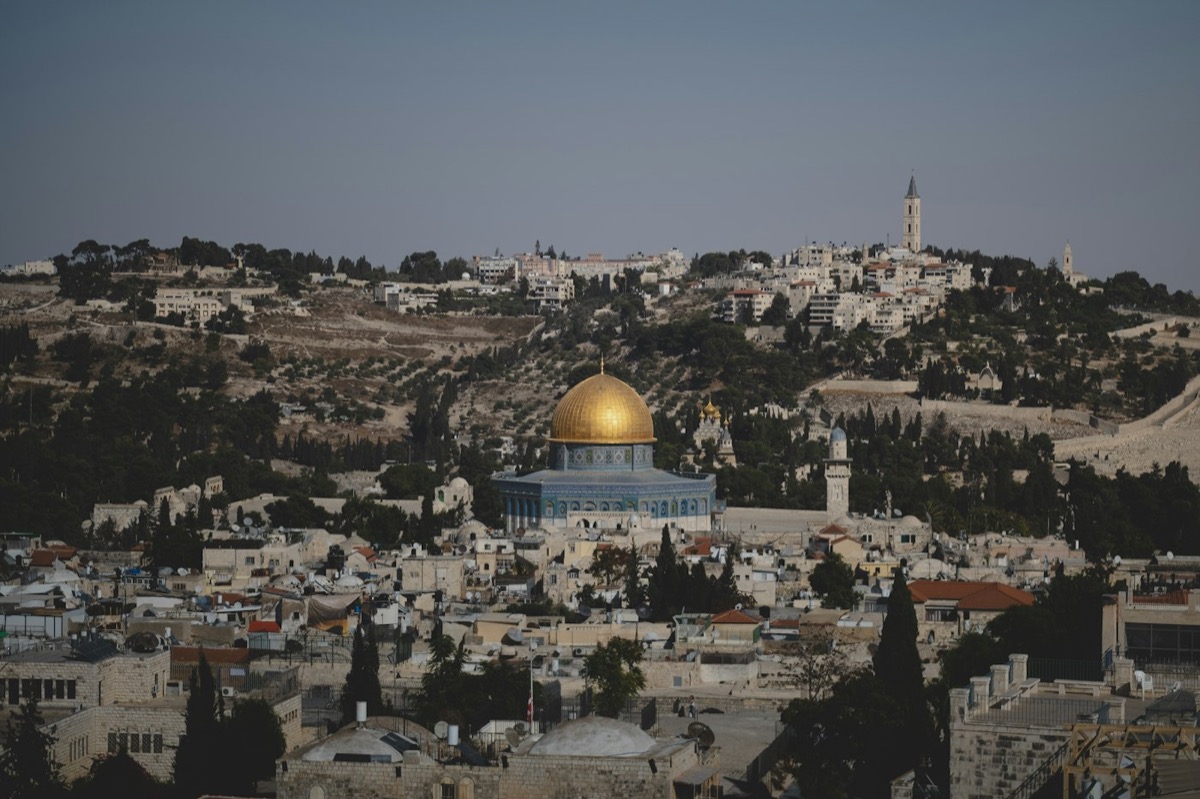
The attacks that the occupying terrorist state of Israel launched during the month of Ramadan and escalated rapidly came to an end, for now, as of yesterday with a ceasefire, after leaving a total of 230 martyrs in Gaza, 65 of them children, 39 women and 17 elderly, and 1,760 wounded. On the question of a ceasefire, Israeli Prime Minister Benjamin Netanyahu had rejected the calls coming from Egypt from the very beginning of the Gaza attacks. Because, as he always does, he regarded these events as an opportunity to deal a deadly blow this time to Gaza, which he considered to be the center of the resistance. At the outset he thought he could carry things through with great fury and a barbaric greed. But he ran into a resistance he had never calculated. First, he was confronted with the fact that Gaza was no longer the sole center of the resistance.
He encountered a new spirit of resistance that had virtually "resurrected" among the Palestinians known as the "1948 Arabs," who, being Israeli citizens, had been relatively cold toward or distant from the Palestinian cause. We say "resurrected" because it had been supposed that the spirit of resistance had died among these Palestinians, and that in particular their new generations had by now been entirely won over to Israel's side.
Yet the process of declaring Jerusalem the capital of Israel, and the anger caused by the normalization process with Israel on the part of the Arab world, had awakened a much stronger consciousness of identity even among this new generation of young people.
The emergence of this segment, which makes up 20 percent of Israel's total population, as a new center of resistance in this process sounded the signal of a serious danger that could paralyze the entire security system Israel has built up for itself until now. For Israel, which was facing such a situation for the first time, it was this danger that deterred it from continuing the disproportionate violence it displayed in the Gaza attacks up to the targets it had set.
Of course, even more important than this danger, and an actual one, was the growing scale of the resistance it met from the Gaza side, which could be called a surprise for it. The primitive rockets of Hamas, which until now had threatened only the vicinity of the Israeli border and without any target, were seen to have now extended their range to every point in Israel and to strike in a relatively much more focused way. In doing so, they are seen to have virtually turned Israel's much-vaunted "Iron Dome" defense system into a sieve.
Until now Gaza was completely defenseless against Israel's one-sided attacks.
It was evident that the famous rockets it fired, which formed the pretext Israel's attacks presented to the world, provided no defense at all. Now, however, it perhaps still lacks a defense against Israeli air strikes, but it has a weapon with which it can respond. Perhaps this time Israel has a real reason to tell the world about its own barbaric attacks. But as can be seen, once this reason has emerged, Israel too is forced to act a little more carefully in its attacks. It is quite clear that where there is no deterrent power on the other side, Israel turns into a complete machine of crimes against humanity and massacre. Yet when it faces a resistance and a force that can retaliate against it, Israel suddenly becomes peace-loving.
Indeed, a third factor that deterred Israel this time was the negative perceptions that had begun to form in international public opinion against Israel and in favor of Palestine. Earlier we had painted a pessimistic picture of a world under Zionist occupation that tolerates all of Israel's crimes against humanity. But we had added that that dark picture was also a moment at which the saving power would begin to manifest itself. Indeed, as against the US and some European leaders who treat even all of Israel's crimes against humanity as part of "Israel's right to defend itself," voices of conscience have begun to rise from within the US itself, from members of Congress, politicians, academics and civil society organizations, proclaiming to the world Israel's unprecedented injustice and its lies. This level has truly been hopeful.
In the face of precisely this new situation, Israel was in fact waiting for Egypt's first proposal to be repeated, again by Egypt or by another country. In the end, Israel regarded the new call for a ceasefire, made through the initiative of Egypt, Qatar and the US, virtually as an opportunity and accepted the ceasefire.
Naturally, despite all its losses, this was regarded as a clear victory on the Palestinian side. This victory both made Israel back down from its attacks on Al-Aqsa Mosque and from its practices relating to opening new settlements, and brought down all the myths it had spread about its own power. The air defense system that was touted as impregnable and impenetrable was virtually turned into a sieve by the Izz ad-Din al-Qassam rockets, and both Israel itself and the whole world saw that it did not provide the protection it claimed.
This event became a sign for Israel that expansionist policies that pay no regard to the world will no longer be as easy as before. Because of these attacks, new and very serious axes of resistance have formed against it, both within itself and throughout the world, in addition to the resistance stationed in Gaza until now. In particular, the intensive diplomatic traffic that President Recep Tayyip Erdoğan has been conducting since the last days of Ramadan heralds the building of a new world. We will touch on this separately later.
However, the characterization of Erdoğan's criticisms of Israeli aggression as antisemitism by the US State Department is a delirium that merely confirms what we have always said, that the US is already under the occupation of Zionism. It is not Jews or Judaism that is being criticized, but the crimes against humanity that have cost children their lives. Do those who immediately play the card of hostility to Jews against precisely this not commit a great error by equating the killing of children with Judaism and by owning these massacres in the name of Judaism? Is this not the real hostility to Jews?
Meral Akşener's comparing Netanyahu with Erdoğan in order to criticize Netanyahu is another manifestation of this same logic. Truly, there could be no better way of legitimizing Israel's massacres and serving it.