
← All articles · Palestine and Israel
The meaning and outcome of the Islamic Summit
"With every hardship, there is surely ease"
The strange silence and indifference conspicuous throughout the entire Islamic world except Turkey, in the face of the crimes Israel committed this time against Jerusalem and the Palestinians under the open protection and direction of the US, was broken by the convening of the Organization of Islamic Cooperation Summit and the strong declaration it issued.
As is known, the strange indebtedness or dependence on Israel that many Islamic countries have had since their founding prevents them from raising their voices. Let alone raising their voices, many Islamic countries have lately entered a race to normalize relations with Israel. Since it creates the appearance of a clear deviation from the founding principles that have been recounted to outsiders until now, this normalization creates a serious legitimacy problem, particularly vis-à-vis their own peoples.
In the literature, the concept of "normalization" means selling the Palestinian cause out together with Jerusalem, betraying it. For that reason there is great public pressure on the countries that wish to enter the normalization process.
Even so, the countries seeking normalization are evidently under an even greater pressure, such that they can risk confronting their own peoples so openly.
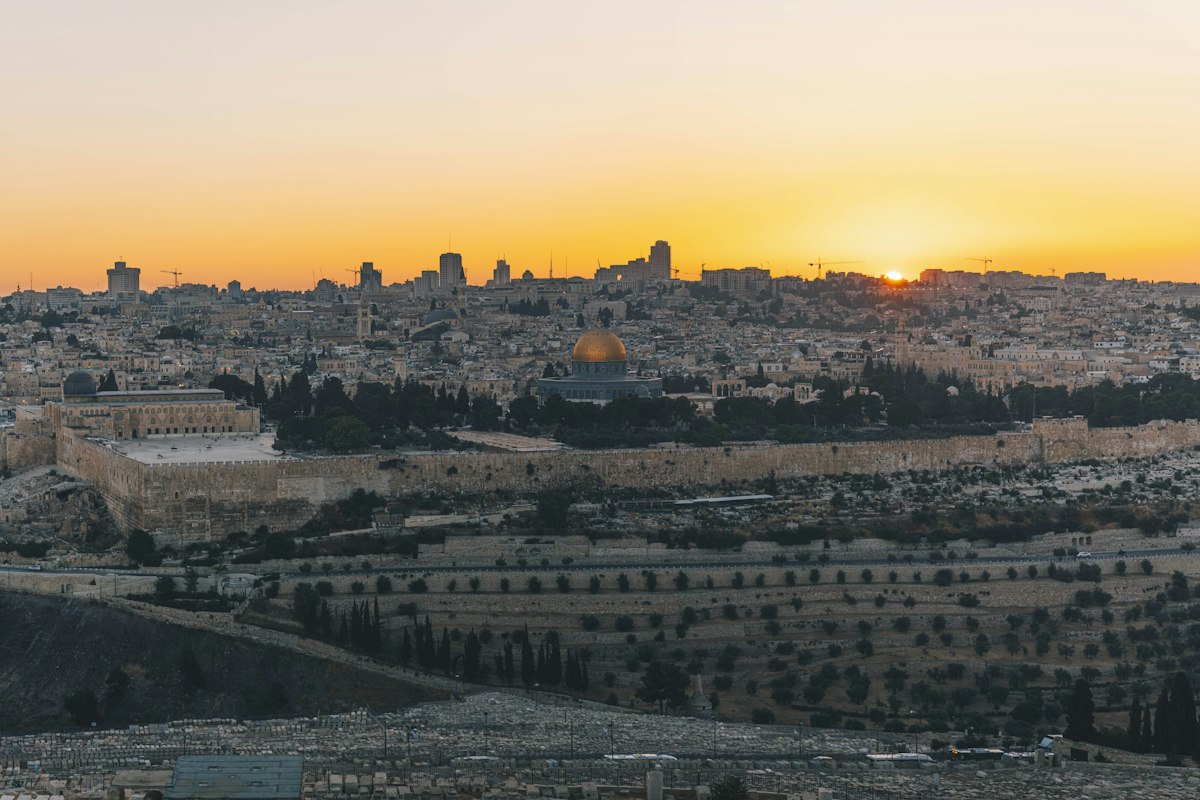
Jerusalem, the red line of all Islamic countries, Jerusalem, which is the very reason for the formation of even the OIC, the first qibla of Muslims and the holy city of all the Abrahamic religions... Jerusalem, the very one that, when touched, the Zionists themselves fear all Muslims will turn into armies and march upon them...
Of course, those trusted rulers who keep Muslims imprisoned within their borders and under control existed to prove these fears unfounded, and until now they have never betrayed the trust placed in them. And they did so in such a hypocritical manner that anyone watching would think the reason for these rulers' existence is hostility to Israel. Cooperation displayed by appearing to be hostile. Now it is said that even this much is no longer needed. "Normalizing" relations with Israel in fact means nothing other than making the de facto situation official.
This dependence on Israel is of course not on the State of Israel itself. It is on the world order that drove Israel into this world like a stake. We can debate what function the Zionist and terrorist State of Israel has in this world order. A pile of speculation can be made about whether it governs the US and the world or the US governs it. The outcome does not matter much. Today, making Jerusalem the capital of Israel is a process set in motion by the US moving its own embassy to Jerusalem. The relationship between the US and Israel had never before been made so open. In fact, the flat personality displayed by US President Trump makes it possible to make public the real power relations underlying the order the US has maintained until now under other guises. Making de facto situations official is the new policy of the US. Otherwise, the US stance and policy have not differed from this since Israel was founded.
Therefore, being against Israel directly means being against the US and the unjust world order it has built. Being against Israel means opposing the world order.
It is not easy to risk this opposition. But what makes it truly difficult is the fears this order has instilled in people. The deep-rooted fears inside them give life to this unjust order. These fears make them say that this order cannot be opposed, cannot be resisted. That is why they stay silent even in the face of its most blatant massacres, stop their ears to the voice of the oppressed, and shrink from calling the oppressor's oppression oppression. They try to normalize relations with the oppressor, to draw close to him. They think that the closer they get to him, the more they will be protected from his oppression. Yet it is nothing other than these very behaviors that give life to the oppressor.
One may ask what meaning and what effect there could be in President Recep Tayyip Erdoğan calling the OIC to an extraordinary meeting, for the second time, in such an atmosphere. It is indeed being asked. This atmosphere radiates a hopelessness, a pessimism. The situation is of course not easy, but one must never lose the belief that there is ease within every hardship.
Even the picture that emerged at the OIC's extraordinary meeting showed this sufficiently. Islamic countries need to remember that, taken together, they are a force that can never be ignored. When there is no activity, a person forgets even his own existence. At an appropriate time, with an appropriate language and approach, even a gathering can in itself bring about this remembering. The OIC Summit, convened in Istanbul under the chairmanship of our President with an extraordinary agenda, showed signs of this remembering and of the revival that may follow it.
Israel was once again remembered and reminded as an occupying state that can in no way be legitimized. For those seeking ways of normalization with it, this was perhaps a warning, perhaps an encouragement and incentive to look for another path. The reactions that we had waited for from each country individually and had not seen, in response to the latest violations and massacres by Israel and the US in Jerusalem, we saw again from each of them and collectively. Not only Israel, but perhaps for the first time, the US, as the power behind it, was criticized in the most open manner.
The pessimism that permeates the presenters' questions on some Arab channels where I took part to comment is voiced about this Summit too: "There will be another meeting, and perhaps a harsh condemnation, but Israel will go on doing the same things. Can't you see that these meetings have no effect?"
On the contrary, at a time when the Palestinian and Jerusalem cause was almost on the verge of being abandoned and Israel's oppression was at its height, this meeting performed the function of placing Jerusalem back at the center of the Islamic world, thereby reminding and announcing, both to itself and to the whole world, that an Islamic world exists. "With every hardship there is surely ease, and when you have finished a task, immediately set yourself to work again"
Erdoğan's words that marked the Summit renewed hopes for the world, which he proclaimed to be greater than five, and reminded us of the way:
"Palestine is not without an owner, Jerusalem is not without an owner, Gaza is not without an owner... As long as the Islamic ummah is not of one voice, Muslims will continue to be oppressed in every corner of the world."