
← All articles · Palestine and Israel
Balfour and the abolition of the Caliphate, or the founding of Israel and the awakening of the idea of Islamic unity
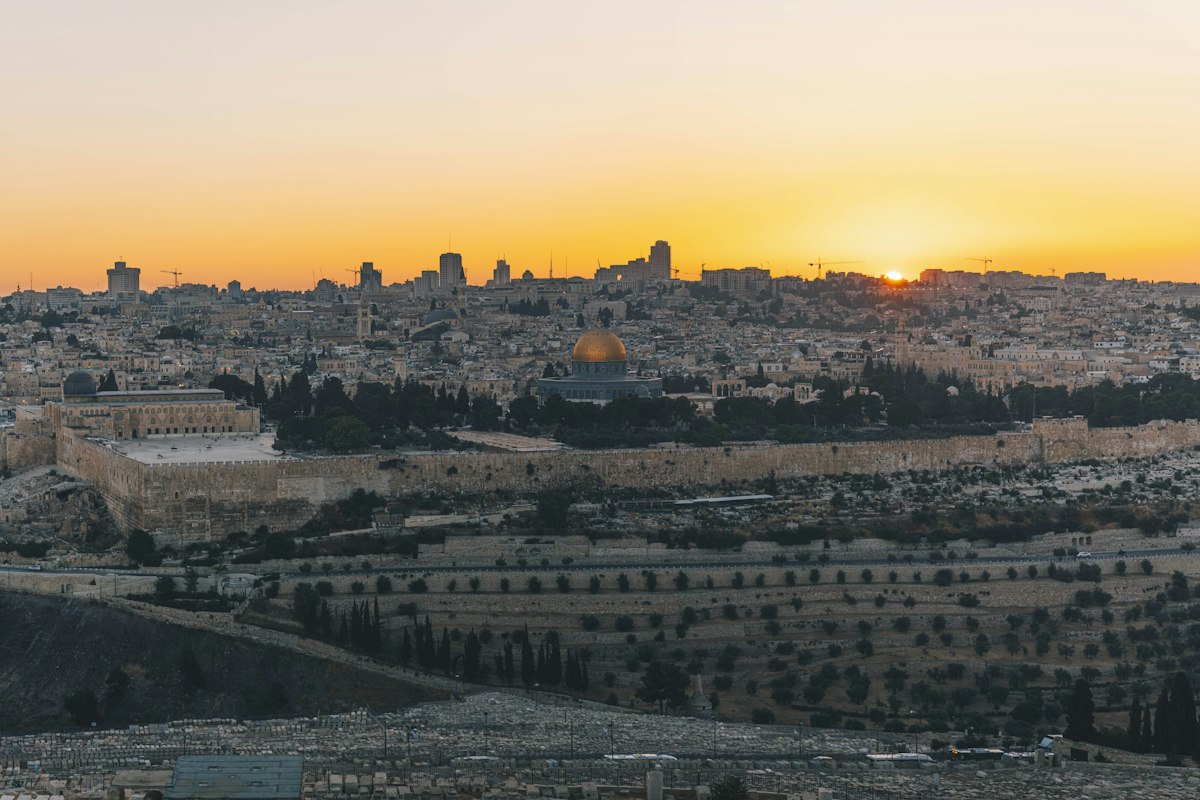
Historically there has been a close correlation between the founding of the state of Israel and the Muslims' being left without a caliph. The Balfour Declaration, which envisaged the establishment of a state of Israel on Palestinian land, also contained the knowledge and fact that this would not be possible in the presence of the Caliph. That is why one stage in the process leading to the founding of the state of Israel also required the abolition of the Caliphate.
The fact that all the actors who played the leading role in the weakness shown on the Palestine front were also among the leading actors of the new political order in which the Caliphate was abolished is a relationship that must be followed within the continuity of this story. Seen from this picture, it is not so difficult to explain why, after Balfour, after the Gaza front and then in the fall of Jerusalem, no one has dwelt on the weaknesses of the Ottoman officers of the time that can only be explained by intent.
It is a very familiar story that those among the winners of the war, having also demolished the authorities before which they would have to account for a defeat of their own making, had a glorious, triumphant role written for them. It is clear that Gaza, which heroically and nobly resisted two powerful British attacks, just as it does today, and repelled the enemy, lost in the third attack not because of the weaknesses of the same heroes but because of the weakness of those who commanded.
Of course, there could be nothing of value in withdrawing and surrendering Jerusalem to the British forces that came after, without any resistance, just so that Jerusalem's supposed historical, spiritual, cultural and architectural fabric would not be harmed by war. But even this has been presented as an example of nobility. Yet the whole game was being played according to the script written by those who proclaimed the Balfour Declaration, and in this game some people within the Ottoman army were also playing the role written for them.
We know that until 1948, when the state of Israel was founded, Turkey followed a policy of complete indifference toward these lands. No claim was made, no concern was felt. By inventing the legends of Arab treachery, the real great treacheries were hidden, and even a kind of national resentment was made to be adopted by society as the justification for this indifference toward the region. In a situation in which the people had no say whatsoever under single-party rule, Turkey was among the first countries to recognize Israel, founded in May 1948, in March 1949. Of course, like all CHP policies: "in spite of the people."
In that period, did the people have any strength left to object to any policy?
THE FOUNDING OF ISRAEL AND THE AWAKENING OF THE IDEA OF THE ISLAMIC WORLD
While such a correlation formed between the decision to found Israel and the abolition of the Caliphate, behold the strange twist of fate: a correlation also formed between the founding of the state of Israel and the revival of the idea of an Islamic world that had been broken and fragmented. The reawakening of the idea of an Islamic Union in an Islamic world left headless and bodiless by the abolition of the Caliphate began to awaken with the founding of the state of Israel. We had previously touched on the Muslim Brotherhood and the Jamaat-e-Islami as a trans-national civil society response, spreading across the whole Islamic world, to the void formed after the abolition of the Caliphate. The former in particular distinguished itself by the volunteers it sent to the front in all the wars known as the Arab wars against Israel.
But at the level of states too, Israel, with all the evil nature it carries, has also become an occasion for some good. King Faisal of Saudi Arabia's setting out to represent the reaction of Muslims all over the world against the burning of the Al-Aqsa Mosque and his convening of the Islamic Conference (OIC) ensured that Islam and Muslims were remembered as a new political axis in the existing world order after the abolition of the Caliphate. This body, which would later take the name Organization of Islamic Cooperation (OIC), although still not at the desired performance today, has reminded most of the Islamic countries colonized under post-Caliphate conditions of their obligation to represent the Muslim peoples they govern, and their values and desires.
The weakness displayed in performing this obligation is now a matter of trial and interrogation for these administrations. It is not enough, but it is a matter of pressure that is better than nothing. It is of course a sociological rule: attacks awaken group identity and feed and reinforce the spirit of solidarity and asabiyya. Zionist Israeli aggression, and the Palestinian resistance that never gave up against it, have constantly fed this vein. For example, thanks to this, even the Muslim countries in Africa, whose ties had not been made sufficiently functional even during the Caliphate, have become engaged with the idea of the Islamic Union and with its relations.
THE OIC DETACHED MORE THAN 30 AFRICAN COUNTRIES FROM ISRAEL AND BROUGHT THEM INTO ISLAMIC COOPERATION
From the moment it was founded, and especially since the 1950s and 1960s, Israel played quite an active role in Africa using its close ties with the West and the discourse of "development and agricultural cooperation." Tel Aviv established diplomatic relations with more than 30 African countries, provided technical and educational support, and supported some newly independent regimes. By contrast, Arab-African relations remained limited.
The biggest change occurred after the October War of 1973. The October War was an important turning point in African countries' understanding of the nature of the Arab-Israeli conflict. By order of the Saudi King Faisal bin Abdulaziz, the Arabs used oil as a weapon to pressure Western countries supporting Israel, thus underlining the economic and political power of the Arabs.
African countries concluded that their interests lay in being in harmony with the Arab-Islamic bloc rather than maintaining relations with Israel, which they regarded as an enemy of the peoples of the Global South, including the peoples of Africa.
As a result, more than 25 African countries, in solidarity with the Arab position, severed diplomatic relations with Israel between 1973 and 1974. Among the foremost of these countries were Chad, Uganda, Niger, Mali and the Congo. After 1973, the number of African member states of the OIC, founded in 1969, grew rapidly. Countries such as Senegal, Guinea, Mali, Nigeria, Niger, Chad, Sudan, Somalia, Gambia and Sierra Leone also joined the organization.
THE MOTIVATION FOR JOINING WAS NOT ONLY RELIGIOUS, BUT ALSO POLITICAL AND STRATEGIC:
To strengthen cooperation with the Islamic and Arab world, to obtain economic support from Arab and Islamic funds (the Islamic Development Bank, the Kuwait Fund, etc.), to secure diplomatic protection against Western or Israeli pressure.
In return, following the widespread boycotts, most Israeli embassies in Africa were closed. Israel's technical aid declined and was replaced by Arab and Islamic support through development programs. However, Israel tried to return gradually to the continent in the 1980s and 1990s, especially after signing peace agreements with Egypt and then with Oslo.
Now, after 7 October, Israel, having shown that with its genocidal aggression it poses a threat to the entire Islamic world, is feeding the idea of the Islamic Union all the more. While wanting to bury it completely in history, it is waking the sleeping giant. It knows best.